With the environmental and health consequences of plastic use currently being better assessed and studied, a number of research laboratories are making efforts to measure their own plastic footprints…
Where did the two natural satellites of Mars, Phobos and Deimos, come from? For a long time, their shape suggested that they were asteroids captured by Mars. However, the shape and course of their…
The implementation of the six societal challenges set out in the CNRS's Objectives and Performance Contract (COP) began in 2020. This work has promoted synergies between disciplines and created new…
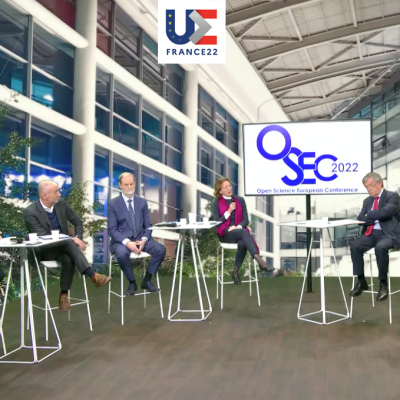
The Paris Call argues in favour of a reform of research assessment practices. It was presented at the Open Science European Conference (OSEC 2022) on February 4th and 5th 2022. This event was…
An event co-organised by the CNRS and the IRD brought together Europeans and Africans in Brussels on 29 June to imagine a new scientific partnership between the two continents.
From coral reefs to public policy - France's overseas territories are at the forefront in ocean research. They serve as natural laboratories and innovation hubs to help build a science that focuses…
The CNRS has established a new office in Australia, which is home to extensive scientific collaboration, and is an important actor in major subjects such as polar research, corals, and radio…
The CNRS has officially been a registered operator of drones for the last eight years. This title is the result of a decade of work by the CNRS Drones Unit on structuring and professionalising pilots…
The CNRS is stepping up its international strategy to further integrate worldwide scientific cooperation dynamics and develop world-class partnerships. Alain Mermet, who was appointed director of…
Scientists, decision-makers and artists redesigned the outlines of research intended to inform political and societal choices at a major conference at CNRS headquarters in Paris on February 3rd and…