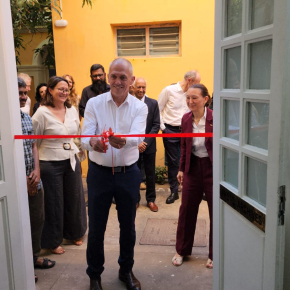

“French research has much to gain from close collaboration with India”
Corporate
A CNRS delegation, led by its Chairman and Chief Executive Officer Antoine Petit, will visit India to exchange with its primary partners on the ground. An opportunity to take stock of Indian research and its collaborations with the CNRS.
Soon to reach 1.4 billion inhabitants (50% of whom are under 30 years of age), India has just surpassed China as the world’s most populous country. It should rank 2nd among G20 economies in terms of growth (2022-2023). “With rapid growth and a country that is ranked 6th among global economic powers, science has an important role to play in India,” says CNRS Chairman and Chief Executive Officer Antoine Petit, who will visit, along with numerous directors of CNRS institutes, important centres of Indian science beginning on 16 February.
Research present within a number of Indian ministries
While the share of Indian GDP invested in science remains low at 0.7%, the country’s strong growth rate has positioned it as a strategic actor in global research in the future. Public research in India is a prerogative of the central government, and is essentially organized around the Ministry of Science and Technology and the Ministry of Earth Sciences. However, each ministry has its own departments, which supervise institutes, centres, and establishments specializing in research. For example, the Ministry of Science and Technology has three key departments: the Department of Science and Technology with 20 independent institutions conducting activities in research and innovation; the Department of Biotechnology, with the Biotechnology Research and Innovation Council consisting of 14 R&D institutes; and the Department of Scientific and Industrial Research (DSIR), with the Council of Scientific and Industrial Research (CSIR) bringing together 37 industrial research institutes.
Another story of India told through its photos
Partager
Audiodescription
“There are a number of other ministries that oversee and implement research programmes in health, space, defence, textiles, atomic energy, computer science, industry, oil energy, renewable energy, and the development of human resources (academic institutions and technical universities),” explains N. Kalaiselvi, the Secretary DSIR, GoI and Director General of CSIR. “All of these ministries help develop different areas of Indian science, and the prime minister has placed the Department of Atomic Energy directly under his control,” adds Srini Kaveri, the director since 2015 of the CNRS office in India, which is celebrating its 12th anniversary this year.
A distinctive feature of the Indian research system is that the academic institutions under the supervisory authority of the Ministry of Education—especially the Indian Institutes of Technology (IIT)—are active participants in the research ecosystem. With respect to universities, there are currently over one thousand, as compared to just a dozen in 1947, the date of India’s independence. Of these universities, nearly half are private. “Some of these establishments still lack infrastructure. While these many universities are a reflection of high population density, basic research is conducted in public institutes with IITs, which boast an exceptional quality of research,” adds Kaveri.
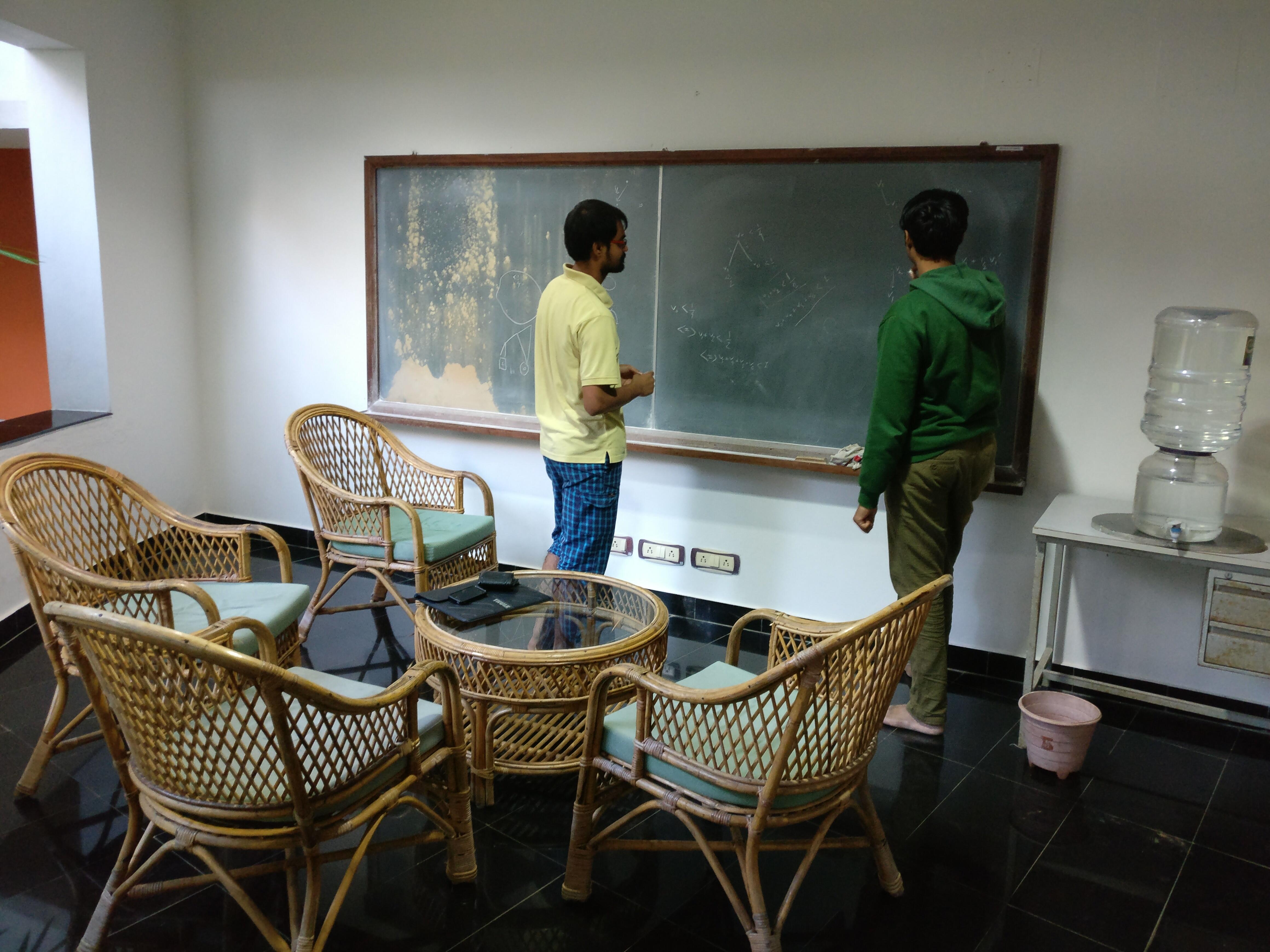
The “pharmacy of the world” is also a leader in mathematics and computer science
India has focused on fields of the future such as quantum technology, advanced communication technology, and digital transformation, with Indian research being particularly effective in mathematics and computer science. The country notably set itself the goal of becoming a $1 trillion digital economy by 2025. It has also emphasized clean energy—such as green hydrogen
“I believe that innovation, resilience, and adaptability are the primary advantages and distinctive features of Indian research, which have earned the country the nickname, among others, of ‘the pharmacy of the world.’” stresses Kalaiselvi. India ranked 5th globally in scientific publications and 7th in patents, with 70,000 active start-ups, 335 incubators, and 130 unicorns,
French-Indian “success stories”
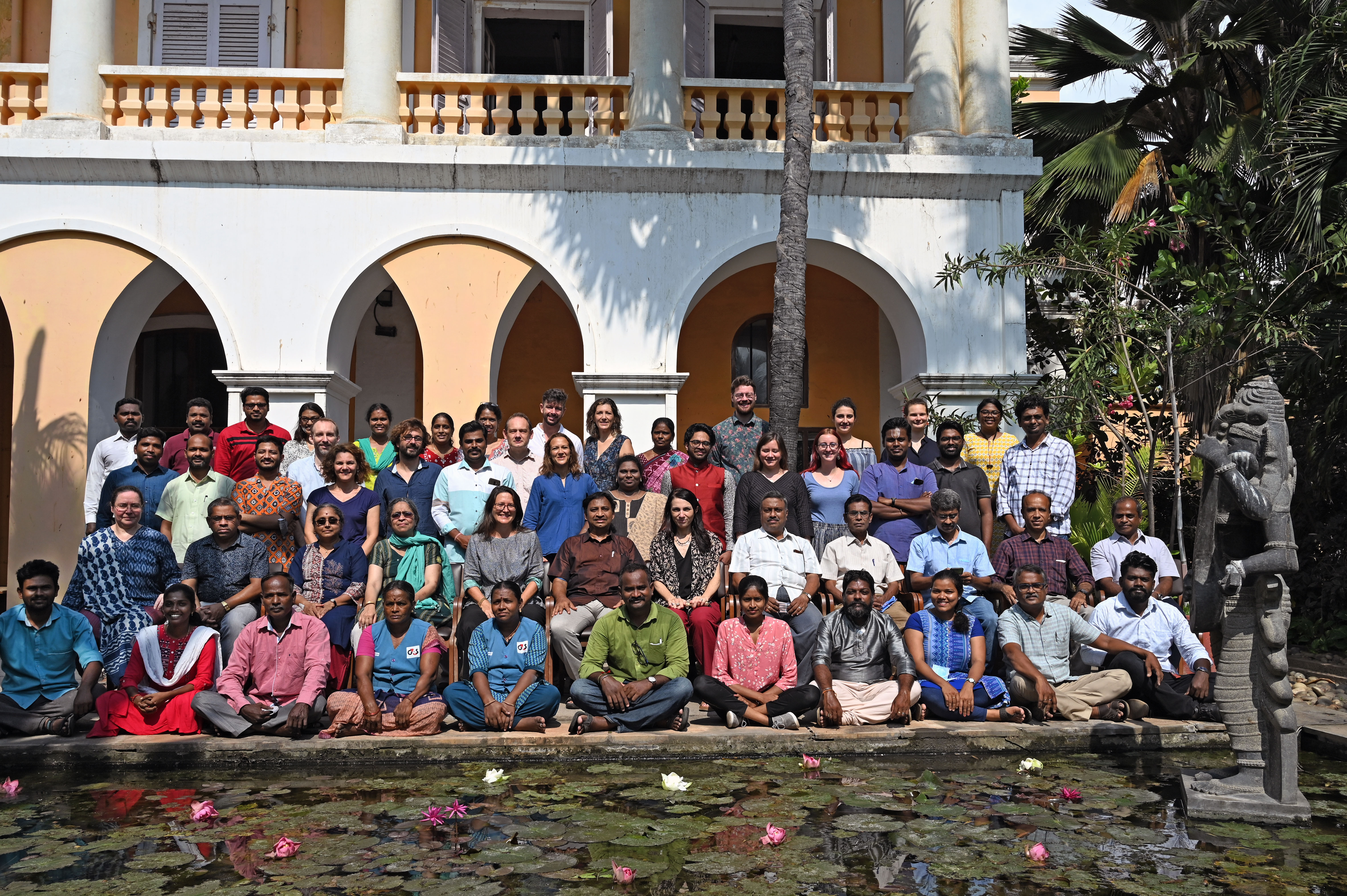
While, due to its history, India is very close to British research, and more largely to US research, French-Indian relations developed under the presidency of Giscard d’Estaing (1974-1981), during which the idea was conceived for an Indo-French Centre for the Promotion of Advanced Research (IFCPAR),
Antoine Petit will attend two IFCPAR workshops, including one by Jean-Christophe Nallatamby, an academic from the Xlim Laboratory
The CNRS will soon have three International Research Laboratories (IRL) in India

ReLaX IRL
“RelaX is devoted to research in theoretical computer science, its applications, and its interactions with mathematics,” explains Madhavan Mukund, the director of the IRL and the Chennai Mathematical Institute. ReLaX has its roots in an IFCPAR project between the Chennai Mathematical Institute and l’Université Sophia Antipolis, which over the course of many years and collaborations (28 in all) transformed into a research network, and then into a project to become an IRL. “The laboratory supports researcher visits and plans workshops in France and India. We host professors over a number of months, and provide resources for student exchange. Eventually we would like to turn more toward enterprises for collaborations, as there are many French enterprises present on the ground.”
Scal(e)S IRL
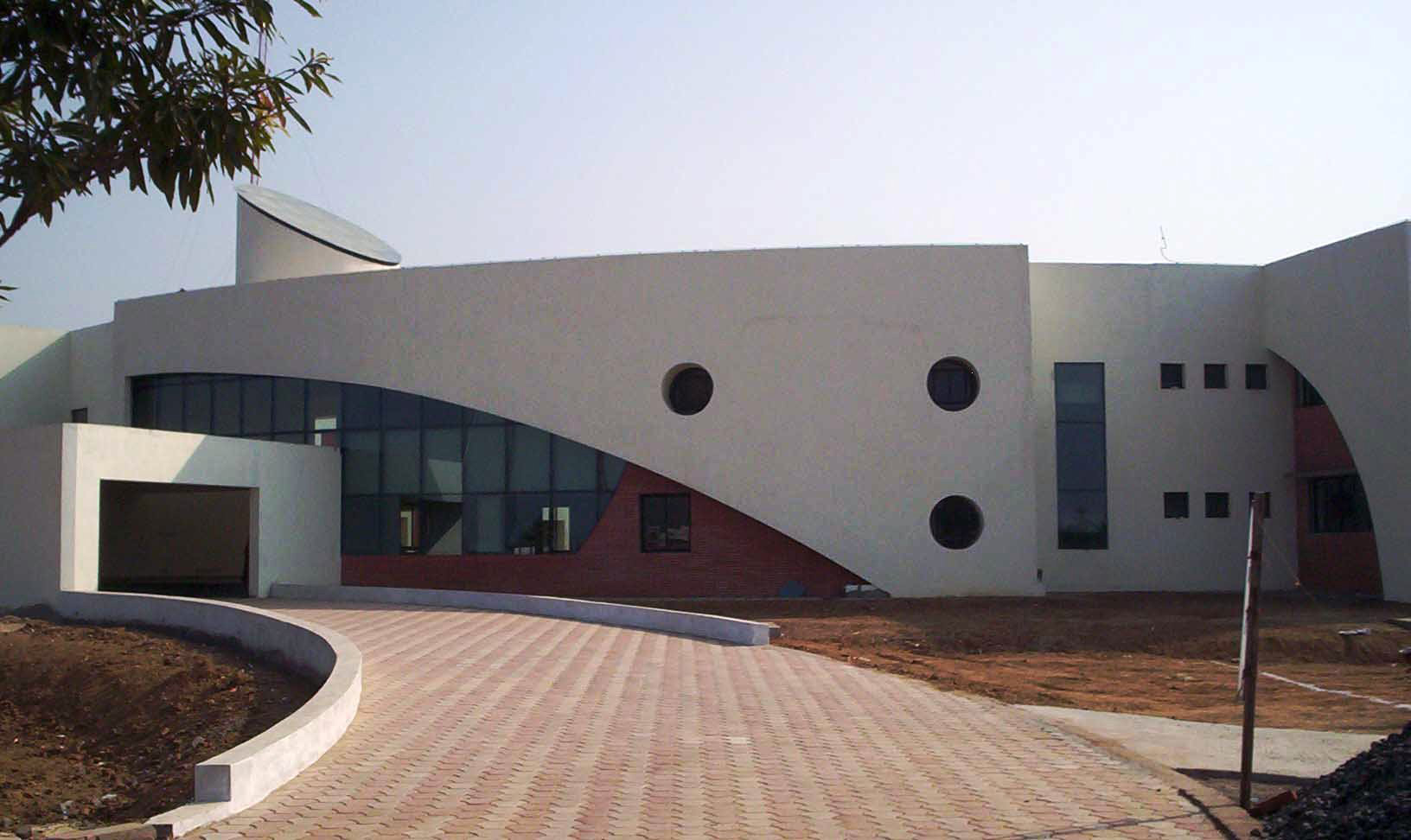
The brand new Self-organisation and Control in Biological Systems (Scal(e)S) IRL aims to untangle the mechanisms of matter and living organisms, especially the complex characteristics that support their physiological functions. It will implement interdisciplinary projects to study how biological systems organize dynamically through scales, from molecules to cell ensembles within bacterial colonies, tissues, and embryos. The goal of Scal(e)S is to drive collaborative research within a consortium of partners based at the National Centre for Biological Sciences in Bangalore, India, and at the Turing Centre for Living Systems in Marseille. “We will promote interactions by holding annual workshops in Bangalore and Marseille, along with student exchange and postdoctoral fellows each year. The expected result of this IRL is to launch new projects in which its broad range of expertise will provide new answers to how biological forms emerge through spatial and temporal scales,” recounts Thomas Lecuit, the director of the IRL.
The French Institute of Pondicherry
Created in 1955, the French Institute of Pondicherry is one of the largest UMIFREs