
COP 27: “Thinking about oceans means thinking about our future society”
Corporate
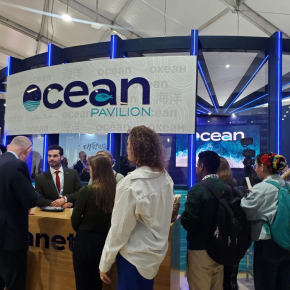
For the first time, the CNRS will be present, alongside numerous international scientific partners, at the COP 27 in Egypt, through a pavilion devoted to oceans. This will be an opportunity to emphasize their role in future challenges relating to the climate and biodiversity, as well as to promote the creation of the IPOS, a dedicated expert panel. We discussed these issues with Antoine Petit, CNRS Chairman and CEO, and Françoise Gaill, a CNRS scientific advisor and leader of the IPOS.
What are the objectives and expectations of the Conference of the Parties (COP 27) in Sharm El Sheikh, which will take place on 6-18 November?
Antoine Petit: This COP, which will be held on the African continent, is expected to be one of enactment. In recent years there have been many announcements without concrete results. Once again last year in Glasgow, the COP 26 ended with a mixed outcome, even as it was supposed to revisit numerous issues that remained unresolved, especially with respect to the implementation of the Paris Agreement. For instance, the goal of limiting warming to 1.5°C globally through commitments made by states, or the financial support of developed countries for developing ones. The latter are now expecting these announcements to be enforced.
Françoise Gaill: I believe the issues are four-fold: establish a robust work programme for mitigation

For the first time, oceans will play a central role at the COP thanks to the Ocean Pavilion. It was a long road to putting this issue on the negotiating table...
F.G.: The importance of oceans as a key actor in the climate system was clearly identified only in 2015, following the COP 21 in Paris. The Paris Agreement introduced, in its preamble, the notion of oceans as an ecosystem. In 2019, the Intergovernmental Panel on Climate Change
A.P.: The Ocean Pavilion is a major first, there has never been one on this topic during a COP. And it is led by scientific institutions from across the globe. Scientific research is crucial in promoting the central role of oceans, and for constructing enduring trajectories. We know the importance of oceans in climate-related issues, and would like this role to be part of the negotiations. We want to present all existing ocean-based mitigation and adaptation solutions. Today scientists have attained precise knowledge regarding the issues involved, and can propose concrete avenues for action.
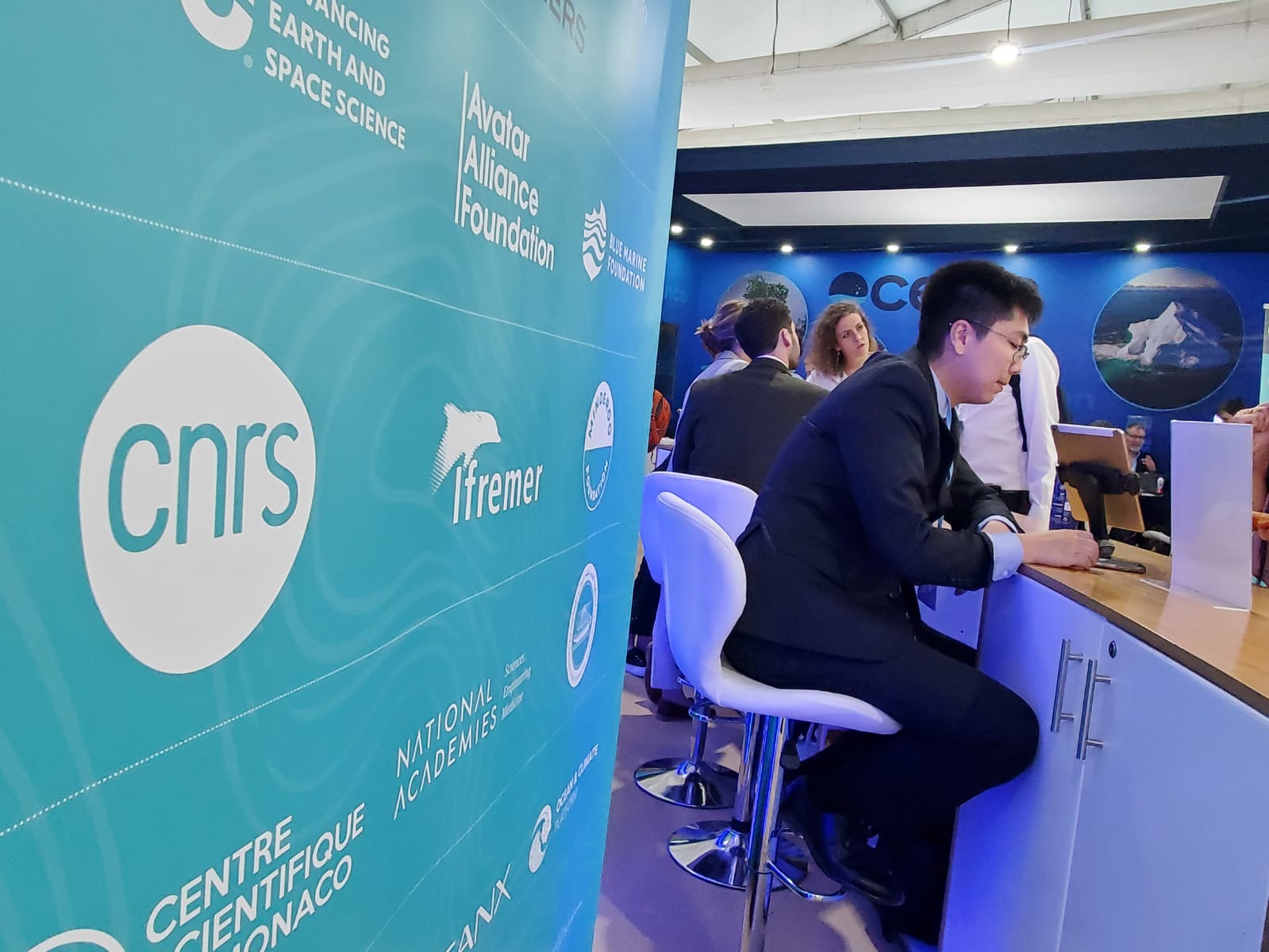
The CNRS is a partner of this Pavilion alongside other international research organisations and NGOs. This is also the first time that a COP pavilion is being managed by a research institution. How will activities within the pavilion be organised?
A.P.: The pavilion will include a series of ‘side events’ designed by its various partners
The CNRS kept away from the science-policy interface for too long, even as other institutions and countries largely integrated science within their political decision-making. The Covid-19 crisis demonstrated the essential need for bringing knowledge into the political arena. We must once again provide science with the role it should have in society. By participating in this COP, the CNRS will continue to increasingly take on this role.
Françoise Gaill, you are leading the International Platform on Ocean Sustainability (IPOS) project, a kind of ‘IPCC for Oceans’. Where does the project stand?
F.G.: Oceans, climate, and biodiversity form part of an inseparable triptych. The creation of IPOS will enable a better understanding of how oceans react to changes affecting the other two elements, and up to what point they can continue to provide their current services. The IPOS will therefore seek to integrate scientific knowledge in an effort to model the evolution of the oceans, and outline actions for their sustainability.
We presented the IPOS during the One Ocean Summit
The CNRS is the only generalist research organisation in the Ocean Pavilion among the heavyweights of international oceanographic research. How does this provide added value?
A.P.: It is firstly a major issue for the CNRS, which is indeed the only institution covering all scientific disciplines. Our interdisciplinarity is a major advantage when it comes to oceans. Oceans need science, whether it relates to biology, oceanography, ecology, and chemistry – or to philosophy, economics, and history. Oceans are, by essence, an interdisciplinary subject, and the CNRS can play a driving role in helping to see them as a sustainability-related subject
F.G.: On the European level, we are lagging behind in sustainability science, which includes this notion of interdisciplinarity. Yet by virtue of its interdisciplinarity, the CNRS occupies a privileged position, and its Institute of Ecology and Environment in particular is becoming fully invested in sustainability science.