

The CNRS's scientific support to feed into the decision-making process
The CNRS Public Affairs Department facilitates access to science through laboratory visits, creating connections with specialists and the dissemination of leading scientific publications, thus turning science into a tool to promote understanding and support decision-making.
Key action takeaways:
Experts and scientific reports to help shed light on current issues,
Verified and contextualised facts that are useful for taking action,
Early warning signs to integrate into forward planning,
A single contact point: the CNRS Public Affairs Department: cnrs-affaires.publiques@cnrs.fr
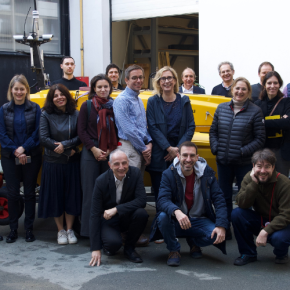
When faced with a marine drone packed with sensors and floating probes that look like small missiles, questions inevitably abound. What can artificial intelligence bring to our understanding of the oceans? Has progress been made in forecasting cyclones and hurricanes? Around twenty public sector representatives from the French Senate, government departments and local authorities alongside counterparts from major companies take the time to discuss matters with scientists from the Littoral Environment and Societies Laboratory (LIENSs)
This November event is one of the ‘Un Temps d’Avance’ (One Step Ahead) series of meetings launched by the CNRS to encourage public and private stakeholders to rely on input from the scientific community. At the beginning of this series of events, Antoine Petit, Chairman and CEO of the CNRS made it clear that “our role is not to decide, but to disseminate scientific findings that are useful for policy-making.” Decision-makers faced with complex challenges, ranging from health and the environment to industrial concerns, can rely on science to provide them with reliable references based on verified facts and rigorous methodology. “We have never needed science more,” insists the CNRS Chairman and CEO.
Un temps d'avance
Le CNRS a mis en œuvre "Un temps d’avance", un programme inédit à destination des décideurs et décideuses des secteurs publics et privés.
Audiodescription
“We are facilitators”
To help make scientific results more accessible, the CNRS is expanding the range of formats for outreach activities it can offer. These include laboratory visits, identifying and linking up experts, specialist reports, and more. The Public Affairs Department acts as a facilitator by working closely with all stakeholders within the CNRS. “We connect public sector stakeholders and scientists according to their needs,” explains Sara Bouleis, head of Public Affairs at the CNRS and also the coordinator of the 'Un Temps d’Avance' programme. This second edition of this series of thematic days is scheduled for October 2026 and the aim of the initiative is to“give participants the right tools to understand subjects as varied as quantum physics, climate change and cybersecurity, spot early warning signs and appreciate the diversity of scientific disciplines involved,” continues Sara Bouleis.
The La Rochelle event also demonstrated how science can be created jointly by local stakeholders and scientists. The examples used were that of a marine submersion warning system to help deal with coastal flooding caused by climatic events or that of a social science study on second homes. “Now I know that for the development urbanisation projects on the (French) Atlantic coast, I can find information here in La Rochelle given the effective coordination between scientists and decision-makers,” says Ambre d’Harcourt, an administrator at the French Senate’s Economic Affairs Committee.
Quicker and more specialised formats
As well as the ‘Un Temps d’Avance’ cycle, the Public Affairs Department responds to the needs expressed by public decision-makers on a daily basis. It organises laboratory visits and, given these decision-makers' are often limited in terms of time, can offer them quicker and more specialised ways of engaging with researchers like putting them in touch with a specific expert or sharing key scientific publications. For example, the CNRS's collective scientific expert reviews provide state-of-the-art reviews of major themes like the use of rare earth elements or reducing plastics in food along with impact studies like the December 2025 report on CNRS research into batteries.
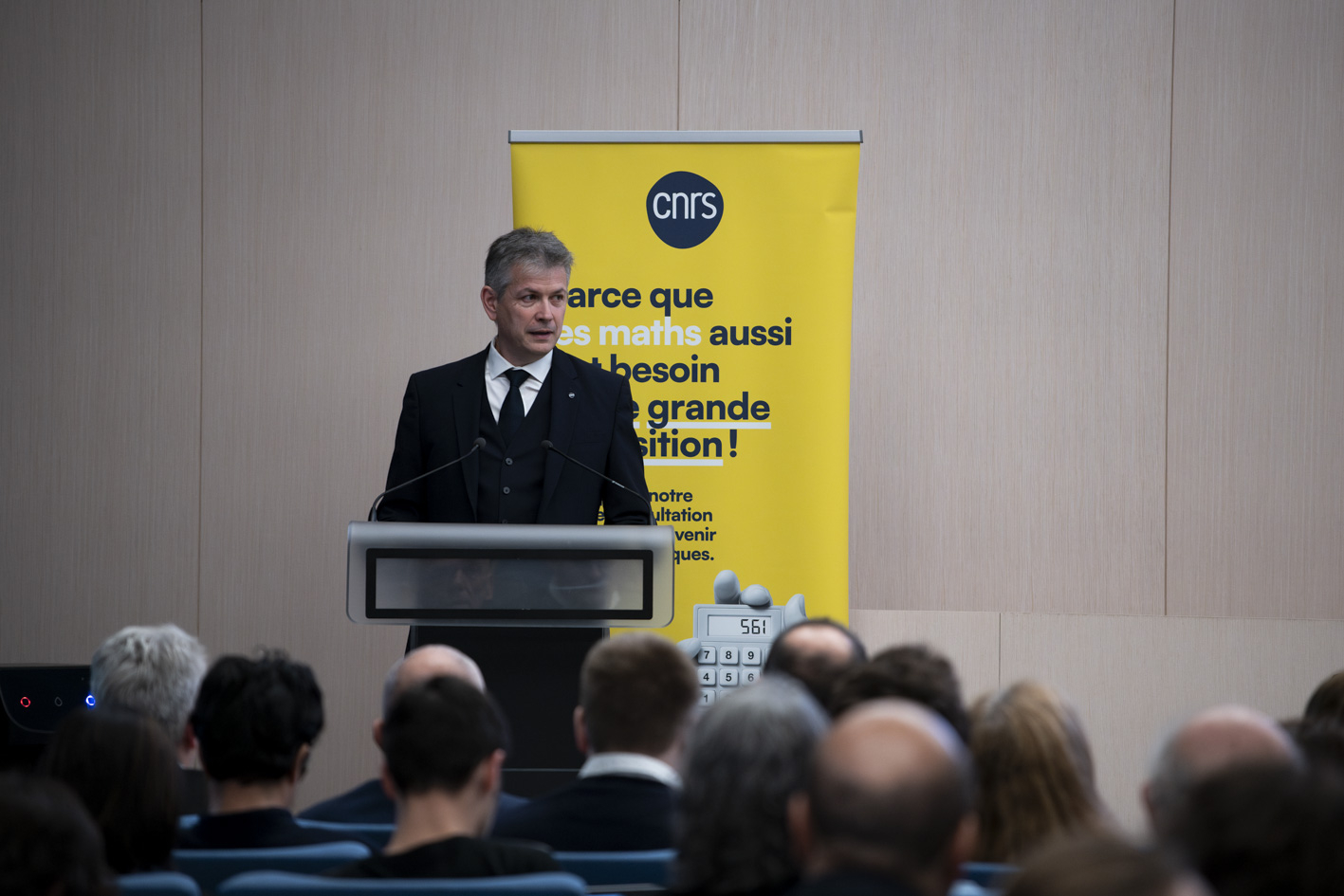
“We always try to bring together public and private sector stakeholders at the events to present these reports, whether they're experts or just interested in the subject,” explains Thomas Borel, the CNRS's head of public affairs and parliamentary relations. Everyone is welcome - elected representatives, their teams, and government staff, “who are all essential cogs in the decision-making process in their own way”. Philippe Bolo, a French MP and member of the Economic Affairs Committee, closely followed the collective scientific expert review by the CNRS and the INRAE of plastics used in agriculture and food: “It's provided me with new, up-to-date information, which is important for informing parliamentary debates,” he explains. “Links between science and society need to be reinforced and everyone will gain from this.”
Depending on the type of request, Thomas Borel and Sara Bouleis can also direct decision-makers to other internal contacts within the CNRS such as representatives of the CNRS’s 17 Regional Offices or at European level, through the organisation's Brussels Office.
Subtle analyses
The CNRS's outreach work is part of a wider range of tools including parliamentary hearings or reports, which CNRS scientists are fully involved in; the work of the French Parliamentary Office for the Evaluation of Scientific and Technological Choices (OPECST); and the joint organisation of events for politicians and scientists, such as a scientific conference at the Senate, for example.
"Researchers are good communicators, and their analysis is often more nuanced than what we might find in the press. I always recommend inviting CNRS researchers to hearings. There's such a broad range of disciplines at the CNRS that there's always a relevant expert for the topics I'm asked to work on. For example, they were extremely helpful in producing the information report on the French automotive industry published in October 2025,” recounts Ambre d’Harcourt, a member of the Senate’s Economic Affairs Committee which specialises in urban planning and housing. These are all essential building blocks in the construction of a science that fully serves society.
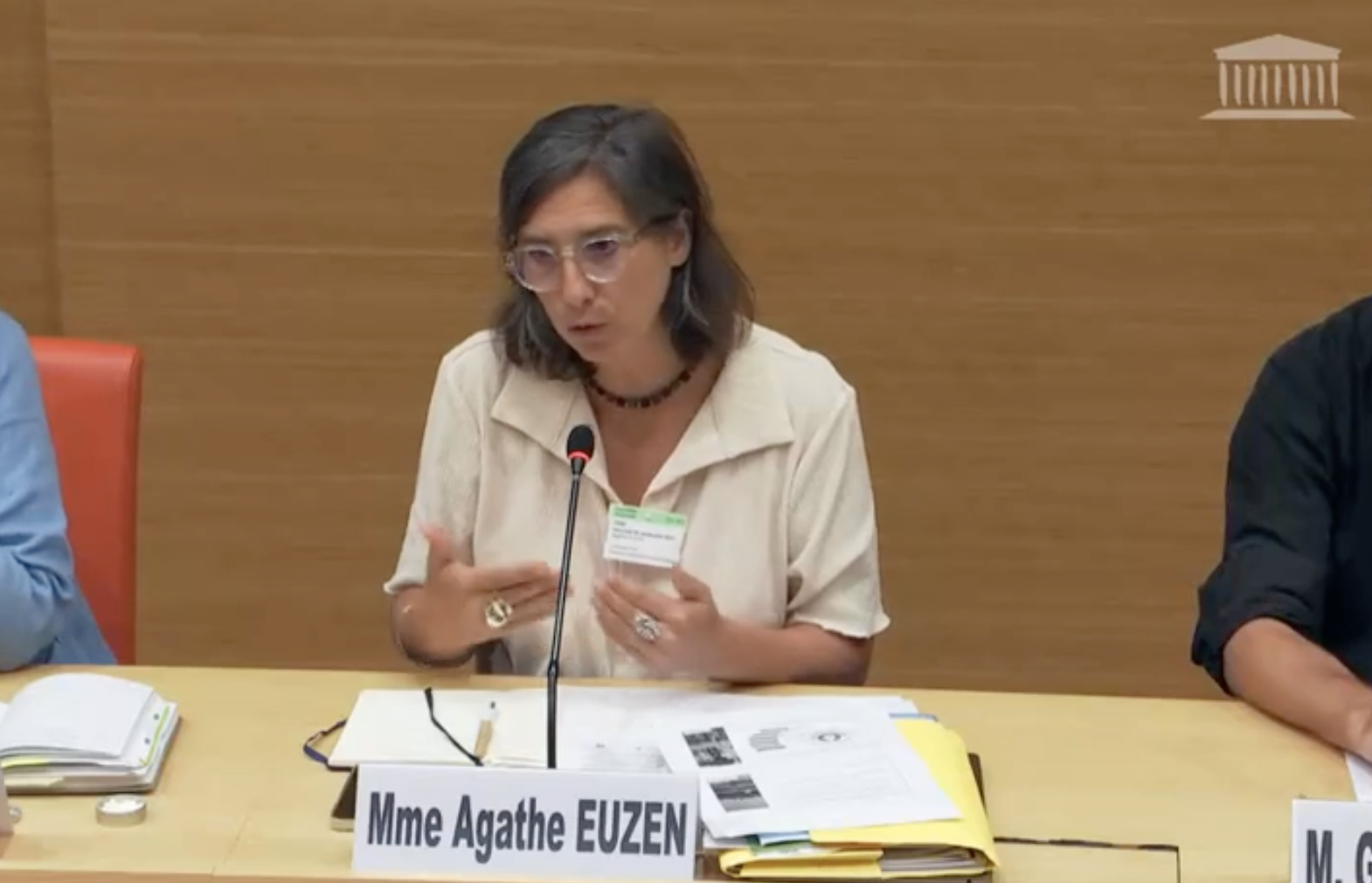
Stéphane Piednoir, the chairman of OPECST (the parliamentary organisation tasked with informing major societal decisions on scientific or technical matters) explains that “in an era when fake news is increasingly widespread and many people feel entitled to express unfounded opinions, we need to dispel false beliefs and highlight the role of scientific organisations like the CNRS. I am horrified by the manipulation of videos using artificial intelligence that depict certain researchers saying things they never actually said. I also believe we have to take the time for proper discussion, as opposed to media soundbites.”
The CNRS actively encourages dialogue which Thomas Borel summarises thus: “We are helping everyone to understand each another – scientists who are used to the long-term nature of research, and politicians who are limited by the short timeframe of decision-making. So this is a way of humanising science.”