
Open science – the CNRS's successes
Corporate
Is open science on the cusp of taking a new turn in the current context of international tension twinned with AI's rapid rise, for better or for worse? On the occasion of the CNRS's seventh annual Open Science Day, Sylvie Rousset, the director of the CNRS's Open Research Data Department, takes stock of the organisation's progress and outlines the upcoming steps forward in this area.
In 2019 the CNRS launched its first Roadmap for Open Science. What have been the main milestones and advances on this theme?
Sylvie Rousset: Overall, there have been very positive results for the four pillars – scientific publications, research data, text mining and the individual assessment of researchers. This has been particularly satisfying as regards publications, for which the CNRS is the leader in France. We'd set ourselves the target of 100% open access for publications by CNRS staff members. Now, nearly 95% of publications by CNRS scientists and 80% of those from our joint research units are available in open access. This means we've succeeded in our challenge thanks to our proactive efforts to encourage our researchers to deposit articles in open archives like the national HAL infrastructure created in 2001 which now attracts scientists from all over the world.
In light of this success, more and more academic journals are asking us to switch to the diamond model which involves journals being funded by academic institutions so publishing becomes free for authors and readers alike. However, CNRS publications are not the only publications in the world so our next goal is to make sure all publications are in open access but to date we're still dependent on the large private publishers.
As you mention this, we have observed private publishers inventing and justifying new expenses for using their services even as open science progresses...
S. R.: There actually is an international consensus on diamond models but, despite this, more and more money is still going to private publishers. And for good reason – they've managed to hijack open science by transferring the economic cost of open access publishing to the authors who publish in their journals in the form of article processing charges, or (APCs). In three years (2018–2021), these have doubled at the CNRS from €2 million to €4 million while, in France as a whole, these costs tripled from €10 million to €30 million between 2013 and 2020. And things could get even worse if all our publications were to become pay-per-view as this would mean the CNRS having to pay three times as much as now with France paying €168 million per year by the 2030s. This would be totally unsustainable financially. Scientists who publish on a piecemeal basis are unaware of these staggering costs which is why we strongly condemn this model. It favours private laboratories that can afford to pay to publish but don't have any control over the quality of scientific articles while excluding countries with more limited research budgets.
To break free of this costly and absurd system, the CNRS began cancelling its subscriptions to private publishers' journals – starting with Springer in 2018 – which has led to savings of €850,000 per year. We then reinvested this money to support open access publishing platforms that are free for both readers and authors like the Centre Mersenne in Grenoble for mathematics and the exact sciences, OpenEdition in Marseille for the humanities and social sciences, and Episciences in Lyon. We've also encouraged scientific communities like the Société Mathématique de France to switch to open access and supported other systems like Peer Community In.

The library of the Rijksmuseum in Amsterdam.© Maxime Galliot / Unsplash
Alongside these unsubscriptions, a public alternative to private for-profit scientific publishing needs to be developed. Europe has been working towards this since 2020 with the roll-out of the Open Research Europe platform which is to be expanded to promote the diamond publishing model more broadly next year. The European Commission's aim is to offer a large-scale publication service at no additional cost to both the beneficiaries of European project funding and scientists in the broader European community. This initiative is in the framework of a larger international dynamic to bolster this free publishing model for authors and readers along with the Global Summit on Diamond Open Access meetings bringing together the global diamond scientific publishing community (journal publishers, organisations, experts and stakeholders).
As well as these additional costs, scientific publications have been strongly impacted by the arrival of artificial intelligence (AI). Should this system of scientific communication be abandoned?
S. R.: That's going to be the theme of our next Open Science Day which is dedicated to 'the death of scientific publications'. We're currently observing that humans are writing, reading and evaluating fewer and fewer articles although the overall production is continually growing every year, partly because of paper mills which use AI to produce fake scientific publications on an industrial level. To identify fake AI-generated articles like these, the CNRS has developed a 'turnkey' service called TDM Factory thanks to the Institute for Scientific and Technical Information (Inist) and the work of the researcher Guillaume Cabanac. This provides the BibCheck tool which is capable of detecting articles in the bibliographic references of an article that were retracted by their publishers. This preventive measure means all scientists can check their bibliography before publishing an article to help curb the circulation of bad science.
In circumstances like these, should publication remain the primary model for disseminating scientific discoveries? On the contrary, I believe that scientific communication needs to reinvent itself and develop more innovative communication models. The round table discussion at Open Science Day 2025 will try to find a response to this question by bringing together a panel of participants from private and public publishing or who work with new scientific communication formats.
As AI is incapable of producing research data, have such data replaced scientific publications as the main mode of communication?
S. R.: If we want science to be more open, research data also needs to be open which is actually the default legal model here in France. There is a virtuous circle in sharing data – open data avoids redundant research, contributes to the reproducibility of results, enhances scientific integrity and bolsters trust in science. One concrete example is that, 35 years after the Hubble telescope was launched, there are now as many publications from the team that first exploited the data as from other groups that subsequently worked on the same data, all of which are public.
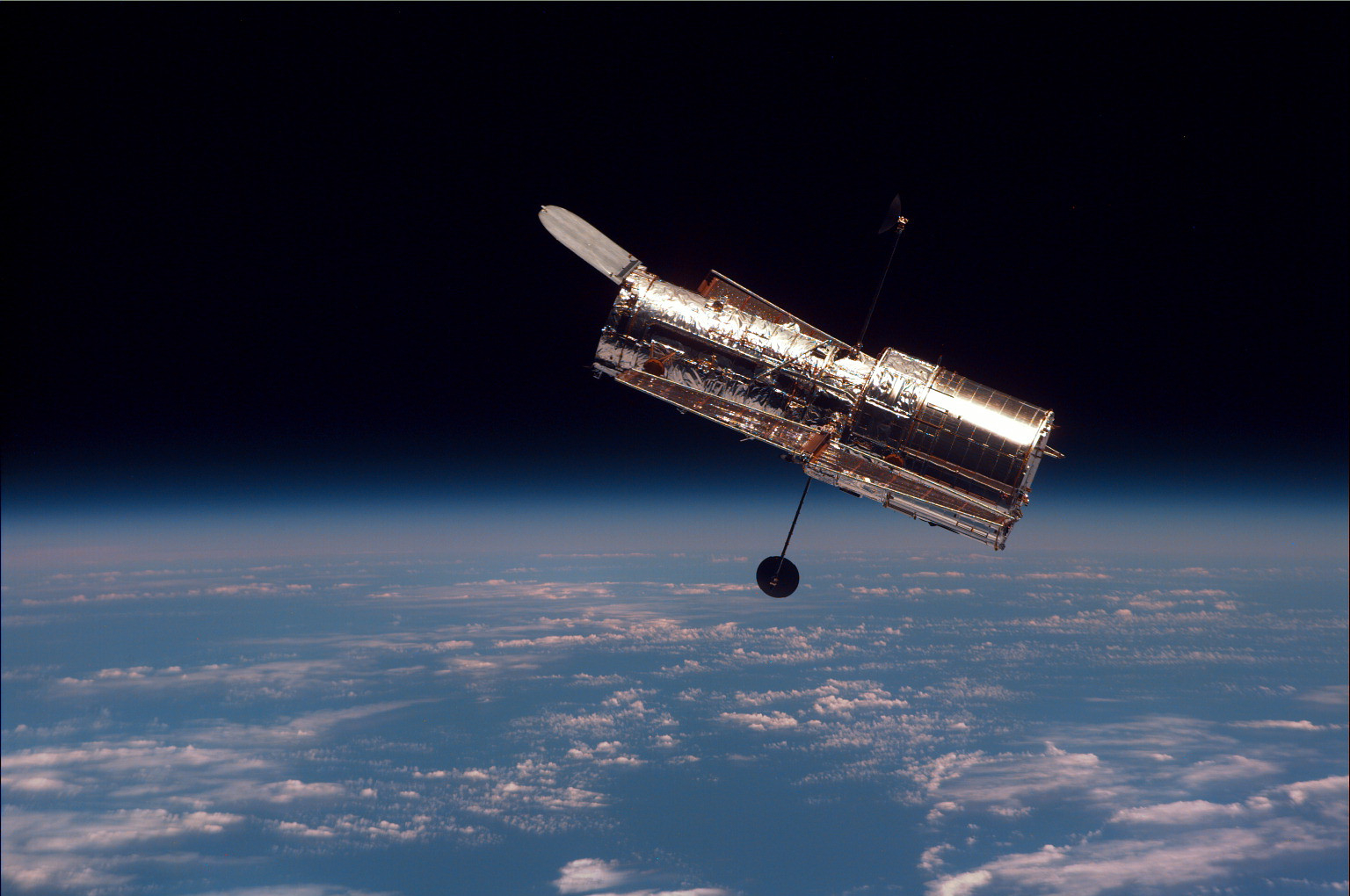
35 years after the satellite's launch, teams of scientists around the world continue to use Hubble data.© Nasa
The issue of data has come up more recently in public debate than the question of scientific publications. An internal survey run by the CNRS at the start of the Roadmap found that 60% of laboratories stored their data internally on servers – or even personal computers – which meant there was a significant risk of data loss due to this form of individualised storage. To deal with this, in 2022 the Ministry of Higher Education and Research launched Recherche Data Gouv, a data storage platform where the CNRS has had an institutional space since June 2023. It's ideal for generic data that don't have a more suitable thematic repository. As well as the CNRS Research Data space, we've provided scientists with a set of tools to deposit, share and reuse their data along with support in designing their data management plans, which are compulsory for certain calls for projects.
The Ministry of Higher Education and Research is also working towards its national vision through the certification of data centres throughout France to help pool computing and storage solutions. Now, the remaining challenge is to convince scientists to deposit their data in existing spaces and also to create new spaces of this kind, perhaps following the example of the massive storage work the Idris
However, opening up data and publications can only be achieved if the individual assessment of researchers is reformed...
S. R.: Exactly. And in fact, that was one of the barriers to open science that we identified right at the start of the Roadmap. Many scientists accepted to pay APCs because of a journal's prestige, which in turn reflected well on their careers.

To open up ever-increasing amounts of data, it must be stored on increasingly massive infrastructures, such as the Jean-Zay supercomputer on the Saclay plateau.© Cyril FRESILLON / IDRIS / CNRS Images
The CNRS has been a pioneer on this in France and as early as 2021 proposed four principles to the National Committee to reform the individual assessment of research. The aim of this was twofold – firstly to promote greater recognition of the diversity of researchers' professions and then to base the annual assessment of our scientists on qualitative rather than quantitative criteria. Henceforth, annual activity reports include a narrative section that describes the importance of a given discovery rather than exclusively basing this on bibliometric indicators like the impact factor or H-index.
This reform dovetails with the international dynamic in this area which is why the CNRS joined the CoARA coalition when it launched in 2022, with the coalition now boasting 800 signatory institutions, three-quarters of which are in Europe. Research organisations worldwide are aligning their practices through CoARA and other likeminded initiatives which was frankly unhoped-for when we published the Roadmap.
As you mention this, is the international geopolitical context still conducive to open science?
S. R.: Things have obviously changed since 2019. In 2025, the threat of US databases being cut off was a heads-up for scientific communities as regards the issue of data sovereignty and how to ensure its sustainability. This is a new issue, as the current rise in international tensions means national sovereignty issues could interfere with data storage policies. There is now a real risk of irreversibly losing international data on climate, the environment and gender studies which means it is more important than ever to share data and not entrust them to just one country or organisation.
Today, the motivations driving open science are even more fundamental in the current context than at the end of the 2010s. We also need to master and control the tsunami AI is generating by keeping its good side while protecting ourselves from the harmful effects it can generate. The CNRS is working on this and our future action plan for open science will of course take this new context into account.
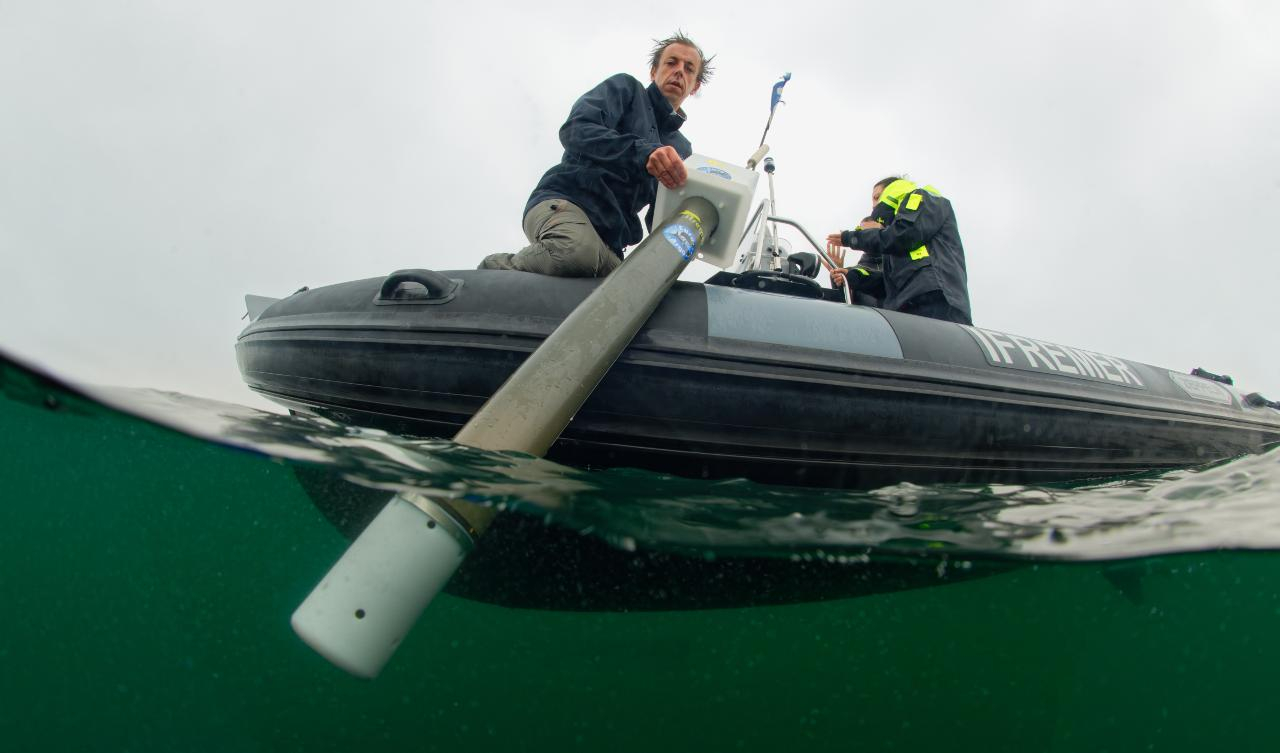
The Argo buoy system is one of the international databases threatened by U.S. funding cuts.© Dugornay Olivier / Ifremer