Parenthood in research: the CNRS is leading the way
Corporate
Issues linked to parenthood are increasingly featured in the media, particularly the impact of maternity leave on female researchers' careers. A whole range of parenthood measures have been implemented to deal with this issue throughout the CNRS. Here's an overview.
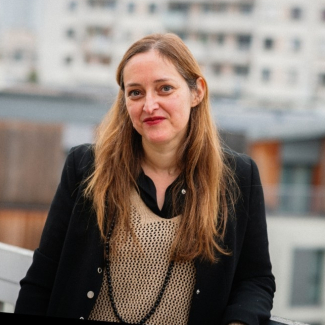
"Taking maternity leave means you're absent for several months and less effective when you come back", notes Héloïse Tissot regretfully and this CNRS researcher at the Unité de catalyse et de chimie du solide
For her first pregnancy, Héloïse Tissot much appreciated the "breath of fresh air" the 'Résurgence' offered through funding for equipment and experiments for one of her PhD students and missions for herself. This support enabled her to "get back to working effectively in a healthy caring environment". Liva Dzene is another of the project's beneficiaries and sees it as both "institutional recognition of this personal situation" and a "helping hand that motivated me to go back to my research" after her first pregnancy. Liva is a senior lecturer at the Université de Haute Alsace's Mulhouse Materials Science institute
'Résurgence' is only one of the parenthood measures implemented at the CNRS. Many aim to reduce the impact of maternity leave on women scientists' careers as this is one of the most prominent examples of how difficult it is for researchers to reconcile their personal and professional lives. The ten CNRS institutes work in close proximity to their scientific communities which meant they were well-placed to set up numerous initiatives in this field that take any specific disciplinary features into account.
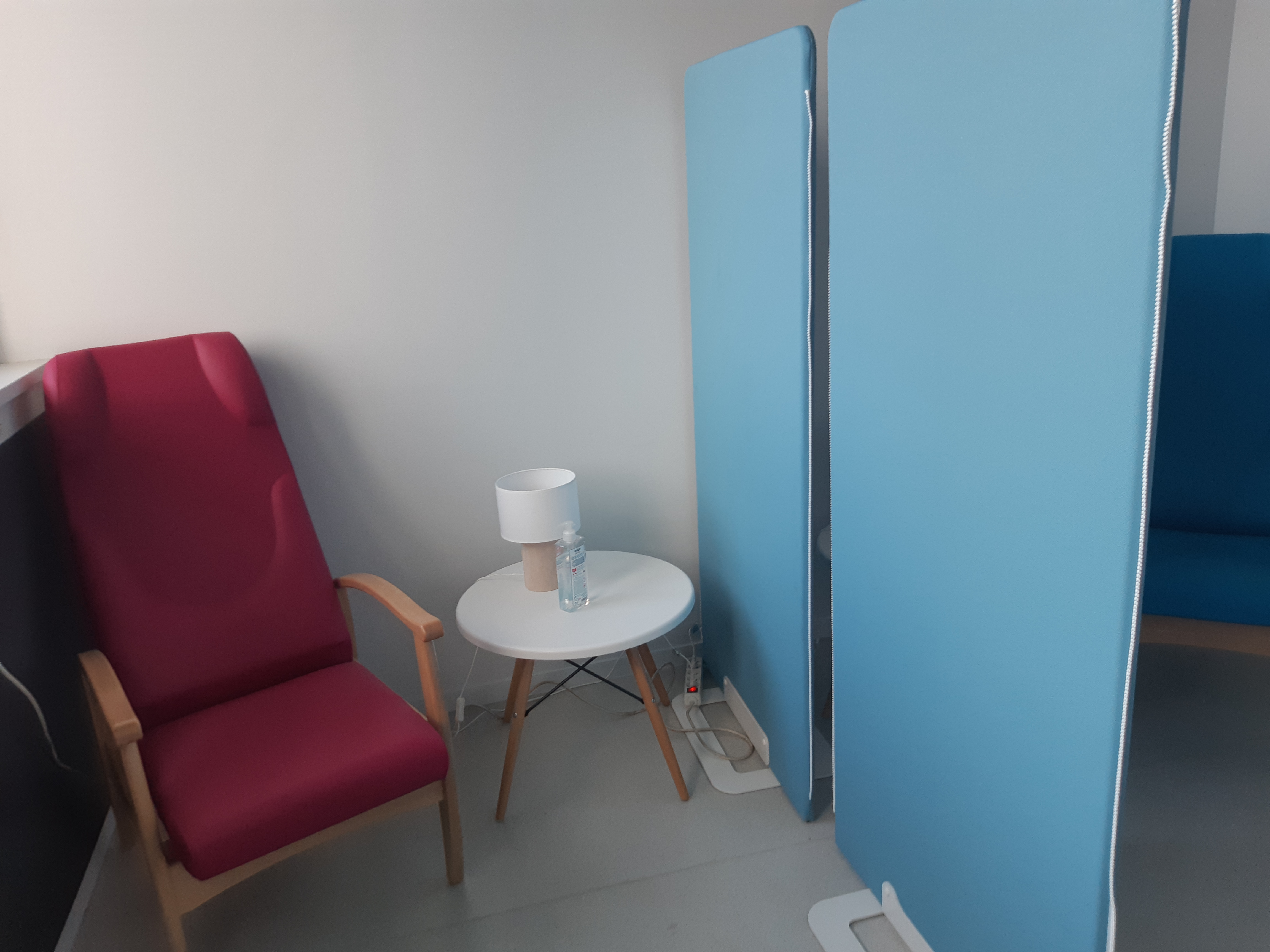
CNRS Informatics launched a career break return scheme in 2019 which also deals with the same parenthood issues to an extent. Anne Siegel, the DAS and head of the institute's equality and parity unit, looks back at how this mechanism came into being: "We contacted women researchers who'd had children to find out what they would have needed before they left on maternity leave. We were very surprised to find out that money when they came back wasn't the most common answer – they put more emphasis on extra support six months before they left, particularly to help with the mental burden of managing non-permanent staff like PhD students that they carried on supervising during their leave". The institute therefore set up a tailor-made support scheme which provides funding for PhD students to spend time abroad while their supervisors are on maternity leave. The scheme also supports PhD students co-supervised by another laboratory so they can spend time in the thesis supervisor's laboratory while the researcher on maternity leave is breastfeeding. It also funds childcare during long missions. The computer science community has a robust network of equality officers in its laboratories and possesses the most breastfeeding rooms in relation to its size – ten rooms for forty research units. Some of these rooms were furnished with funding from the institute's support scheme for gender equality initiatives in its laboratories. This may perhaps seem anecdotal but it is a controversial subject within laboratories because it is "on the borderline between private and public life" as Anne Siegel explains.
The CNRS's proactive approach to reconciling research and parenthood
However, the institutes are not alone in driving change and several of the CNRS's other component elements are incorporating more and more measures of this kind. The CNRS is implementing its own initiatives to complement French civil service measures like birth leave, parental leave, exceptional leave of absence for sick children and so forth. The National Committee for Scientific Research (CoNRS), which is responsible for the recruitment and promotion of researchers, is now recommending that all its sections harmonise the length of time taken into account for the impact of maternity (or adoption) leave on scientific production and activities at 18 months per child – the duration adopted by the European Research Council. Alexandra Houssaye, a research professor at the Adaptive Mechanisms and Evolution Laboratory
As well as helping the careers of women researchers develop, the CNRS also takes proactive social action to help reconcile the personal and professional lives of the parents it employs on a daily basis. Elisabeth Kohler, director of the CNRS's Mission for Women's Integration, underlines how "this is a major issue for the attractiveness of the CNRS because the expectations of candidates have evolved over time and certain employers have advantageous policies on this subject". Hayfa Trabelsi, the head of employer social responsibility with the CNRS Human Resources Department (DRH), agrees with this, viewing social action as "a criterion for attracting and retaining staff" and highlighting the CNRS's "proactive policy" on the subject. The specific measures set up by the CNRS include crèche places and benefits managed by its Social Action and Mutual Aid Committee including holiday vouchers, Universal Service Employment Vouchers and subsidised leisure centre tickets and language study trips for children. There are also specific allowances for parents of disabled children, extensions to fixed-term contracts for a period equivalent to maternity leave and full annual allowance bonuses maintained for women who take maternity leave.
Rethinking the place of parenthood in research
Beyond the emblematic maternity leave, all such initiatives invite us to rethink parenthood's place in the research context. 'Reconciling employment and family life' is becoming an increasingly crucial factor in how staff members view their quality of life at work. Ingrid Bonet, the head of the CNRS Human Resources department, regional equality officer and equality correspondent for the CNRS West Occitania regional office, confirms this is the case: "Supporting parenthood means taking a person's overall situation into account and helping that person reconcile their professional, family and personal lives whatever their gender or situation so being a parent isn't an obstacle to working well together". The DRH has rolled out a set of awareness-raising initiatives targeting mothers and fathers alike and including webinars, communication material and annual parents' days.
Awareness-raising initiatives also need to be combined with an overall re-evaluation of scientific careers in the light of parenthood and, more generally, of staff members' private lives. Alexandra Houssaye's work at the CoNRS has shown her how women and men can have different levels of investment in collective workplace responsibilities and thus calls for "a qualitative reform of research evaluation with enhanced recognition of tasks some consider thankless – which are often left to women – and the impact these have on the work group, such as ensuring scientific cohesion and well-being within our units, hosting and supporting students and so on". She considers this type of reform would primarily benefit women researchers who carry the heaviest burden in terms of parenthood as it would take a more positive view "of voluntary activities and take more account of women's daily time involvement in our laboratories and their benefits for the units". Anne Siegel agrees and is in favour of "changing career models and enhancing the value of other profiles, particularly among women, to encourage men's involvement in parenthood too".

Re-evaluating fatherhood within parenthood
The actions presented above mainly concern women but clearly men have an essential role to play in rebalancing careers with parenthood. Developments in this area have yet to fully counter the main burden of parenthood still being carried by mothers. For example, women do 80% of the CNRS's part-time jobs, often so they can look after their children. And yet, as Hayfa Trabelsi explains: "men have the same parenthood rights as women, apart from those linked to pregnancy". This means representations and prejudices still need to be combated because, as Elisabeth Kohler observes, "many fathers would like to be more involved but are wary of changing their working hours or taking days off for ill children because they are not encouraged to do so and aren't sure what their colleagues and management would think".
Nonetheless, a few fathers have already opted to benefit from such measure and Daniel Müller is one. He is a researcher with the Rennes institute of Chemical Sciences
However, encouraging fathers to take time for their children should not lead to their personal investment being valued more than that of mothers. Jean-Philippe Magué recounted his wife's criticism of his wife who was "annoyed I was singled out in this article, when she herself had reduced her working hours for our children to a much greater extent with no support from her employer and all the inevitable ensuing difficulties". His own case illustrates a more general trend that Alexandra Houssaye has flagged to the National Committee. Unlike their female counterparts, taking part-time has, at worst, no impact on male researchers' careers and can even have a positive impact because it reinforces "the positive image of the father who has to provide for his family".
Growing media coverage of parenthood issues has prompted the CNRS to include them in its 2024-2026 gender equality action plan. One of the main objectives of this plan is to make Liva Dzene's enthusiastic words more likely to be repeated by other women researchers – "You can go on maternity leave without worrying too much about when you coming back to work!"