French research overseas
Special report: how CNRS scientists produce knowledge essential to protecting and preserving overseas territories (in French).
https://lejournal.cnrs.fr/dossiers/la-recherche-francaise-en-outremer
By virtue of their geostrategic position scattered across four oceans, French overseas territories are home to diverse cultures, ecosystems, and rare species on a global scale. On the front lines of global change, they are already affected by rising water levels, pressure on resources, health risks, and biodiversity erosion, and more intensely than elsewhere.
In these outposts of living beings, CNRS scientists are working in close collaboration with overseas universities and local actors to observe, gather data, analyse, and offer solutions. Whether established in territories for the long term or on assignment, they produce essential knowledge for protecting natural environments, bolstering public health, preserving cultures, conceiving suitable energy models, and providing support for climate change adaptation. These are so many keys for helping and supporting overseas territories trace out their future, with full knowledge of the facts.
Overseas France includes thirteen largely insular territories: DROM-COM (Overseas Departments and Regions and Overseas Local Governments) that represent approximately 20% of the total surface area of France, and nearly 4% of its population. These overseas territories represent the world’s second largest exclusive economic zone (ZEE), in which France exercises its specific rights with respect to the exploitation and use of marine natural resources. Due to their diverse resources, incomparable flora and fauna, and distinctive cultural, geographic, and climate features, these territories represent a unique terrain for developing research and innovation initiatives in the fields of health, social science, the energy transition, biodiversity preservation, and climate change adaptation, doing so with and for the benefit of these territories.
*La Réunion, Mayotte, Guadeloupe, Martinique, French Guiana, Saint Pierre and Miquelon, French Polynesia, New Caledonia, Saint Barthelemy, Saint Martin, Wallis and Futuna, Clipperton, TAFF (French Southern and Antarctic Lands): Crozet Islands, Kerguelen Islands, Saint Paul and Amsterdam Islands, Scattered Islands, and Adélie Land.
Since 2023, the CNRS has pursued a proactive strategy by adopting the CNRS Overseas Roadmap whose primary goal is to increase its presence and involvement in overseas territories. In the five territories where it is present French West Indies, French Guiana, La Réunion, French Polynesia, New Caledonia), the CNRS supports research that is firmly engaged with the concerns of these territories, which it conducts in collaboration with our academic and territorial actors on the local, regional, and international scale.
For instance, by relying on observation and research infrastructure — such as the French Research Infrastructure for Coastal Ocean and Nearshore Observations (ILICO) and its National Observation Services (SNO), the Observatory of Sciences of the Universe (OSU-R) in La Réunion, Human-Environment Observatories (OHM), Zones Ateliers (ZA), and SEE-Life label programmes — CNRS teams are involved in interdisciplinary projects that chiefly focus on:
The transfer of knowledge, expertise, and scientific education are CNRS priorities. To this end, by sharing results and methods with overseas partners and local governments, it works to provide concrete solutions for the problems of overseas territories, with a view to building a sustainable future there in the context of planetary issues from the Anthropocene (the significant influence of human beings on ecosystems).
Learn more about CNRS activities and the projects conducted by laboratories:
Martinique and Guadeloupe, located in the heart of the Lesser Antilles Arc, are island territories especially exposed to natural hazards and the effects of climate change. Their tropical environment, marked by great marine and coastal biodiversity — in addition to a singular social and cultural history — makes them a preferred location for scientific research.
The CNRS conducts pluridisciplinary research there in collaboration with the University of the French Antilles. Its scientists are notably hosted by the PHEEAC laboratory (Powers, history, slavery, environment, Atlantic, Caribbean) and the BOREA laboratory (Biology and Aquatic Organisms and Ecosystems).
Its presence is based on various National Observation Services (SNOs) deployed in the territory to monitor long-term environmental dynamics and natural risks. These infrastructures are based on instrumented sites in Martinique and Guadeloupe, which provide continuous observation of volcanic, seismic, and hydrological phenomena in these particularly sensitive territories.
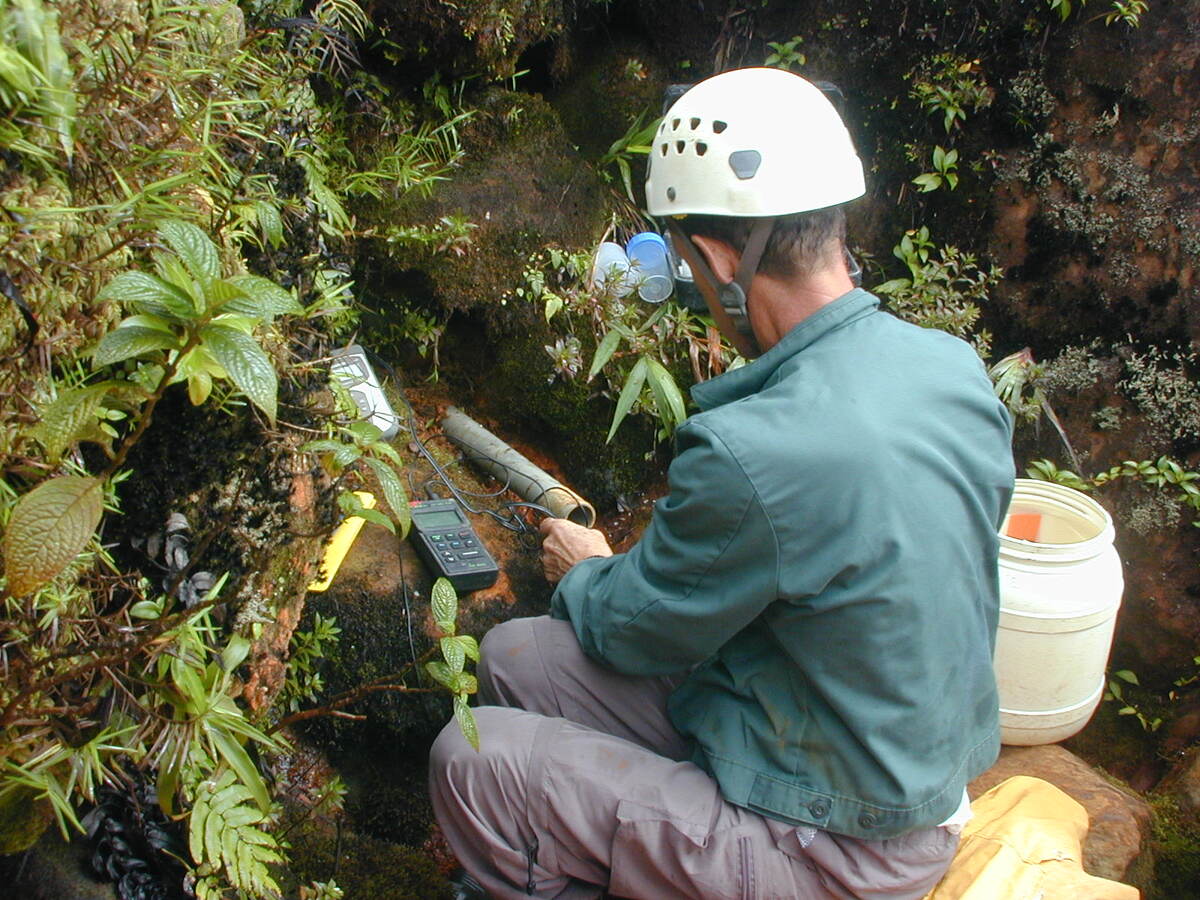
Photo: taking water samples from the sources of the Carbet River, on the eastern slopes of Soufrière Volcano in Guadeloupe.
CNRS research in the French West Indies analyses interactions between coastal ecosystems, human uses, and methods of governance. It is based on close collaboration with local institutions and actors, with a view to producing knowledge that is useful for managing marine and coastal environments.
Multiple projects illustrate this research:
CNRS research helps analyse slavery, post-slavery, and its legacies by studying the memories and social uses of the past. It illuminates the historical and cultural dynamics that structure contemporary French West Indian societies. This research mobilises major scientific resources and innovative mediation measures to analyse the mechanisms of slavery, its abolition, and its legacy. By combining history, social science, and creation, the CNRS promotes dialogue between research and society, and illuminates contemporary debates on memory and reparations in French West Indian societies.
Political ecology, mobility, and social justice in Caribbean societies
The research conducted by the CNRS in the French West Indies is in keeping with a critical approach that combines political ecology, mobility, and social justice. It explores the relations between environmental crises, social inequality, colonial legacies, and migratory dynamics in the Caribbean.
It notably analyses how some environmental crises — such as the one involving chlordecone — reveal structural inequality in risk exposure, knowledge recognition, mobility capacities, and access to environmental resources. This research also focuses on Caribbean diasporas as well as the regional and transnational mobility that helps transform territories, identities, and relations to the environment, thereby contributing to an interpretation in keeping with contemporary environmental and social justice issues in the Caribbean.
The Paris Institute of Earth Physics (IPGP) and the CNRS-INSU are responsible for the functioning of volcanological and seismological observatories, and play a major role in the operational monitoring of the volcanic, seismic, and hydrological activity of active volcanos within the national territory. Knowledge regarding the state of volcanos, their tectonic context, their evolution, and eruptive manifestations are expanded and improved via the Volcanological and Seismological Observatory of Guadeloupe (OVSG), and the Volcanological and Seismological Observatory of Martinique (OVSM).
The observations provide data that is essential to better understanding their dynamics, and contribute to anticipating natural risks as well as public action.
CNRS research in French Guiana revolves around three topics: Amazonian biodiversity, socio-ecosystems of the Amazon rainforest, and the coastline under the influence of the Amazon River. The CNRS has been present continually since 2002 via two research units: the CNRS, University of French Guiana, and Ifremer Research Support Unit (UAR LEEISA), and the CNRS, AgroParisTech, INRAE, CIRAD, University of French West Indies, and University of French Guiana Joint Research Unit (UMR ECOFOG).
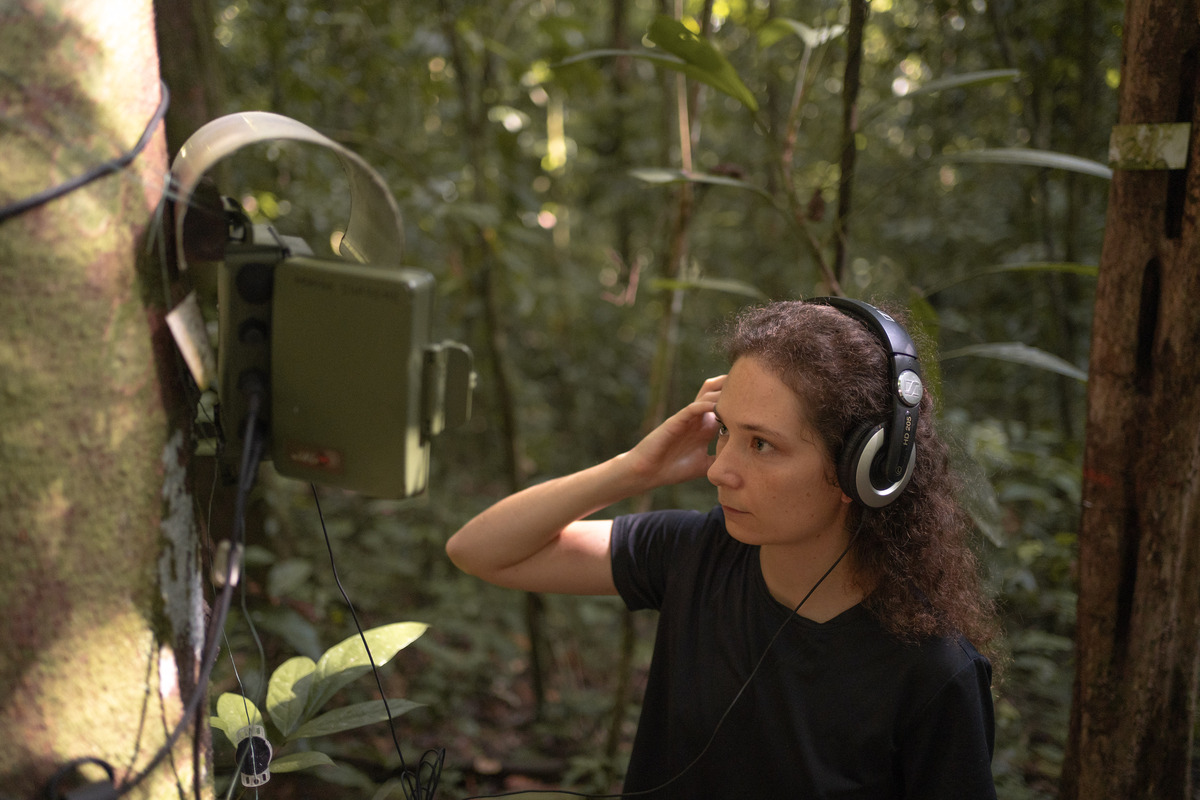
Photo : listening to sounds captured by an acoustic recording device near the Nouragues field station in French Guiana.
Exploring biodiversity and monitoring various ecosystems: that is the goal of the Nouragues research field station in the heart of the Amazon rainforest. The station, which is managed by the CNRS, has been providing its services for 40 years. It can accommodate 18 scientists, and is open to artistic and educational residencies as well. The CNRS also contributes to better understanding the primary forest across the entire territory of French Guiana.
New avenues for preserving the Amazon forest have emerged thanks to molecular biology and environmental genomics. These disciplines help us understand how biodiversity appears, from the gene to the ecosystem. In collaboration with the IRD and the University of French Guiana, the CNRS leads the genomics platform named Guyomique, located in Cayenne on the campus of the Institut Pasteur in French Guiana. The CNRS is also the primary driver behind the Amazonia Bio-Track International Research Network, which has included five countries in the Amazon since its creation in 2025.
Mangroves, the forests of the seas, provide protection for coastlines. They are also a key space within the marine ecosystem of French Guiana, as well as for the productivity of fisheries. That is why the CNRS is leading – in collaboration with the IRD – the Living-Lab Magellan, which focuses on nature-based solutions for mangroves. This effort is part of the SOLUBIOD Priority Research Programmes and Equipment (PEPR). With the expertise of its researchers in environmental DNA, the CNRS and Ifremer are contributing scientific tools for improved management of fisheries off the coast of French Guiana.
The coastline of French Guiana is one of the world’s most unstable, subject to substantial movements of sand and silt. This is due to marine currents and the sedimentary influence of the Amazon River. Understanding this dynamic can help anticipate the risks of coastal erosion and submersion, in addition to the short-term silting of navigable routes. This research is based on the services provided by the research station in Western French Guiana, as well as the Ayawande coastal ship. They are both part of the DYNALIT National Observation System and the ILICO French National Research Infrastructure for Coastal Ocean and Nearshore Observations
Video: Oyapock OHM ; https://lejournal.cnrs.fr/videos/guyane-un-littoral-si-mouvant
Accounting for social and cultural practices in health measures, understanding informal housing structures in a migratory context… CNRS research focuses on the social, environmental, and historical anthropology of Amazon settings in order to better support the transformation of complex socio-ecosystems in which natural and societal dynamics interact with one another. A Human-Environment Observatory has been active since 2008 in the border area of the Oyapock River between France and Brazil. It studies cross-border dynamics and changes to the living space. The emerging field of political ethnoecological research addresses issues connected to the equitable use of biodiversity data during a time of digital globalization and open science. Since 2025, a French Guiana Zone Atelier has brought together research on the mosaic of socio-ecosystems coexisting in the territory.
The particularities of the Amazonian environment — humidity, climate, remoteness of networks — puts materials and technological devices to a severe test. It is a challenge for economic sectors such as construction, which is subject to demanding performance standards. Teams from the CNRS and their partners (CIRAD, IRD, University of French Guiana) have long been invested in finding solutions inspired by the natural sustainability of ecosystems in French Guiana. Wood engineering is a promising avenue, given the more than 1,800 species present in the French Guianese ecosystem. The research, based on bioresource chemistry, focuses on sectoral sustainability and diversified production pathways. The goal of expanding tropical green building is pursued by developing biosourced materials as part of a circular economy approach.
In La Réunion, the CNRS conducts research at the heart of a tropical island territory, one that is especially exposed to major environmental and health challenges. Its research has four major focuses: the effects of climate change; study of the atmosphere and cyclones; emerging diseases; and the health of marine and terrestrial ecosystems.
Present on the island since the 1990s, the CNRS relies on multiple laboratories in partnership with l’Université de La Réunion, Météo-France, Inserm, and the IRD. Together these teams study the climate, monitor cyclones, analyse health risks, and develop solutions to better understand and protect tropical environments.
The oceanographic campaigns conducted by the CNRS – departing from La Réunion and in close collaboration with French Southern and Antarctic Lands (TAAF) – play a key role in understanding climate-related issues, natural risks, and marine ecosystems. These missions, which notably rely on the logistical infrastructure of the Dumont d’Urville station in Adélie Land, explore unique zones that are often difficult to access, and gather essential data on biodiversity, ocean currents, and the impact of climate change on polar and subtropical environments.
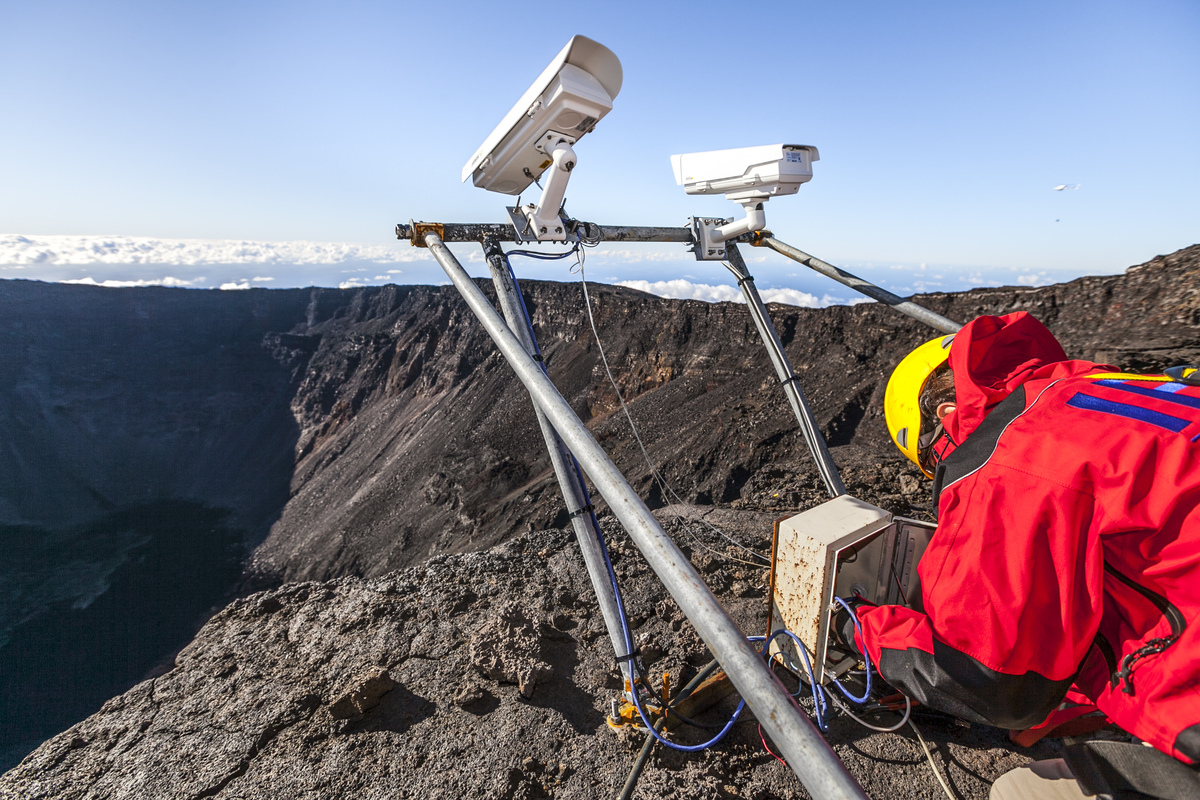
Photo: replacing the cameras installed on the Piton de la Fournaise.
The only Observatory of the Sciences of the Universe (OSU) located overseas, OSU-Réunion is affiliated with l’Université de La Réunion. Its mission is to observe the island’s environment over the long term, from the land to the ocean, by combining physical, chemical, and biological data. It also plays a key role in bringing disciplines together, training students, and sharing knowledge for and with society.
The OSU-Réunion notably contributes to the Coastal Observatory, which monitors and studies the evolution of coasts, and also informs public decision making. It also takes part in the Regional Expert Group on Climate (GREC-Réunion) to prepare solutions for adapting to global change, and is home to the Bridges Priority Research Programme and Equipment devoted to the sustainable management of marine resources in the South-West Indian Ocean.
Three observatories are part of OSU-Réunion: OPAR for atmospheric physics; OZC-R for the soil-plant interface in the torrential context of la Réunion, and OCTOPUS for the functioning of coral buildings in their socio-ecosystem dimension.
These three observatories are affiliated with national and European structures. Their data is accessible as part of local (Geosur) and national (DATA TERRA) catalogues.
The LACy laboratory, located in La Réunion, studies tropical cyclones and the functioning of the atmosphere in tropical areas. Its researchers analyse the formation and evolution of cyclones, the physicochemical composition of the atmosphere, and meteorological phenomena specific to these areas.
Their research is not limited to climate science, as they also focus on the concrete consequences of cyclones on populations and territories. The goal is clear: to improve digital forecasting models to better anticipate such events and help reduce risks.
Present in La Réunion and throughout the South-West Indian Ocean, LACy helps better understand and manage the impact of climatic variations in a region especially exposed to them.
The Pimit laboratory studies infectious diseases in tropical areas by combining multiple disciplines: biology, ecology, epidemiology, and the human and social sciences. Its goal is to understand how diseases spread from animals to humans, and how they spread within populations.
The scientists analyse infectious agents in their natural environment, the conditions that promote their emergence, and interactions between microbes and the organisms they infect. Their research includes clinical work, with the development of diagnostic tests and treatments suitable for local realities. This approach helps to better anticipate health risks, and offers concrete answers in the face of emerging diseases.
SantEco (entropy)
Created in early 2023, the SantEco team brings together scientists in La Réunion and New Caledonia to study the health of tropical ecosystems. The goal is to understand how these fragile environments react to human pressures and climate change, and to find solutions for better preserving them. Their research revolves around three focus areas: the capacity of tropical island ecosystems to resist or to degrade; the study of natural substances to develop sustainable biotechnologies; and modelling the dynamics of these ecosystems to anticipate their evolution and inform decisions.
In keeping with a One Health approach connecting human health and environmental health, this research helps to better understand the impact that climate change, environmental degradation, and human use have on ecosystems. It aims to provide concrete tools to inform public policy, whether it involves conservation, sustainable resource management, or public health in overseas territories.
The Paris Institute of Earth Physics (IPGP) and CNRS-INSU are responsible for the functioning of volcanological and seismological observatories, and play a major role in the operational monitoring of the volcanic, seismic, and hydrological activity of active volcanos within the national territory. Knowledge regarding the state of volcanos, their tectonic context, their evolution, and eruptive manifestations are expanded and improved via the Volcanological Observatory of Piton de la Fournaise (OVPF), and the Volcanological and Seismological Monitoring Network of Mayotte (REVOSIMA).
The observations provide data that is essential for a better grasp of their dynamics, and contribute to anticipating natural risks as well as public action.
New Caledonia is an archipelago in the South Pacific whose primary island, Grande Terre, stretches nearly 500 kms. It is surrounded by the world’s second largest coral reef that is home to an immense lagoon included on UNESCO’s World Heritage List. Its unique geology — very rich in metals of interest such as nickel, iron, manganese, and chrome — is also home to exceptional species endemism.
The CNRS conducts numerous multidisciplinary research efforts there connected to environmental science, namely via three research structures associated with the CNRS.
The CRESICA (https://www.youtube.com/watch?v=ERaECtp_Vg0) consortium provides access to the territory’s scientific platforms for the nine research institution members.
New Caledonia is part of various scientific instrumentation networks: it takes part in astrophysical research via the TAROT (https://youtu.be/KGK20X6jrSA?si=EPUzXH6_Bmvce6fZ) Telescope Network operated by the CNRS and the CNES. It is part of the ReefTEMPS (https://www.reeftemps.science/en/home/) national coastal waters observation network associated with ILICO’s national observation system (SNO).
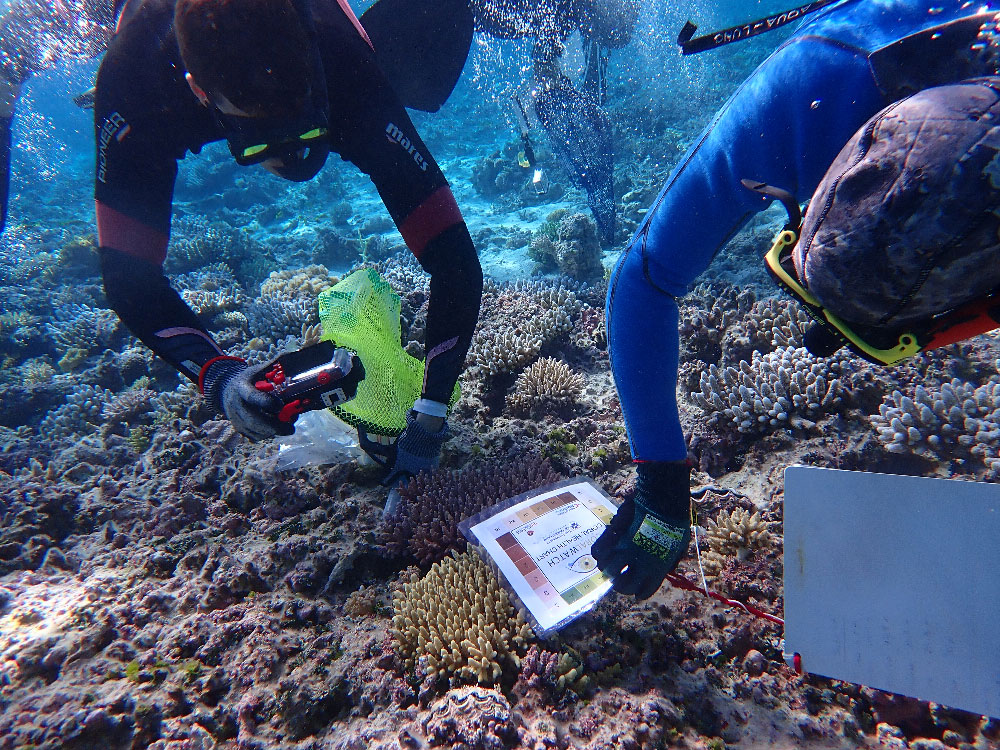
Photo : ReCoVer mission, southern Bellona Reef
The 28 Kanak languages still spoken in New Caledonia raise challenges, namely to protect this linguistic wealth, and to grasp subtleties related to phonetics and orthographic transcription. Digital applications are currently being developed to help learn these languages.
The ultramafic soils of New Caledonia represent 30% of Grande Terre, and are home to specialized flora. Over 80% of plants are endemic; this exceptional botanical wealth and chemical-biodiversity has implications in ecological soil remediation engineering, in addition to the discovery of molecules of pharmacological interest.
Studying marine biodiversity — its dynamics and networks of trophic interaction — is now based on analysis of the DNA present in seawater. This method, known as “environmental DNA,” can map species and follow the evolution of coral ecosystems. This research helps to better understand the effects of climate change on these ecosystems as well as their dynamics. Conducted with numerous partners in Oceania and supported by participatory science programmes, they seek to better protect and manage regional coral reefs.
The marine ecosystems of New Caledonia are home to numerous micro-organisms whose properties remain little known. Researchers are notably studying a collection of 600 bacterial strains in order to identify those that can produce biodegradable plastics or help degrade plastic waste. Some could also possess the antibacterial or antifungal properties studied by CNRS teams.
Using the state of health of marine ecosystems and coral reefs, scientists are developing models to anticipate their evolution with regard to climate change, the transformation of habitats, and invasive species. This research involves digital tools — such as interactive maps, data portals, and AI-based simulators — that transform scientific results into information, and forecasts that can be used by local decision makers and actors.
The history of the CNRS in Polynesia is connected to CRIOBE, a CNRS research and support unit located in Moorea since 1971, and affiliated with l’Université de Perpignan. This laboratory created to study Polynesian reef-lagoon systems has expanded its field of expertise over the last 15 years to the ecosystem’s evolution, adaptation, and resilience to climate change, as well as the impact of human activity. The CRIOBE environmental observatory is also home to SNO-Corail, which offers the scientific community monitoring of biological and physicochemical data for islands in the South Pacific, some dating back over 50 years.
The CNRS supports more integrated research of socio-ecosystems. For instance in 2017, the CNRS and the University of French Polynesia (UPF) created the House of Human Sciences, and in 2026 the CNRS and UPF — with their partners Ifremer, IRD, and ILM — inaugurated the Z’API Zone Atelier bringing together research actors around the sustainability of tropical island ecosystems.
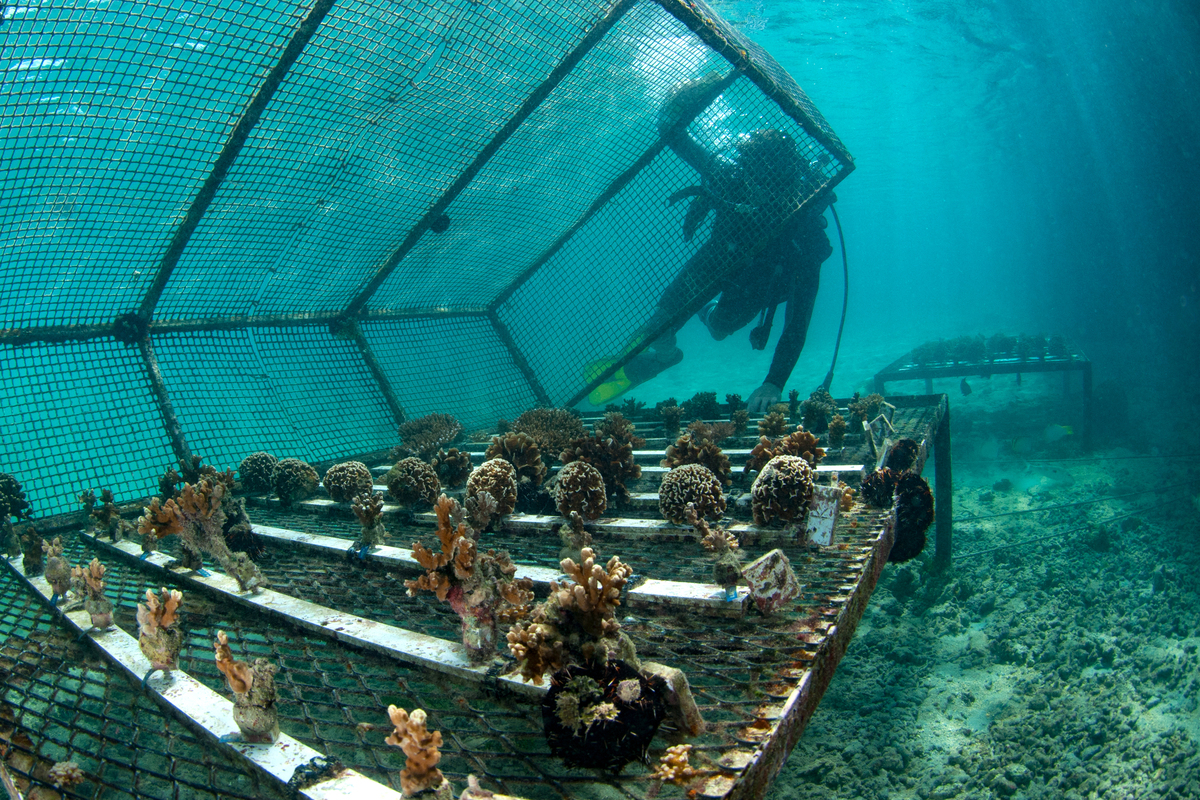
Photo : First coral nursery system used at CRIOBE, Moorea Lagoon.
CNRS research in French Polynesia is deeply rooted in the analysis of coastal and marine socio-ecosystems, in collaboration with environmental protection associations, fishermen, farmers, and schoolchildren. Transdisciplinary research combining the ecology of drainage basins, the lagoon ecosystem, and the human and social sciences — via experimentation with nature-based solutions — aims to support the reappropriation of environments by local populations. It includes the evolution of ancestral practices (Tapu, Rahui), and provides decision-making elements for local stakeholders.
The ecosystem services provided by coral reefs are central to the survival of local populations, but these ecosystems are subject to intense anthropic and climate pressures that will continue to grow. The CNRS is implementing or supporting innovative solutions to protect this fragile environment and limit the consequences of global change, including: the selection of heat-resistant coral; replanting of riparian forests to reduce the transfer of sediment and pollutants toward lagoons; restorative aquaculture; and strengthening herbivory to reduce the colonization of reefs by algae are a few examples of studies conducted by the CNRS on these marine ecosystems.
Other CNRS research in Polynesia involves the pursuit of “nature-based solutions,” such as the depollution of the Hao Atoll using plant-based bioremediation methods, or geodesic analysis of mountains via muography with a view to preventing landslides (César project). In the human and social sciences, the CNRS is helping to study the many languages in the Polynesian Triangle connecting Hawaii, New Zealand, and Easter Island (HéliCeo project: Linguistic Heritage, Oral Cultures, and Education in Oceania).
The majority of energy used in the 118 non-interconnected islands of French Polynesia is based on fossil energies. The CNRS supports local actors in their efforts to innovate in renewable energy production and storage systems that are suitable for island systems (Tranpolyn GDR). For instance, researchers from the UPF and a CNRS team from Perpignan have developed an original system using solar panels to produce hydrogen stored in the system, combined with a fuel cell producing electricity. The system is integrated within a container in order to be transportable, and to address the various needs of Polynesian Islands.
Led by the CNRS and supported by the ILICO IR, the CORAIL National observation Service is one of the oldest and most comprehensive coral databases. Beyond traditional physicochemical monitoring (temperature, pH, salinity, oxygen, etc.), biological data is recorded by CRIOBE diving operators (coverage for living coral, fish diversity, benthic macrofauna), and more recently by photogrammetry image capture and water samples to conduct environmental DNA analyses. All of the gathered data is made available to the scientific community as part of FAIR best practices, supported by the Data-Terra IR.
The CNRS is a major research actor in the South Pacific. By signing a framework-agreement with UPF in 2025, the CNRS aims to show its presence, and to offer French researchers the possibility of collaborating with researchers from the territory by providing expertise that is not available on site. The scientific excellence of the CNRS also attracts collaboration with countries in the South Pacific such as Australia, New Zealand, and the United States.
Associated with the CNRS and CNES since 1997, the Geodesy Observatory of Tahiti aims to evolve towards a more modern structure that is associated with NASA: the Geodesy and Geophysical Observatory of Polynesia (OG2P). The studies underway demonstrate that developing such a structure makes Polynesia a major centre for Earth observation and climate monitoring.
Photo credit: top of the page © Thibaut VERGOZ / IGE / CNRS Images - French West Indies : © Dominique GIBERT/CNRS Images - French Guiana : © Thibault COCAIGN / LEESIA / CNRS Images - La Réunion : © Thibaut VERGOZ/UMS-IPGP / CNRS Images - New Caledonia : © M. Boussion/IRD - Polynesia : © Yannick CHANCERELLE / CRIOBE / CNRS Images