Discovery of an essential sleep rhythm that appeared 300 million years ago.
Life
An infraslow brain and body rhythm, specific to the deep sleep of mammals, has recently been identified in seven reptile and one bird species, thus demonstrating its ancestral and fundamental character. This discovery suggests an identical mechanism which is still shared between lineages that diverged more than 300 million years ago. Although in mammals this rhythm seems to be associated with the elimination of metabolic waste from the brain, it may also reflect an adaptation to environmental constraints and sleep-related risks. The discovery also questions the debatable hypothesis of the presence of “rapid eye movement sleep” in reptiles, a phase associated with dreaming in humans.
Achieved by a team of CNRS scientists1, this discovery was published on 29 December 2025 in Nature Neuroscience.
The team carried out an unprecedented comparison that was based for the first time on a series of species and covered several key levels of evolution: seven reptiles, a bird and two mammals. The scientists simultaneously recorded brain, cardiac, vascular, respiratory, muscle and ocular activity during sleep, using complementary methods that included functional ultrasound imaging. This multimodal approach revealed that a slow and regular rhythm alternated throughout sleep in both the brain and body of the reptiles.
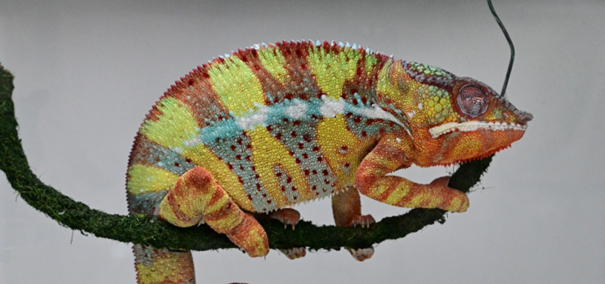
© PA Libourel
- 1Working at the Centre d'Écologie Fonctionnelle et Évolutive (CNRS/EPHE-PSL/IRD/Université de Montpellier). Scientists from the Laboratoire Physique pour la Médecine (CNRS/ESPCI Paris – PSL/Inserm), Laboratoire Plasticité du Cerveau (CNRS/ESPCI Paris-PSL), Centre de Recherche en Neurosciences de Lyon (CNRS/Inserm/Université Claude Bernard), Laboratoire Biodiversité, Eau & Ville (CNRS/Ecole Nationale des Travaux Publics d'Etat/INRAE/INSA Lyon/Université Claude Bernard Lyon 1/VetAgro Sup), Laboratoire Mécanismes Adaptatifs et Évolution (CNRS/MNHN) and Institut des Nanotechnologies de Lyon (CNRS/CPE Lyon/Ecole centrale de Lyon/INSA Lyon/Université Claude Bernard Lyon 1) also participated in this study.
Bibliography
Sleep-dependent infraslow rhythms are evolutionarily conserved across reptiles and mammals. Bergel A., Schmidt J.M., Barrillot B., Arthaud S, Averty L.6; Blumberg M.S., Carachet C., Clair A., Filchenko I., Froidevaux C., Herrel A., Massot B., Rattenborg N.C., Schmidt M.H., Tanter M., Ungurean G., Libourel P., Nature Neuroscience, 29 décembre 2025.
DOI : https://doi.org/10.1038/s41593-025-02159-y