
The CNRS - a great explorer of the universe
Corporate
With space currently establishing itself as a critical infrastructure, France's new space strategy for 2025-2040 restates a fundamental choice, namely to make research a pillar of space sovereignty in its own right. The CNRS is proposing the recognition of a key field of expertise - understanding the Earth and the universe, anticipating technological breakthroughs and preserving the shared heritage that is space.
France's new space strategy for the 2025-2040 period states that "at the crossroads of scientific, economic, military and climatic issues, space will become an infrastructure that is both invisible and omnipresent." This strategy was presented at the inauguration of the space command facilities in Toulouse by President Emmanuel Macron on November 12th and devotes an entire pillar to scientific research and space exploration which are given pride of place. "This sends a strong signal that science absolutely needs to keep its place in space at a time when space is becoming increasingly commercial," explains Alain Schuhl, the CNRS's Deputy CEO for Science. Clearly the organisation has a key role to play in this strategy because of its fundamental expertise in "exploring the frontiers of the universe to understand", "defending and developing our shared heritage" and "anticipating technological breakthroughs".
One of the strategic objectives set out in the pillar dedicated to scientific research is that of pursuing an ambitious policy in the sciences of the Universe by consolidating international partnerships, supporting instrumental sectors of excellence and involving national research in preparations for the major missions of the future. "The research themes set out in detail in this strategy align perfectly with the themes we defined as priorities in the foresight work carried out by the CNES's scientific programmes committee," observes Nabila Aghanim, a CNRS research professor at the Institut d'Astrophysique Spatiale and chair of the CNES's space science research and exploration committee (CERES).
"This notably means understanding more about the origin of the Universe and the fundamental laws that govern it, along with the formation, evolution and habitability of exoplanetary and solar systems. Another priority is studying the processes that govern life and matter in space and particularly working to identify the origins of the disturbances in matter that give rise to galaxies. And within these galaxies, how the life cycle of hot matter heated by supermassive black holes interacts with the life cycle of cold matter which condenses and forms planets and stars," explains the researcher. At the CNRS, "life in the Universe is also one of the six new transversal challenges the organisation defined last April in its Objectives, Resources and Performance Contract," emphasises Marc Ollivier, director of the Institut d'Astrophysique Spatiale1 in Orsay and space project leader with the CNRS.
The objective is thus to structure research communities around this strategic issue because many mysteries remain to be solved regarding our Universe, like the origin of our solar system, for example. This is a key element in finding out how our solar system and other planetary systems were formed. "In situ exploration of planets also has to continue, going beyond Mars," he adds. "We're planning to carry out analyses on the moons of Jupiter and Saturn by 2040-2050."
Six major challenges for CNRS by 2030
Partager
Audiodescription
The CNRS - the architect of instruments
To carry out explorations of this kind, researchers need to be able to rely on state-of-the-art instruments that can function effectively in the most extreme situations. "Technological innovation underpins space exploration," stresses Nabila Aghanim. "For example, some detectors have to be cooled to temperatures close to absolute zero to be operational." These technological tools are mainly designed in research laboratories following a 'techno push' philosophy which means scientists can benefit from cutting edge instruments in terms of performance, explains Marc Ollivier. "Suitable instruments need to be developed that can be fitted on board rovers or probes to collect samples to bring back to Earth for analysis in our laboratories."
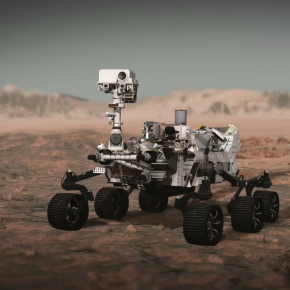
French savoir faire in instrument design feeds into and benefits the socio-economic fabric of France's space industry and has even been exported as far as the Red Planet. Several tools developed by French research teams are being used on the Curiosity and Perseverance Mars rovers used on NASA's exploration missions. The Perseverance rover that landed on the Red Planet in February 2021 is equipped with an instrument called SuperCam which can analyse the chemical composition of Martian rocks. This cutting-edge tool resulted from close collaboration between the Los Alamos National Laboratory in the United States and the Institute for Research in Astrophysics and Planetology (IRAP) in Toulouse, with the contribution of the University of Valladolid in Spain.
Space as a place of observation
Space is also unique in terms of observation which enables researchers to learn more about our planet so one of the new national space strategy's key points will be to bolster France's contribution to the study of Earth sciences from space. "The CNRS is actively part of this through the production and exploitation of data obtained from satellite measurements in particular," emphasises Marc Ollivier. "Observations made from space like these provide a real overall view of the evolution of Earth systems over long periods of time. Satellite measurements mean we can , for example, record variations in the mass of large glaciers on Earth, measure water levels in lakes and rivers or identify and characterise different ocean currents more effectively," explains Jean-François Crétaux, a researcher at the Laboratory of Space Geophysical and Oceanographic Studies (LEGOS)2 in Toulouse.
One of the most important missions in this area began with the launch of the SWOT (Surface Water and Ocean Topography) satellite December 2022. This mission derives from a partnership between the CNES and NASA and is providing a wealth of new information on surface waters and their dynamics. "This satellite is equipped with new technology based on interferometry which provides a very detailed and comprehensive view of the topography of the oceans and continental surface waters," explains Jean-François Crétaux, who also directed the SWOT mission's hydrological component until the end of 2024. Marc Ollivier considers that "the models developed in our laboratories are not just used to enhance scientific knowledge. They also help guide political decisions in the fight against climate change, particularly by preparing for and anticipating possible sudden changes which is why these observations are vastly important in societal terms."
Reinforced and necessary European collaboration
Alongside these considerations, the new French space strategy also emphasises how important it is to bolster our collaboration with other European countries. The ministers responsible for space affairs from the European Space Agency's (ESA) 23 member countries met in Germany on November 26th and 27th and agreed on a significant increase to the budgets allocated to European space research programmes. However regulations need to be adapted to ensure scientific research continues to play a key role in space. Marc Ollivier explains that "to prevent this environment from becoming saturated, particularly with satellite constellations, a new set of rules need to be defined on how to use orbits and free these up at the end of missions. The CNRS is also involved in discussions on the implementation of the first European texts on the subject in the framework of the 'Space Act', the new regulation that governs space activities in the EU." At a time when space is attracting more interest from the business community than ever before, scientists have to make sure they can maintain their prominent position in this field.