

The European challenge of rare earths - between the demands of sovereignty and environmental imperatives
Rare earths are critical for the energy and digital transitions and currently largely imported from third countries. With the European Union gradually addressing the strategic issue of the supply of these metals, science is contributing to informing public policy, which is attempting to reconcile the demands of sovereignty and crucial environmental imperatives.
“Rare earths are not just a challenge for industry; they’re also a challenge for research and innovation,” explains Alexandra Hild, a member of the office of Ekaterina Zaharieva, the European Commissioner responsible for start-ups and research. This was a core issue at the event organised by the CNRS’s Brussels Office on June 10th 2026 to explore the issues of European sovereignty linked to the supply of these critical metals.
Rare earths are essential components of high-power magnets for electric car motors and LED screens in electronic devices, which of course makes them crucial for Europe’s energy and digital transition. However, currently, these are largely imported from third countries, and primarily China, which controls 60 per cent of global production and 90 per cent of global refining capacity.

This means that the supply of rare earths is a strategic issue for the European Union, with the situation becoming increasingly urgent. Current forecasts predict that demand in Europe could increase sixfold by 2030. “These issues are now at the core of European debates on sovereignty, security, resilience and the environmental, energy and digital transitions,” sums up Alain Schuhl, the CNRS’s Deputy CEO Science.
A boom in legislative and regulatory activity
This sense of urgency is being reflected in a flurry of legislative and regulatory activity. In 2024, the European Union adopted its Critical Raw Materials (CRM) Act, which was followed by the RESourceEU plan presented by the European Commission in December 2025.

These texts mark a turning point. “For the first time, we’ve stated that one of our policy objectives is for production capacity to be able to withstand shocks, rather than focussing on total self-sufficiency,” explains Joan Canton, head of raw materials policy and energy-intensive industries at the European Commission’s Directorate-General for the Internal Market, Industry, Entrepreneurship and SMEs (DG GROW).
Robust foundations for discussions thanks to science
The contribution of research is essential, as the European strategy on critical raw materials begins to take shape. In this context, the CNRS’s Collective Scientific Expert Review (ESCo) on rare earths, published in November 2025 and presented at the Brussels event on June 10th, is serving as a starting point for the development of this strategy. In Alain Schuhl’s view, “science provides independent and rigorous knowledge based on factual data”. This knowledge is “neither an opinion nor a political stance”, and so helps anchor the discussion on solid foundations, while feeding into the development of European policies.
The aforementioned ESCo aimed to establish the state of scientific knowledge on the use of rare earths throughout their life cycle and explores the prospects for resource efficiency, recycling and alternative production methods. It provides legislators with valuable ideas for thought and study, particularly the issue of how to reconcile sovereignty and environmental imperatives. This is a major issue, because the development of industrial projects involving rare earths in Europe (particularly the relocation of mines) is central to the ambitions of the European institutions. Evaluating the risks of environmental degradation and obtaining the consent of local communities will be essential steps forward, following on from the closure of these industrial sites several decades ago.

The example of the Kiruna mine
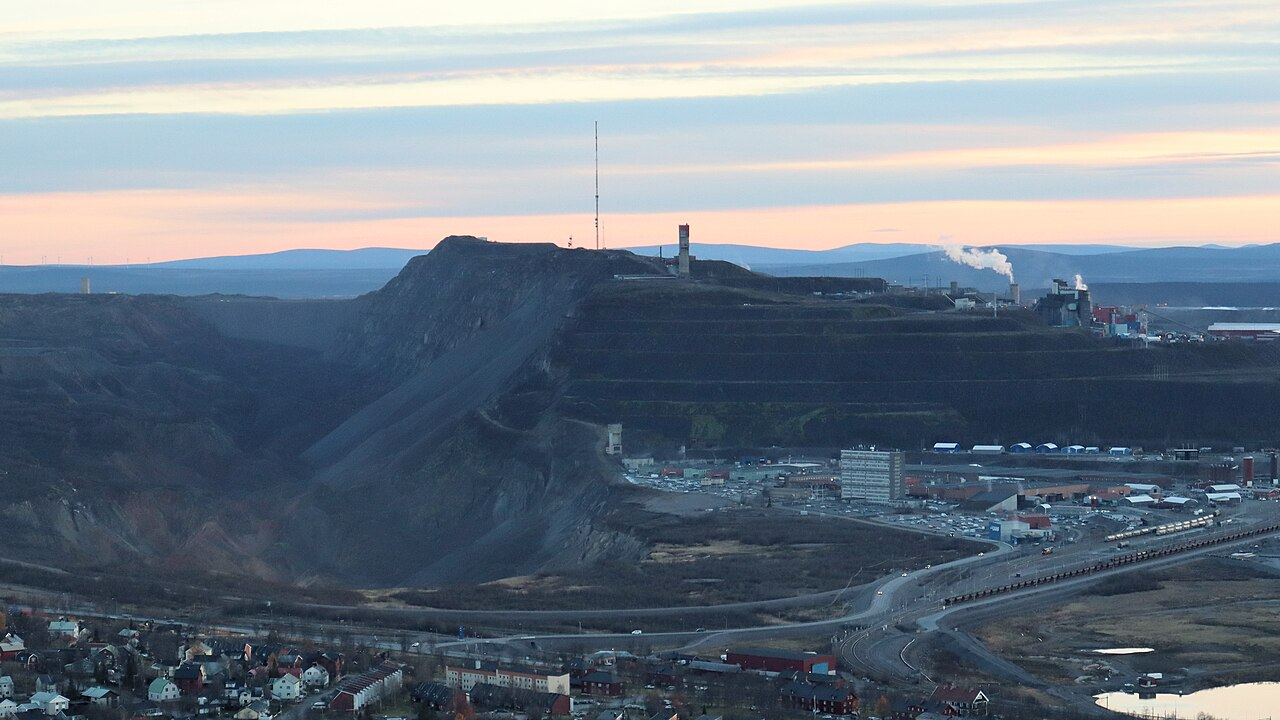
To limit this impact, the optimisation of extraction processes is one of the options that researchers have put forward. “We need to move away from a single-product extraction approach towards a comprehensive resource recovery approach,” explains Émilie Janots, an academic who works at the Institute of Earth Sciences1 at Université Grenoble-Alpes. “In the mining industry as it is structured currently, massive projects have been set up for a single substance. Now a change in mindset is required.”
The geologist cites the example of the Kiruna mine in Swedish Lapland, which has been identified as a promising deposit. “What’s new here is that there’s an opportunity to extract rare earth elements and phosphorus as well as the main ore, iron”, explains Émilie Janots.
- 1
CNRS/IRD/Université Grenoble-Alpes/Université Savoie Mont Blanc
Investing in science
Reducing consumption, recycling via ‘urban mines’1 and the recovery of mining waste, or even the substitution of rare earths with other metals, are other “viable avenues, but we still need to continue investing in science’, argues Cyril Robin-Champigneul, head of the industrial transformation unit at the European Commission’s Directorate-General for Research and Innovation (DG RTD). In this way, new research insights will help “clarify issues, highlight trade-offs and make sure decisions are taken in the best interests of society”, concludes Alain Schuhl.
- 1
The term ‘urban mines’ refers to waste from electronic devices, offshore wind turbines, and so on. These are core elements for industrial strategies.
The European challenge of rare earths: key figures
90 per cent of the world’s rare-earth refining capacity is controlled by China.
Up to 600 kg of neodymium is required for the permanent magnets in certain wind turbines.
European demand for rare earths could increase sixfold by 2030.
10 per cent of Europe’s annual consumption has to be supplied by European deposits by 2030, according to the targets set by the Critical Raw Materials Act, compared with under 1 per cent currently.