


IRC Arizona: calling card for a scientific alliance
Habitability, the environment, the future of human health: the CNRS and the University of Arizona are marshalling their research excellence to solve the challenges of the future. Assessing five years of strategic partnership.
When CNRS Chairman & CEO Antoine Petit proposed forming an International Research Centre—a new structure promoting ambitious strategic dialogue between two partners of excellence—the University of Arizona (UofA) seemed an obvious choice.
The collaboration between the two organisations had been fruitful, with over 500 articles co-authored each year in connection with research projects in astrophysics, particle physics, and ecology. The collaboration was also longstanding, with numerous emblematic partnerships emerging during the 2000s, such as the iGLOBES International Research Laboratory (IRL) on natural resource governance and climate change adaptation.
The breadth of this collaboration ultimately led to the creation of the CNRS’s very first IRC in 2021, named Global Grand Challenges.

Addressing the great challenges of the future
The Global Grand Challenges IRC was originally built around three pillars:
- Habitability on Earth and beyond, by fostering dialogue between environmental science and Earth and space science. Of the projects supported by the IRC, evaluating the biosignatures for one of Saturn’s moons had a major impact in the media.
- The water, food, and sustainable energy nexus driving research on the environmental transition. The teams supported by the IRC notably explore the large-scale roll-out of agrivoltaics in arid parts of the globe.
- The future of human health, with a triple focus on extreme climate events, emerging pollution, and pandemics. The integrated One Health approach, in particular, is applied to the social and environmental risks connected to climate change.
The IRC also develops other research subjects. For instance, materials can serve as a common thread for research on space exploration, ore extraction, and nuclear fusion.
The University of Arizona, a partner of excellence
Founded in 1885 and boasting 45,000 students, the UofA is an important actor within the American academic landscape. Its three fields of excellence include:
- The natural sciences and environmental social sciences, with an ecology program ranking in the top 20 globally, and an applied humanities programme globally recognized for its innovation in research and training.
- The space science and astronomy departments, totalling nearly 1,000 people. The university is also responsible for twenty large telescopes, and leads flagship NASA missions, such as HiRISE and OSIRIS-REx.
- Data science, especially for space research, environmental research, and health, with the university regularly ranking in the global top 10 in the field.
It was one of the first U.S. institutions to make an interdisciplinary approach central to its activities, with its range of Graduate Interdisciplinary Programs, created in the 1960s, serving as a pioneer in this area.
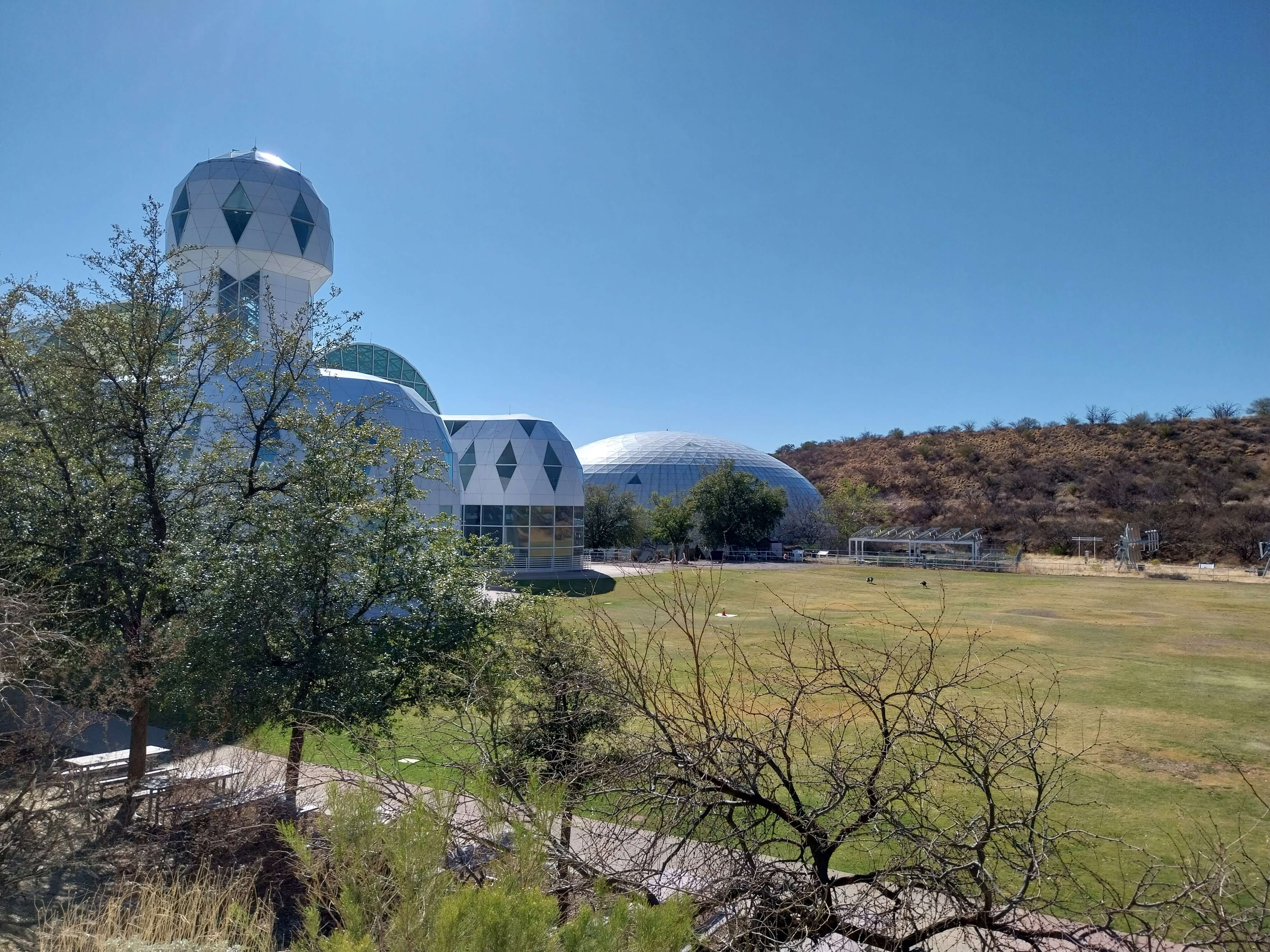
Focus: Biosphere 2, a one of a kind artificial ecological system
Under its glass dome are a selection of artificially reconstructed mini ecosystems, including a tropical forest, coral reef, mangroves, and drainage basin. This allows for studying the interactions between these environments and the impact of various parameters (temperature, precipitation) in a controlled and centralized manner. With its 1.5 hectares of controlled environment, Biosphere 2 is a one of a kind infrastructure by virtue of it scale. Designed in the late 1980s for a Mars colonization experiment, it has been managed by the UofA since 2007.
Today Biosphere 2 is central to the activities of the Global Grand Challenges IRC, which uses it to better understand the consequences of climate change.
At year five, time for assessment
In addition to the co-publications emerging from the cooperation, students trained in a joint PhD programme, and conferences bringing together the scientific communities of the CNRS and UofA, the IRC has served as a springboard for securing more substantial funding. Collaboration between the CNRS and the UofA has developed three projects in astrobiology and ecology, leading to large grants from the NSF and NASA.
Five years after the signing of the IRC, the CNRS reaffirms its position as a preferred partner of UofA. The organisation even received the first Distinguished Partner in Research Award from the American university in 2026. The IRC with the CNRS has become UofA’s model for international collaboration.
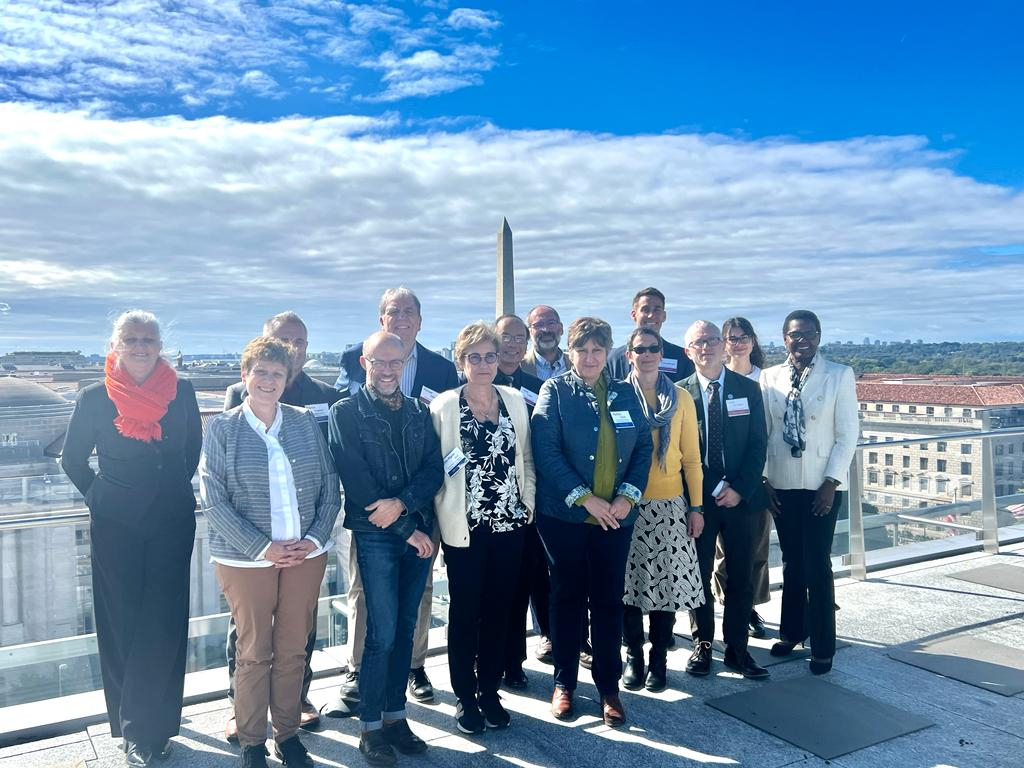
The IRC, a community
The strength of the collaboration between the CNRS and UofA is not exclusively bilateral. The scientific community used the IRC to develop a collaboration with the Université de Sherbrooke around converging interests, with a special focus on sensors and environmental analysis. The creation of a CNRS IRC with the Canadian institution in 2024 helped accelerate this dynamic. Researchers from France, the United States, and Canada joined forces as part of the CNRS’s new international network (IRN) in 2026 named ENVIRONET, which explores environmental and health risks in sensitive environments.
Scientists from the Global Grand Challenges IRC also have historical ties with the University of Sao Paulo, notably via the CNRS’s Worlds in transition and iGLOBES IRLs. Since the creation of the IRC with the Brazilian university in 2024, collaboration has expanded in the human and social sciences, as well as ecology.
The IRC’s collaborative efforts also go beyond the American continent. With the development of agrivoltaics projects in Kenya, scientists are exporting their expertise developed as part of the sustainable water-energy-food nexus. This helps contribute to the UN’s Sustainable Development Goals, as well as CNRS efforts to bolster ties with the African continent, from the publication of a multiyear cooperation roadmap with Africa to the creation of an IRC with the University of the Witwatersrand in South Africa, along with the opening of a CNRS office abroad in Nairobi, Kenya.
IRC: Science without borders
The climate crisis, the energy transition... These global challenges are at the heart of a new form of cooperation established by the CNRS with leading universities, from Tokyo to Sao Paulo and Chicago: the six International Research Centers (IRCs). Their directors met on October 29, 2025, at the CNRS headquarters in Paris.