


Quantum Technology: A New France-Canada Network
Corporate
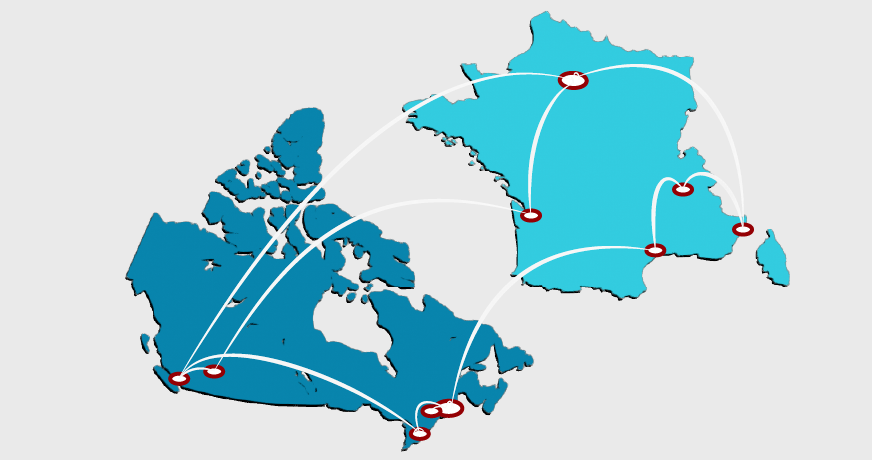
An international network in quantum science and technology, set in motion by the CNRS, will officially be launched on 1 January 2023 with 16 French and Canadian universities.
“There are so many French scientists I want to work with! France has very good expertise in the field of quantum computers,” says with enthusiasm Barry Sanders, a researcher at the University of Calgary in Western Canada. He is one of the four scientific coordinators of the new French-Canadian International Research Network (IRN) on Quantum Science and Technology set in motion by the CNRS. “Our work in Canada complements what is being done in France. The IRN highlights the genuine synergies we can exploit.”
Quantum materials and simulations, quantum computing and algorithms, quantum sensors... With its national acceleration strategy, France is active across all areas of quantum technology, “with a focus on the transition from basic research—one of the recognized strengths of the CNRS—to applications, with numerous start-ups emerging from CNRS joint laboratories,” points out Sébastien Tanzilli, Deputy Scientific Director at the CNRS Institute of Physics, and the CNRS co-director for the Quantum PEPR
Common Interests
Canada has also positioned itself as a leading choice of partner. In Europe, the Quantum Flagship
The quantum network is therefore a natural evolution in the collaborations between the two countries, which are already numerous and “win-win” according to Isabelle Philip, a CNRS Senior Researcher at the Charles Coulomb Laboratory
A model international laboratory for the network
Created in January 2022, the Quantum Frontiers Laboratory (LFQ) is an International Research Laboratory (IRL) between the CNRS and the Université de Sherbrooke in Canada, focusing on quantum materials and circuits, as well as their use in quantum technologies such as quantum computers and sensors. It builds on 40 years of collaboration in the field between laboratories in France and Quebec, relying on the complementarity of experimental techniques and numerical methods between the two countries. “The IRL is a fine example of successful collaboration, with both communities feeding one another,” adds Aprili, citing workshops and the exchange of scientists, and especially co-supervised doctoral students. This joint laboratory has “tremendous added value” for the latter, who “gain expertise by thriving on different scientific cultures and networks,” indicates Taillefer, the Director of the LFQ. “The France-Canada network was born from the desire to broaden this good example to other actors, with a view to supporting new collaborations,” concludes Aprili.
With an official launch planned for this coming January, the network is led by the CNRS, and currently involves 16 universities
A focus on young scientists
“What is original about our IRN is that it is based on university campuses, whereas traditional IRN's are based on laboratories,” indicates Philip. This distinctive feature assumes its full meaning in light of the network’s field and missions. In addition to consolidating research and making it more dynamic, it aims to facilitate student exchange at the Master’s level and beyond. “By involving university campuses, we hope to simplify the administrative aspects of these exchanges, especially the consideration given to structural differences in university education in both countries,” underscores Aprili. The coordinators thus hope to “prepare and strengthen the collaborative fabric between France and Canada for the researchers of the future.”
This would pave the way for co-supervised and co-directed theses and postdoctoral fellowships. “The next generation of scientists will need expertise that is being developed in French and Canadian laboratories today: it is therefore important to attract students to this field, and to include them as early as possible in international collaborations,” confirms Louis Taillefer, a Professor at the LFQ in Sherbrooke, and the fourth scientific coordinator of the IRN’s executive committee.
The French-Canadian network could help fund trips of varying length for researchers and academics, and will serve as a relay for mobility offerings and other national initiatives that quantum subjects can align with. It will therefore also have an events budget to “build a tight-knit community,” before proposing joint projects for other funding mechanisms.
Planting the seeds of collaboration
“There are always major advantages to international collaborations, starting with the wide range of complementary expertise they can marshal,” Taillefer maintains. For instance, his field of expertise requires new theoretical approaches developed in Paris, measurements in high magnetic fields that are the specialty of teams in France, and great expertise in very low-temperature measurements, which is available at Sherbrooke.
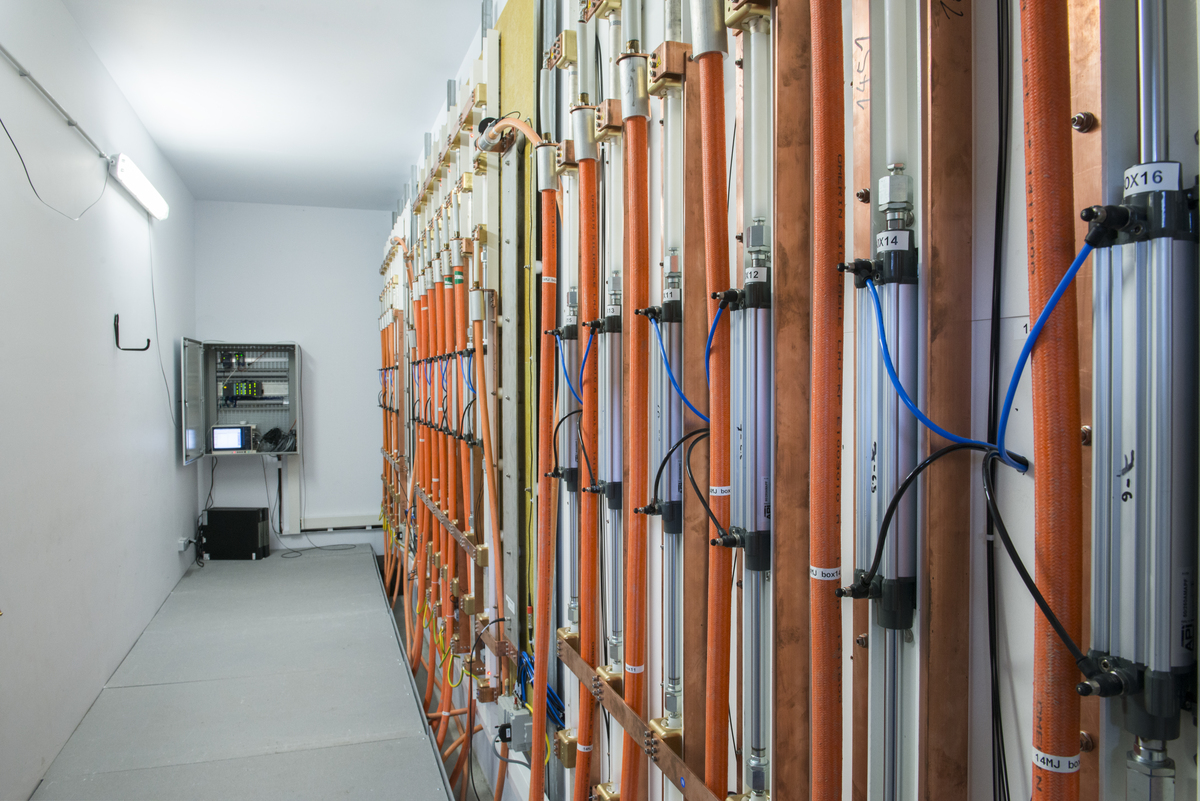
“Connecting France and Canada in our field will notably facilitate access to France’s leading large-scale research infrastructure for Canadian communities that do not have instruments on this level,” Taillefer continues, citing the “very powerful tools” represented by the ESRF, the Soleil synchrotron
The general outlines of the subjects that will be explored by the IRN will be jointly established by the actors involved. As part of this effort, annual workshops will be held in France and Canada. This will also provide an opportunity to create connections between sub-fields that do not usually attend the same conferences, thereby enabling new and “fruitful” approaches. The first meeting will take place in Paris between 22-24 May 2023, and will “as a priority but not exclusively” feature scientists working on topics likely to foster new transatlantic collaborations. “The idea is to reinforce existing collaborations, and especially to learn more about one another and to help build ties,” explains Philip.

