In search of risk
Corporate
In connection with the France 2030 investment plan, the CNRS recently unveiled its new programme to identify and support bold scientific projects that could spark major technological advances.
Along with the CEA, Inrae, Inria, and Inserm, the CNRS is one of five research organisations to launch a Risky Research programme as part of France 2030
Funding “risky and bold” research
The Risky Research programme, with a budget of 150 million euros–of which 40 million is allocated to the CNRS–notably complements national programmes, such as Priority Research Programmes and Equipments (PEPR)
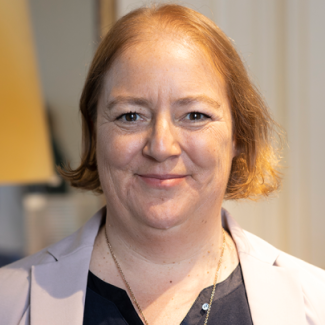
“The CNRS identified our team during a discussion regarding a programme on fluids, and asked us to submit something more risky,” relates Bérengère Dubrulle, a CNRS Senior Researcher at the Condensed Matter Physics Laboratory

Another example is Jérôme Casas and his project for a bioinspired artificial nose (see text box), which was refused in 2019 by the European instrument of the European Research Council’s (ERC). “There is a genuine scientific and technological risk. The idea of sexual pheromones seems far-fetched,” explains the ecologist, whose project studies how animals, and insects in particular, detect very small concentrations of molecules in the air, a process that remains poorly understood.
An ideal format for scientists
The CNRS decided to allocate these means to projects that can break down barriers and revolutionize one or more fields, but whose funding represents a scientific wager, so to speak. “These are projects that we are unable to fund with the existing instruments. We help open new pathways with these projects,” explains Frédéric Villiéras, the Director of the CNRS’s National Programmes Mission (MiPN).
The particularity of the programme resides also in its simplification, as there is no call for proposals in the identification and selection of (RI)² projects. It is instead based on the experience of the organisation’s national scientific management, which travels across France throughout the year to discuss science, to accompany and support laboratory teams, and to identify future gems. “It is an ideal format for scientists in a number of respects, where science is the only consideration”, says Dubrulle. The instrument is also simplified in terms of monitoring, for risky research entails agility. The mindset is very different from investments for the future programmes
The CNRS funds major projects, with a budget of approximately 2-3 million euros each. The programme is designed in two stages. During the first year, the demonstration stage, the idea or intuition is tested and assessed, with a “go/no go” halfway through at two years. If the demonstration is positive, this leads to the second stage, which allows for the project to be completed (in 5 years). “This means about ten selected projects for over 100,000 researchers, since the programme involves all CNRS laboratories, and is not just reserved to CNRS scientists”, explains Alain Schuhl, the Chief Scientific Officer of the CNRS. The pre-selection decisions were deliberately made through the ten CNRS institutes in order to capitalise on the organisation’s foresight efforts and the work of specialized inter-organizational commissions, in addition to that of our university partners in our joint research units.
Twelve projects announcing revolutions
To improve the chances of breaking scientific or industrial barriers in emerging subjects, the twelve selected projects are led by “scientists who have already been singled out, and who have left a mark on the history of French research”, Schuhl points out. These projects are led by researchers who have built internationally recognized experience and expertise in their field.
While the CNRS sought risk in these selections, it also wanted to promote projects with scientific, technological, or societal impact. And the projects selected indeed herald revolutions! For instance, the one coordinated by Bérengère Dubrulle could pave the way for new neuromorphological artificial intelligence (AI), which would function based on the differences or links between objects, thereby creating a new kind of AI that is more similar to neuronal function.
On the societal level, the transfer of knowledge in the climate and environmental sciences could lead to a system that predicts extreme events. “It tells itself that some marine birds detect storms before traditional forecasting systems such as Météo France, thanks to their ability to detect minute changes in their environment”, Dubrulle cites by way of example. Exploiting this idea could revolutionize our approach to climate and environmental forecasting.
For Jean-Luc Moullet
The ERC, an engine for risky research
This instrument is part of a new dynamic pursued by the government, inspired by the United States and the Defense Advanced Research Projects Agency (DARPA)
DARPA, the quintessence of risky research
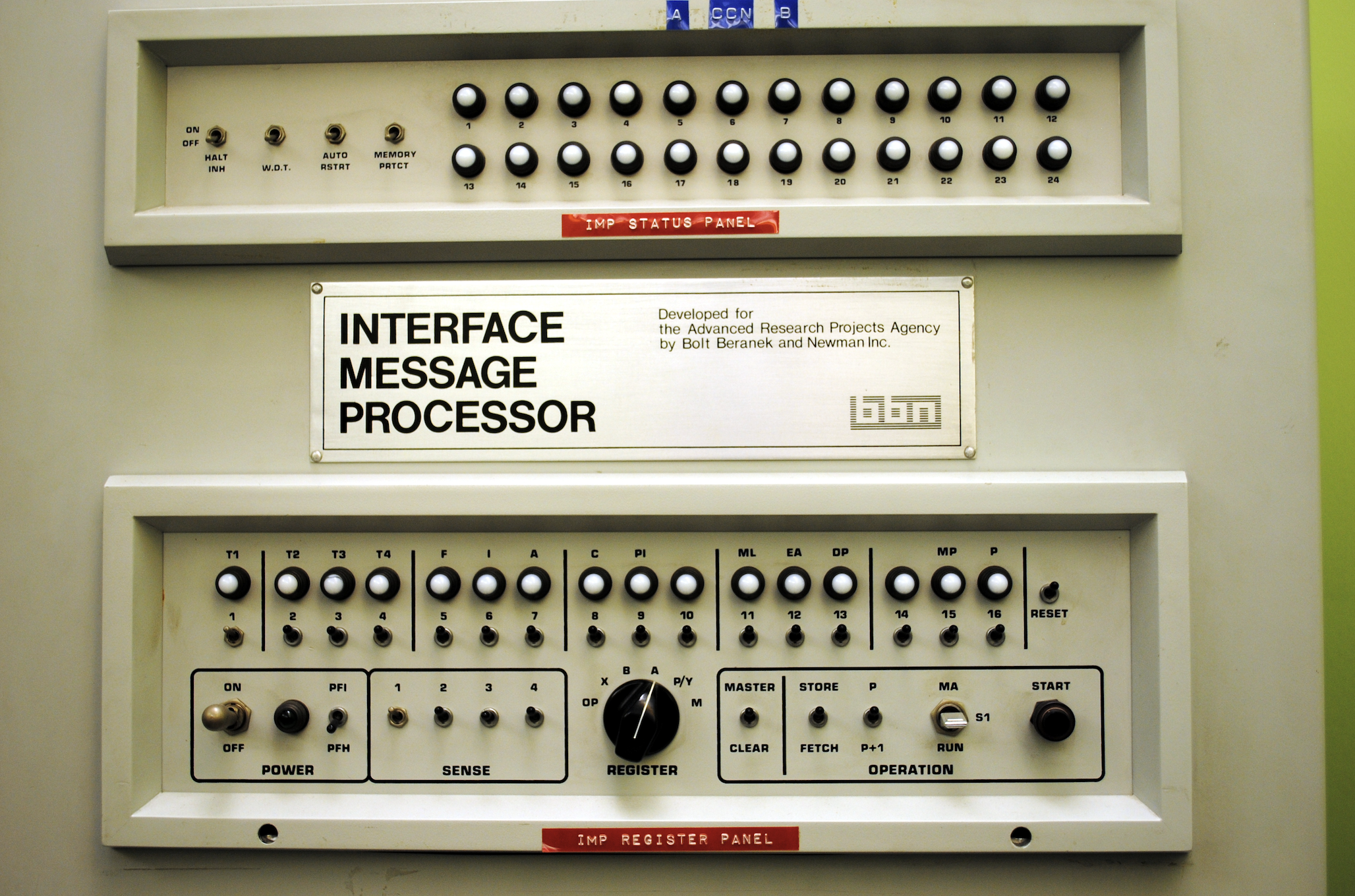
DARPA was created by President Eisenhower in February 1958 in the middle of the arms race, in response to the Soviet launch of Sputnik 1. Famous for its bold projects and ability to transform innovative ideas into concrete reality, such as the Internet or the Global Positioning System (GPS), it is the perfect example of successful risky research. The very indicator that DARPA prefers to use is the percentage of its projects that do not succeed: 80%.
“That is risky research. Failure is part of the game. The idea is a willingness to invest millions of dollars, because what we are looking for is innovation that will transform society,” explains Mireille Guyader, the Counsellor for Science and Technology at the Embassy of France in the United States. Jérôme Casas, the project leader for Innovating in Agroecology and the Fight against Terrorism, adds: “In addition to the finished product, DARPA is interested in mobilising and keeping afloat brilliant minds.”
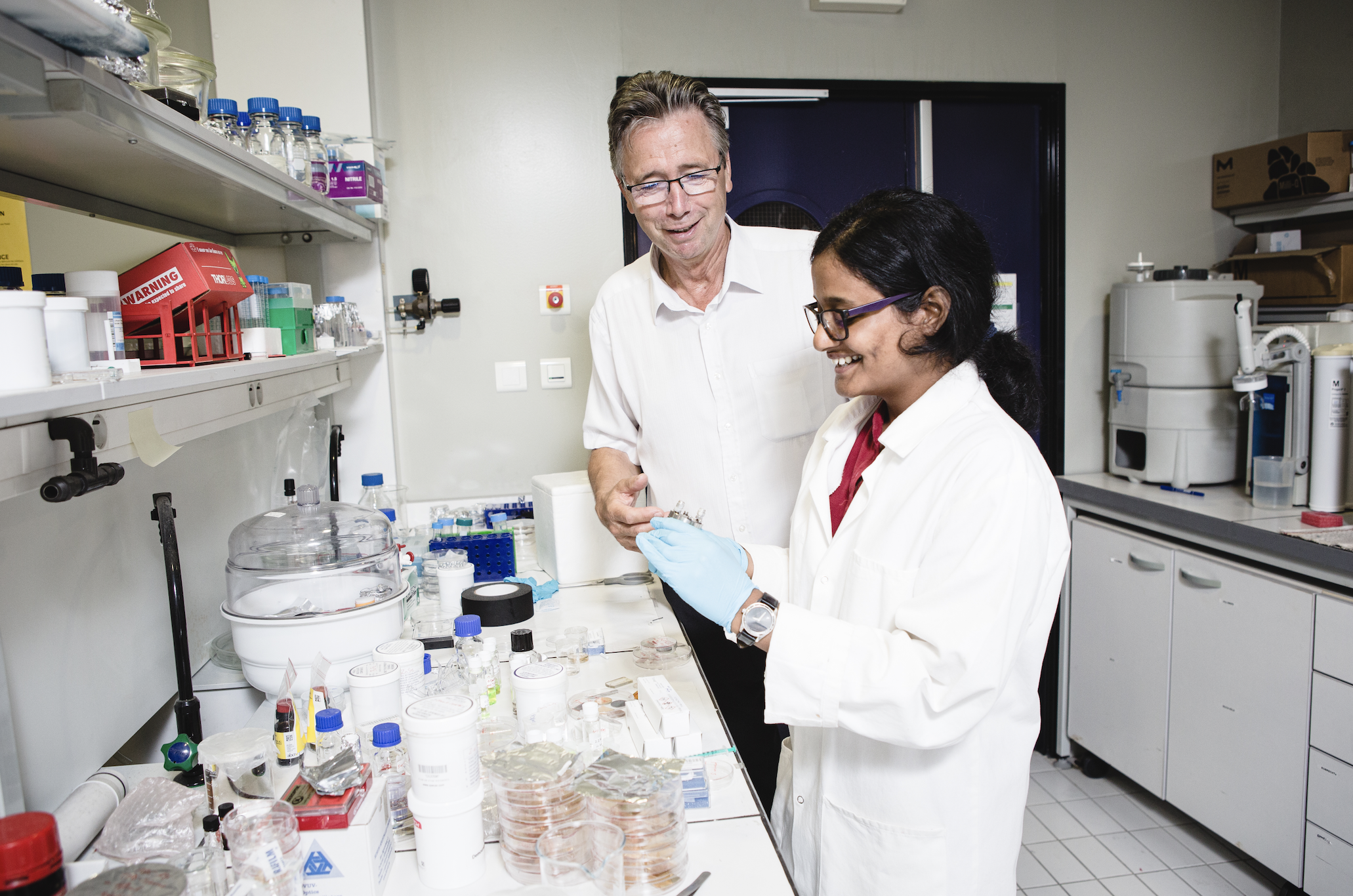
What if Europe could rival U.S. budgets? For Ebbesen, whose project received two ERC Advanced grants in 2008 and 2018
Towards a European ARPA
“The CNRS is the primary beneficiary of European framework programmes, and more specifically ERC grants,” details Jean-Stéphane Dhersin, the Director of the CNRS’s Brussels office. Since 2007, 14,000 “white” ERC projects have been funded, with 1,900 (13%) becoming ERC Proof of Concept Grants (which transfer the results growing out of ERC research). “This is clear proof that Europe has a system that can transform risky projects,” Dhersin adds. However, it is perhaps necessary to go further, with the French President affirming, during his speech on Europe at the Sorbonne last April, the need “to continue up until this European DARPA, that we do not yet entirely possess.” Will a response come in the form of the European Innovation Council (EIC), a key initiative of Horizon Europe with its budget of 10 billion euros for 2021-2027 seeking to develop groundbreaking technologies and innovations? Not in its current state. “Unlike ARPAs, which concentrate on proof of concept (TRL 3-4)
The discussions surrounding FP10 (10th Framework Programme), the future framework programme for research and innovation–the successor of today’s Horizon Europe starting in 2028–will be decisive for the future of innovation in Europe. “The CNRS has affirmed the importance of projects with lower TRLs, and hence with greater risk, within the three pillars of the future programme,”
The 12 projects selected for the CNRS’s (RI)² programme
Extreme Turbulence: predicting the unpredictable
Using a neuromorphological approach to detect and model weak signals announcing extreme events, with a view to improving climate forecasting and our understanding of complex systems.
Project leaders: Bérengère Dubrulle, Guillaume Balarac, Mickaël Bourgoin.
Polaritonic chemistry and polaritonic materials
Exploring the impact of vibrational strong coupling on the chemical reactivity and properties of materials, providing a new way to transform the fundamental properties of materials.
Project leaders: Thomas Ebbesen, Cristiano Ciuti, Cyriaque Genet.
Transition Edge Sensor for Dark Matter
An innovative detector at the Modane Underground Laboratory tracks dark matter with increased sensitivity, extending the search over 12 orders of magnitude in terms of mass, and capable of detecting the antineutrinos of nuclear reactors.
Project leaders: Julien Billard, Stefanos Marnieros, Silvia Scorza.
New mathematical approaches for quantum systems in interaction
Accelerating the transfer of mathematical ideas towards chemistry and physics, with a notable impact on quantum technology and molecular simulation.
Project leaders: Mathieu Lewin, Eric Cancès, Julien Toulouse.
Innovating in agroecology and the fight against terrorism
Exploring transportation mechanisms and the olfactory cuticle surface to improve explosive detection and to optimise the use of pheromones in managing agricultural pests.
Project leaders: Jérôme Casas.
Developing single-cell spatial proteomics
Developing an analytical method for cell proteins that preserves information regarding their micro-environment, with potential applications in medicine, as well as for research in virology, neurobiology, and beyond.
Project leaders: Raphaël Gaudin, Myriam Ferro, Jean-Christophe Olivo-Marin.
Demonstration of an energy-efficient and high-powered particle accelerator
Developing an energy-recovering linear electron accelerator (ERL) in Orsay, with considerably reduced electricity consumption. This demonstrator provides France with European leadership.
Project leaders: Maud Baylac, Walid Kaabi.
Hierarchical and functional self-assembly for heterogeneous and dynamic catalysis in confined liquid interfaces
Developing complex fluids (foams, emulsions) functionalised by enzymes to take advantage of the synergy between the physical properties of these fluids and the (bio)chemical activity of enzymes. This involves varying the characteristics of the complex fluid/enzyme duo in order to eliminate bacterial biofilms, or to degrade/upcycle microplastics.
Project leaders: Wiebke Drenckhan, Christophe Chassenieux, Fouzia Boulmedais, Jean Farago.
High-resolution distributed fibre-optic measurement for environmental monitoring
Developing an advanced in situ system for the circulation of fluids in underground and ocean environments in order to characterize their dynamics and the effects linked to change.
Project leaders: Olivier Bour, Anthony Sladen.
Linguistic heritage, oral culture, and education in Oceania
Describing the diversity of languages in the Pacific, including languages of oral tradition that are vulnerable today, and studying their transmission in a multilingual context, all while situating them within the universal tendencies of language.
Project leaders: Jacques Vernaudon, Alejandrina Cristia, Alexandre François, Marie Salaun.
Palladium ecocatalysis
The project takes an interdisciplinary, integrated, and sustainable approach to the synthesis of the primary active ingredients in the pharmaceutical industry, with potential applications in oncology.
Project leaders: Claude Grison, Peter Hesemann.
Molecular computing: from molecular circuits to the DNA computer
Exploring DNA-based molecular computing, enabling requests for large masses of structured data. The goal is to provide proof of concept for a molecular computer (data coding, implementing data instructions, reading results), and measuring its environmental impact. The effort especially involves the development of algorithms that manipulate graphs of metadata 100 times greater than the state of the art.
Project leaders: Anthony Genot, Nicolas Schabanel.