"We are putting forward the French One Health research strategy"
With the ‘One Health Summit’ approaching, due to take place from 5 to 7 April 2026 in Lyon, the coordinator of a prospective study on the subject launched by the programme agencies entrusted to the CNRS, INRAE and Inserm reflects on the challenges facing the One Health approach.
From 5 to 7 April 2026, Lyon will host the ‘One Health Summit’, an international scientific and political summit. What does the ‘One Health’ concept entail?
Eric Cardinale
In recent years, One Health has become an established term in international discussions and in UN vocabulary. How far back does it go?
E. C.: The concept of One Health dates back to the 18th century when human and veterinary medicine were not separated even though the term didn't actually even exist then. Hyperspecialisation and the distinction between the two spheres arrived later – in the 19th and 20th centuries.

In the early 2000s One Health came back to the fore during the avian flu crisis in Southeast Asia. The Covid-19 pandemic highlighted the interdependence between human health, animal health and environmental health which led to this term becoming established at last. In 2021, the quadripartite represented by the World Health Organisation, the World Organisation for Animal Health, the Food and Agriculture Organisation and the United Nations Environment Programme set up the dedicated One Health High Level Expert Panel. This is particularly useful as currently zoonoses account for 60% of all infectious diseases and 75% of emerging infectious diseases.
Has France incorporated this concept into its health and scientific tools?
E. C.: France has fully adopted this issue, as the international Prezode initiative shows. This was launched by President Macron in 2021 at the One Planet Summit on biodiversity and now has 170 partners, including 15 governments.
Since then, all scientific disciplines have taken up the idea in a continuum that ranges from life and health sciences to the human and social sciences and also including environmental sciences, mathematics and computer science. There are several areas of research – understanding interdependencies and interfaces like animal reservoirs; modelling for enhanced prevention; identifying social and economic determinants which is why participatory surveillance is so important to make innovative measures that result from research projects acceptable; developing tools and methods like the system for active surveillance of avian influenza; and – the most important – aiming for their operational implementation through collaborative research projects, training and providing advice for public policy-makers.
As for the French healthcare system, the One Health approach has been officially recognised since the 2023–2033 national health strategy. Key organisations like the ANSES, Santé Publique France and the French Health, Agriculture, Environment and Research Ministries have since created a task force to work on this theme. However, work remains to be done to break down silos because, so far, not many people have implemented the One Health approach in practice.
In this positive context for One Health, the programme agencies entrusted to CNRS, INRAE and Inserm management have launched a prospective study on the subject and you have been appointed coordinator. Where did this idea come from and what are the objectives?
E. C.: These three agencies – 'Climate, Biodiversity, Sustainable Societies' for the CNRS, 'Agriculture et Alimentation Durables, Forêts, et Ressources Naturelles Associées'
In practice, we will be working in two main areas. The first involves data on different aspects of health which is an extremely sensitive subject. The fragmentation and heterogeneity of these data are obstacles to the early detection of emerging diseases because solid data are required to inform public policy making effectively. This means it's therefore necessary to access, share and standardise all data in compliance with the FAIR principles
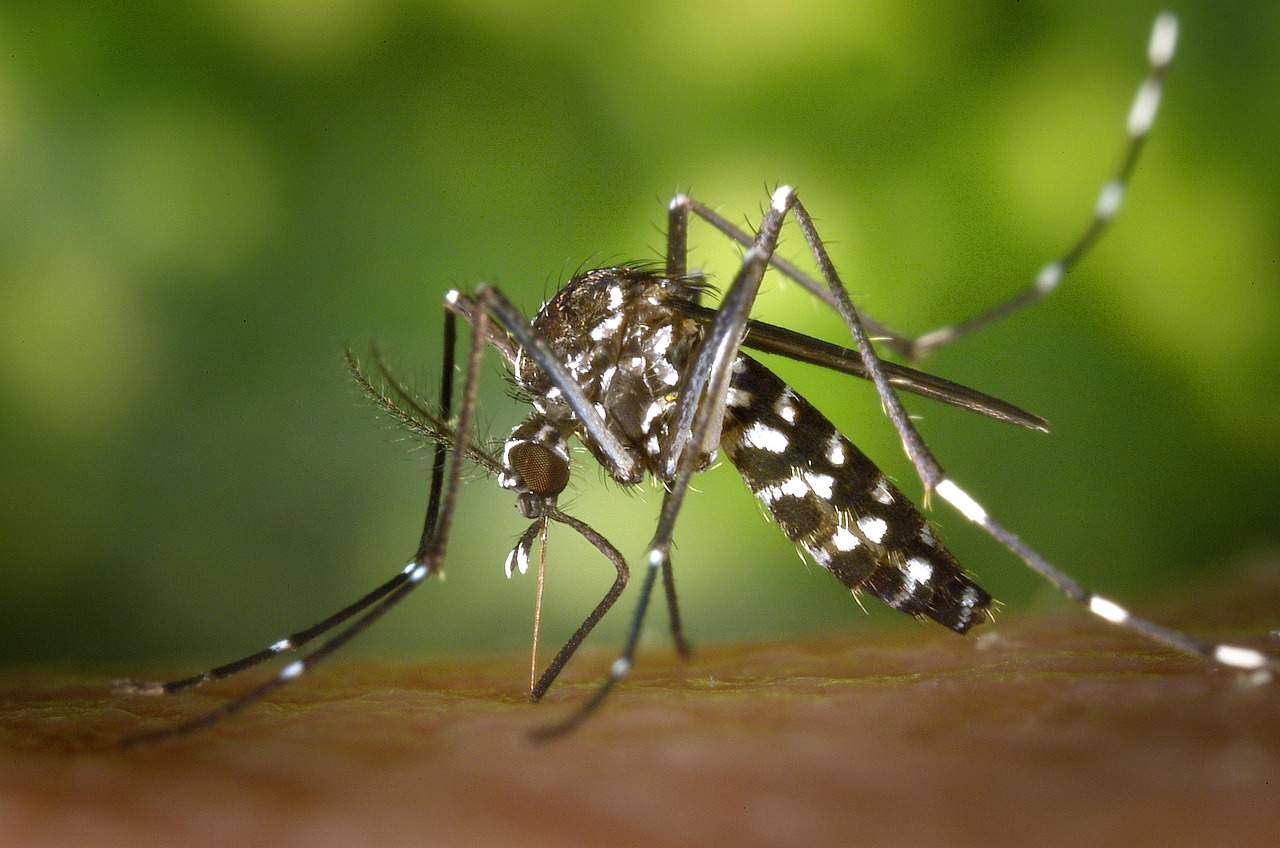
The second focus area is the French overseas territories which host five of the 34 biodiversity hotspots identified by the International Union for Conservation of Nature and Natural Resources. (IUCN). However, these territories are particularly vulnerable to climate change whether in terms of rising sea levels, an increase in extreme weather events or the spread of infectious vectors like the tiger mosquito on Réunion Island, half of whose population is now affected by chikungunya. These overseas economies also host specific agricultural and consumption systems that need to be studied from a One Health perspective. These include plantations like the banana monocultures in Martinique – that have long been treated with chlordecone – and traditional hunting practices like the hunting of a Madagascan hedgehog, the tangue, on Réunion Island.
This working group's objective is to put forward a French One Health research strategy. We'll be publishing our initial findings at the end of this year with the aim of releasing a strategy document in the next two to three years. We really don't want to just engage in another bout of One Health washing because the term has been so overused in recent years and instead aim to show we can rapidly become operational.