The CNRS has awarded its 2026 Gold Medal to the physicist Jacqueline Bloch
Corporate
|
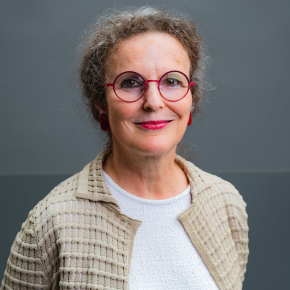
Jacqueline Bloch is the recipient of the 2026 CNRS Gold Medal, one of the most prestigious French scientific distinctions. A CNRS Research Professor at the Centre for Nanosciences and Nanotechnologies (CNRS/Université Paris-Saclay), she has been recognized for her pioneering work on polaritons, hybrid particles resulting from the coupling of light and matter. Her discoveries opened new prospects for studying quantum phenomena, ranging from the behaviour of electrons in certain materials and the flow of fluids of light to the exploration of phenomena inspired by the physics of black holes.
The CNRS Gold Medal, which includes an endowment of 50,000 euros from the CNRS Foundation, will be awarded to her on 17 December 2026 at the Maison de la Chimie in Paris.
Bloch’s research profoundly renewed the study of light-matter interaction by making polaritons a major tool for exploring quantum physics. Thanks to her successive discoveries regarding the behaviour of these hybrid particles, she opened up new avenues for exploring physical phenomena that are difficult and even impossible to observe directly.
Thierry Dauxois, President and CEO of the CNRS, praised the laureate’s achievements: « Jacqueline Bloch’s exceptional career embodies the boldness and rigor of French research. By harnessing light, her work has revealed spectacular and unprecedented effects in physics and engineering. The aesthetic quality of her experiments makes quantum abstractions ‘visible’. As the first to demonstrate the essential differences between polariton condensates and conventional lasers, this renowned CNRS scientist has resolved a major scientific debate. Her highly collaborative approach is a reminder of the importance of exchange and dialogue in the scientific endeavour, an essential condition for advancing knowledge.»
At the heart of Bloch’s work resides a key question: What happens during strong light-matter interaction? This interaction gives rise, in certain semiconducting structures, to polaritons, “hybrid quasiparticles” that combine both the properties of light and matter, whose potential Bloch identified quite early on. She and her team study the behaviour of these hybrid particles in small micrometric cavities of varying shape specifically designed for the experiment: polaritons behave like quantum fluids of light1. These systems can simulate, within laboratories, phenomena such as superfluidity and Bose-Einstein condensates2.
She later demonstrated that these microcavity polaritons can serve as actual miniature laboratories for simulating and exploring phenomena from other fields in physics, such as black holes3, or for exploring the properties of materials such as graphene4. Her current research, which studies the light emitted by polaritons, focuses on the universal laws that describe the shape of frost on glass or the front in a wildfire. Her work opens up prospects for developing new types of lasers and all-optical information processing.
Bloch, who was born in 1967, graduated from the City of Paris Graduate School of Industrial Physics and Chemistry in 1991. She earned an M. Phil (DEA) in solid-state physics from Université Paris VI in 1990, and completed her PhD in physics in 19945. She joined the CNRS that same year as an Associate Research Professor at the Laboratory of Microstructures and Microelectronics (CNRS)6. After an experience in the United States at Bell Laboratories between 1998 and 1999, in 2010 she completed her authorisation to supervise research on the study of polaritons. She became a CNRS Research Professor in 2011 at the Centre for Nanosciences and Nanotechnologies, and since 2015 has also served as a Lecturing Professor at École polytechnique.
Backed by her scientific career, Bloch has long defended the role of basic research as an essential driver of the major scientific advances of the future. This conviction goes hand in hand with a commitment to greater support for scientific careers, especially eliminating obstacles that can still keep women away from occupations in research, and even more so when it comes to basic research.
Her exemplary scientific and institutional career has been recognized by numerous awards throughout her career. In 2014, she was awarded the iXcore Foundation prize, and in 2015 the Jean Ricard Prize from the French Physical Society. In 2017 she won the CNRS Silver Medal, and in 2019 the Ampère Prize from the French Academy of Science, to which she was elected a member that same year. Bloch was made a Knight of the Legion of Honour in 2014, and an Officer of the National Order of Merit in 2023.

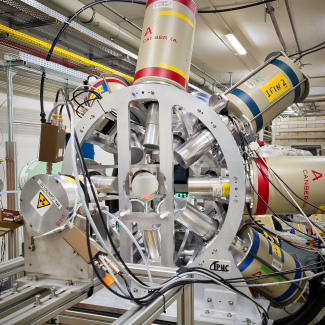
© Cyril Frésillon / CNRS Images
Photos of the winner are available on the CNRS Images platform, along with her portrait in CNRS le Journal.
- 1
A quantum fluid of light is a state in which the particles that make up light collectively behave like a fluid, but with properties described by quantum physics.
- 2
Superfluidity is the property of a quantum fluid that can flow without friction. A Bose-Einstein condensate is a state of matter in which particles behave like a single quantum system. It forms when a gas is cooled to low temperatures.
- 3
By fashioning a cavity in which polaritons move about, researchers can reproduce physics equations similar to those describing systems that are difficult or impossible to observe directly, such as black holes. It subsequently become possible to detect analogue Hawking radiation in laboratories.
- 4
Researchers can organise polaritons into networks of “cylinders” that reproduce the honeycomb structure of graphene, with a view to studying, in the laboratory, physical properties that are difficult to observe directly within the real material.
- 5
Her PhD, which was devoted to the optical properties of epitaxial quantum wires on vicinal surfaces, sought to understand how “sculpting” a nanometric-scale semiconductor could control electrons, and thereby produce lasers and higher-performance optoelectronic components that are notably more efficient and less temperature sensitive.
- 6
Former CNRS unit that is today part of the Centre of Nanosciences and Nanotechnologies (CNRS/Université Paris-Saclay).