
The CNRS, Université de Lorraine, and Framatome are joining forces to optimize large components in nuclear power plants
Innovation
Corporate
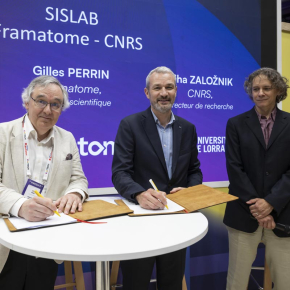
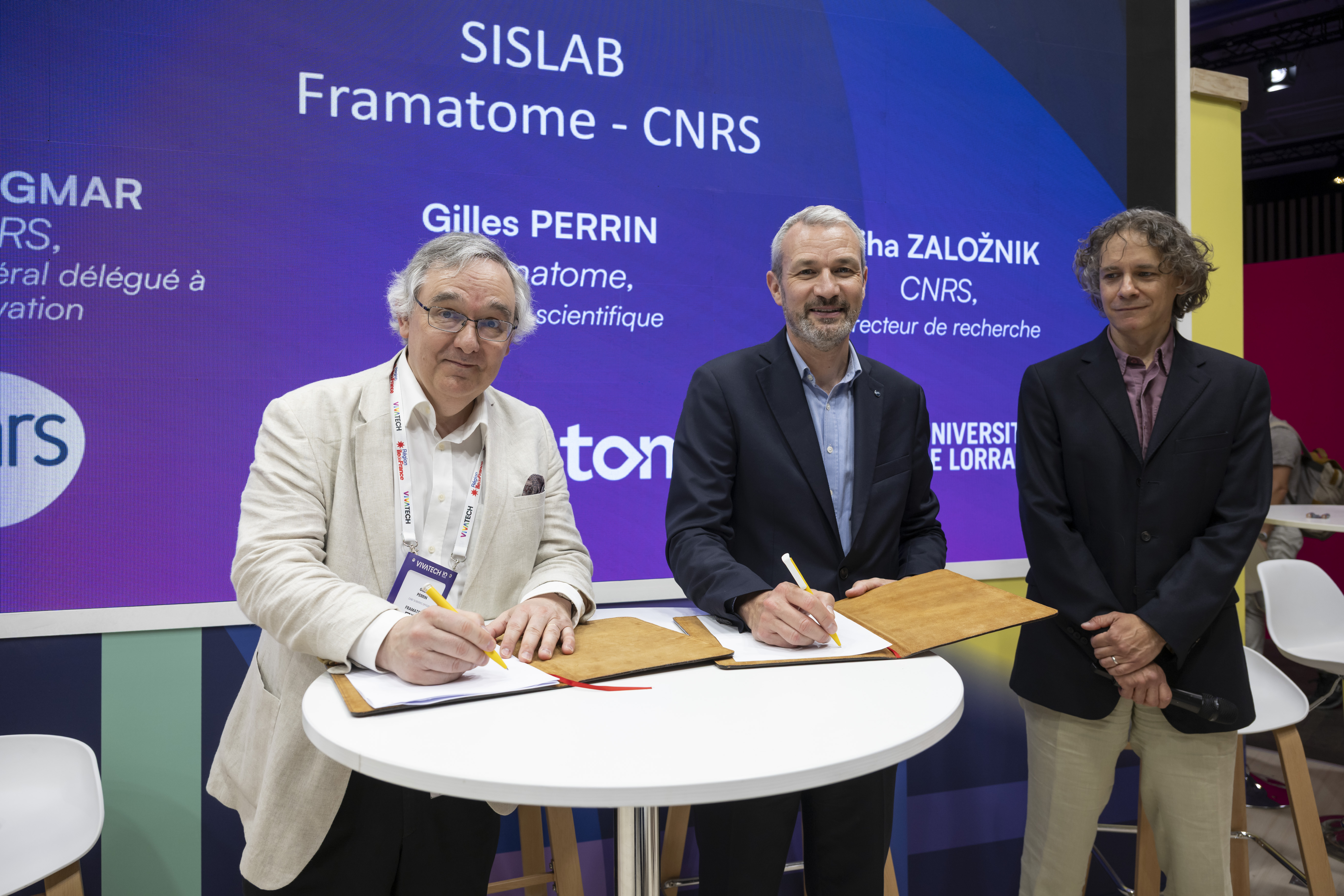
The CNRS, Université de Lorraine, and Framatome have just inaugurated the SISLAB joint laboratory at VivaTech, dedicated to studying chemical composition variations in steel ingots, which are used in particular forge large components for nuclear power plants.
During the solidification of metal ingots, local heterogeneities—known as chemical segregations—can form at various scales. Although the forging process for these components such as reactor vessels and steam generators mitigates these variations, they can still influence the structure and properties of the materials. To address this, research teams from the CNRS and Université de Lorraine, based at the Institut Jean Lamour1, specialised in materials science, are joining forces with Framatome. Their approach combines chemical analysis and numerical simulations to better understand the formation of grains in solidified steel, the flow of liquid during solidification, and the impact of alloy composition on these phenomena.
The goals of this partnership? To understand and control these local heterogeneities in order to produce more homogeneous ingots, improve the predictability of industrial numerical models, and enhance control over mechanical properties in low-alloy steel forged parts. Ultimately, the aim is to ensure nuclear components that are ever safer and more efficient.
“Since 2012, the CNRS and Framatome have been collaborating to tackle major industrial challenges. With the SISLAB joint laboratory, our teams at the Institut Jean Lamour and Framatome’s experts are joining forces to understand and control chemical segregations in steel ingots—a key issue for the reliability of nuclear components. This alliance between materials science and industrial expertise once again demonstrates that collaborative research is a driver of innovation." explains Mehdi Gmar, Chief Innovation Officer of the CNRS.
“Safety, security, and quality are Framatome’s top priorities, and innovation is one of our core values. In a context of sustained global growth in nuclear energy, the new SISLAB laboratory sends a strong signal to our clients: to provide them with industrial solutions that are safe, reliable, high-performing, and innovative—while adhering to the highest standards—we continually push the boundaries of our expertise, in partnership with the best specialists. On the subject of materials, Framatome is delighted, alongside its partners CNRS and Université de Lorraine, to expand this cooperation through the creation of the SISLAB joint laboratory.” says Gilles Perrin, Chief Scientific Officer of Framatome.
“Materials are one of the six societal challenges of our Lorraine Initiative of Excellence (Lorraine I-SITE). The signing of this joint laboratory demonstrates the real impact of academic research on the socio-economic world and on society through innovation.” notes Alain Hehn, Vice-President of the Scientific Council of Université de Lorraine.
“Advances in experimental characterization and numerical modeling now allow us to better understand the structure of industrial materials—a dynamic at the heart of our joint laboratory, where industrial challenges and major scientific questions mutually enrich each other.” adds Miha Založnik, CNRS researcher at Institut Jean Lamour and scientific director of SISLAB.
- 1Under the joint supervision of the CNRS and Université de Lorraine.