A new collaboration between academic research and business to create the rubber of the future
Innovation
Corporate
|
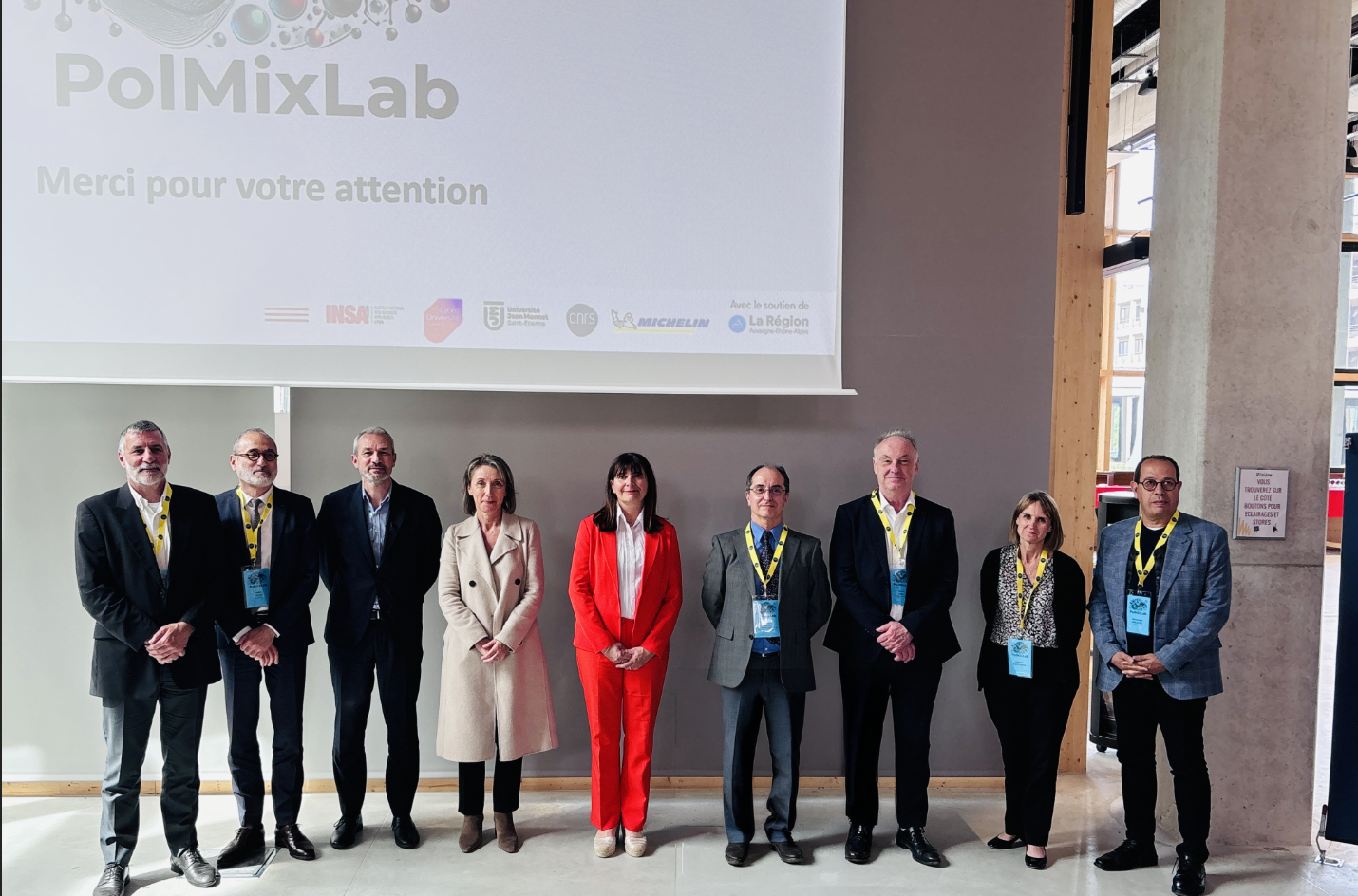
Michelin, the CNRS, INSA Lyon, Lyon 1 University, and Jean Monnet University inaugurate PolMixLab on 22 April 2026, an associated research laboratory (LabCom) to invent the rubbers of the future. This new partnership seeks to accelerate research and innovation in creating polymer materials for multiple industrial applications. It relies on the recognized scientific and industrial expertise of the partners to balance performance, durability, and energy sobriety.
In a context marked by the ecological transition and heightened requirements for industrial performance, polymer materials such as elastomers represent a major avenue for research and development. Used in sectors as varied as automobiles, aeronautics, health, and construction, these materials must increasingly respond to imperatives of durability, recyclability, energy sobriety, and advanced functionalities. In light of these challenges, the CNRS, INSA Lyon, Lyon 1 University, and Jean Monnet University –via research teams from the Polymer Materials Engineering Laboratory–have joined forces with Michelin as part of a research project to develop new generation polymer materials.
Over the course of four years, academic and industrial scientists will work to push back the technological limits of polymer materials central to numerous critical industrial systems, doing so through three research focuses:
Reducing the quantity of energy needed to manufacture elastomer materials via digital simulation as well as a focus on the quality and homogeneity of resulting blends.
Obtaining new elastomer materials that surpass current performance limits thanks to innovative structures.
Increasing the environmental performance of elastomers by integrating short-loop recycling right from the polymer formulation phase.
This associated research laboratory combines the industrial expertise of Michelin with the scientific excellence of the Polymer Materials Engineering Laboratory, recognized on both the national and international level. It represents a structural initiative to develop solutions responding to contemporary industrial and environmental issues, such as reducing the carbon footprint for processes, lengthening material lifespan, and optimising their performance.
It is wholly in keeping with Michelin’s historical expertise in materials science developed over more than 130 years, in addition to its unparalleled ability to combine chemistry, material transformation, composite design, and a firm grasp of uses, spanning from basic research to industrialisation.
The new rubbers developed will have varied and strategic applications in both mobility and other sectors such as medical, aeronautics, and high-performance industrial equipment. Auvergne-Rhône-Alpes is the ideal territory for the development of this joint laboratory, thanks to its thriving scientific ecosystem and the support of the Auvergne-Rhône-Alpes Region, which fosters ambitious partnerships between academic research and industry.
PolMixLab is the 10th active associated research laboratory between the CNRS and Michelin.
“The CNRS is pleased with the creation of PolMixLab, a new associated research laboratory with Michelin, a leading partner with which it has a longstanding relation of trust since the 1990s, one that is structured by a framework-agreement renewed multiple times and nearly forty collaborations each year. This associated research laboratory, which also includes INSA Lyon, Lyon 1 University, and Jean Monnet University, marks a new stage in this cooperation by developing polymer materials that offer higher performance, and are more recyclable and sober in energy.“ declares Mehdi Gmar, the CNRS Chief Innovation Officer.
“With PolMixLab, Michelin is strengthening its ability to anticipate and accompany major industrial and environmental issues connected to materials. By combining our unparalleled expertise in materials science and polymer composites with the academic excellence of our partners, we strive to invent rubbers that offer higher performance, and are more durable and sober in energy. This research indeed includes the development of materials from biosourced resources, as well as control over material life cycle assessment, with a view to creating innovative solutions offering reduced environmental impact in the service of mobility, along with numerous industrial applications beyond tyres.” adds Christophe Moriceau, VP Advanced Research for the Michelin Group.
“PolMixLab illustrates the capacity of Lyon 1 University to develop structural research partnerships where scientific excellence meets industrial and environmental issues. By mobilising our expertise in materials science alongside our academic partners and Michelin, we help develop innovative solutions for materials that offer higher performance and are more suitable for the uses of the future.” enthuses Bruno Lina, the President of Lyon 1 University.
“PolMixLab embodies the shared commitment of Jean Monnet University and its academic partners to a common ambition: to combine cutting-edge research with ecological transition. Drawing on our recognised expertise in polymer materials, we develop innovative and sustainable solutions that align with the evolving challenges and requirements of industry. This joint laboratory also exemplifies the capacity of academic research and the industrial sector to collaborate closely in addressing pressing societal and environmental issues." affirms Florent Pigeon, President of Jean Monnet University.
"Whether through our research laboratories, our foundation, our technology transfer subsidiary INSAVALOR, student challenges, or the outstanding careers of our graduates, INSA Lyon enjoys a long-standing and privileged partnership with Michelin. We are particularly delighted and proud to embark today on this new phase of our collaboration, as we continue to tackle together ambitious challenges in polymer materials innovation and ecological transition." declares Frédéric Fotiadu, Director of INSA Lyon.
"Auvergne-Rhône-Alpes is a land of innovation, and our leadership in materials science stems from three key success factors embodied by PolMixLab: the scale of our industrial players in the field, the academic excellence of our research laboratories, and a Region that actively supports its ecosystem. Two years ago, we made the strategic choice to launch the 'Sustainable Materials' call for projects to support the sector in its transformation and address the market’s evolving technical and ecological demands. With €9 million already invested and 15 projects funded across the region, this initiative reflects our political commitment: to build public-private research partnerships that drive our companies’ strategic vision and enhance their economic performance. Maintaining our position as France’s leading industrial region is an ongoing effort, built day by day through excellence-driven projects like this one." states Catherine Staron, Vice-President of the Auvergne-Rhône-Alpes Region, responsible for secondary schools, higher education, research, and innovation.