The climate and biodiversity – public research as a foresight tool
The acceleration of climate change and the erosion of biodiversity now represent major risks for the world's societies. Elsa Cortijo, the executive director of the 'Climate, Biodiversity and Sustainable Societies' research programming agency coordinated by the CNRS, analyses how research can make a long-term contribution to public policy, especially regarding the habitability of territories and our understanding of environmental risks.
Key takeaways
Climate change and the loss of biodiversity are major risks to societies.
Public research is well placed to support public policy by anticipating these environmental crises and identifying breaking points.
In particular, the ‘Climate, Biodiversity and Sustainable Societies’ programme agency led by the CNRS has proposed a research programme on terrestrial biodiversity to the French State and is coordinating discussions on climate interventions and Sargassum to inform the public decision-making process on these issues.
Programme agencies – a mechanism for transforming science into a policy tool
France’s programme agencies were set up at the direct request of the French government. Why does the public sector now feel the need to structure research on climate and environmental issues to a greater extent?
Elsa Cortijo: At the time of the creation of the programme agencies in January 2024, the government stressed the importance of optimising the overall organisation of the research and innovation ecosystem to make it better equipped to respond to today’s major challenges.
More specifically, the acceleration of climate change and the loss of biodiversity are now major challenges for societies, which is why the government asked the CNRS to set up the ‘Climate, Biodiversity and Sustainable Societies’ agency (CBSD, French acronym) to coordinate the efforts of all research stakeholders in this area and assist public decision-makers in solving environmental crises.
Does the creation of these agencies mark a new era based on more directed research?
E.C.: The scientific community is committed to continuing to carry out research that is free and driven by curiosity and the pursuit of knowledge. However, the government also has specific needs that require the rollout of targeted research programmes and justify the creation of programme agencies to coordinate research and inform government decisions.
Let’s take biodiversity as an example. France has a national strategy, which includes a research component. The Dynabiod PEPR1 focuses on the dynamics of terrestrial biodiversity with joint scientific leadership by the CNRS and the MNHN. It’s designed to provide scientific insights and some of these are highly fundamental. In this way, we’re fulfilling our role perfectly because the agency structures research programmes that advance knowledge whilst building the capacity for action by public decision-makers.
Is foresight your agency’s central mission?
E.C.: I’d say the CBSD’s main mission is to move beyond short-termism. We have the capacity to provide public authorities with insights that go beyond the political timeframe, which is limited by definition, and could therefore help support long-term planning.
- 1
Priority research programmes and equipments

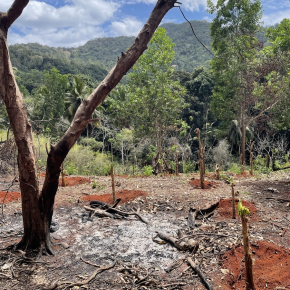
Terrestrial biodiversity – a strategic issue
The Dynabiod PEPR is a prime illustration of the new generation of programmes. What are the differences between an ‘agency PEPR’ and a conventional PEPR?
E.C.: Agency PEPRs are indeed a new arrival in the range of national programmes. They’re receiving €3.3 billion in funding in the framework of the France 2030 programme.
Until now, a distinction was made between acceleration PEPRs and exploratory PEPRs. The former derive from France’s strategy to support transformations that are already underway, like quantum technology or the energy transition. The latter work on themes based on emerging challenges, like DNA data storage or the subsurface.
On the other hand, agency-led PEPRs are designed to target government priorities by coordinating the efforts of various research organisations across France.
Until recently, biodiversity was a keyword that was virtually absent from public debate on climate change. Why is it becoming a strategic issue on a par with energy or digital technology now?
E.C.: The collapse of biodiversity is an increasingly pressing reality for our environment. A 2024 analysis by the World Wildlife Fund estimated that global wildlife populations had fallen by 73% over 50 years and this trend has been accompanied by a loss of ecosystem services. One particularly telling example is that of pollinators, as their disappearance is leading to a fall in agricultural yields. This urgent observation has led the government to take up this issue.
The PEPR Dynabiod that your agency is proposing will concentrate on plants and terrestrial invertebrates. How are topics considered to warrant a massive national research effort actually selected?
E.C.: The development of the Dynabiod PEPR resulted from a collective effort. The choice between the different proposals was made pretty naturally. Some were thought to be too similar to existing PEPRs, while others were considered to be too far removed from government strategy. When the partners decided to put forward the Dynabiod programme, discussions led to the final decision to concentrate efforts on terrestrial plants and invertebrates. Of course, making a choice also implies making sacrifices - for example, we had to leave out marine biodiversity - but focusing on a theme with a narrower scope gives us a stronger potential impact.

This is also why we opted to present the government with a ‘major’ PEPR with a considerable budget of €45 million over eight years rather than several smaller projects. This massive funding will help us position France at the highest level and bolster our sovereignty. In short, primarily, this work will have a scientific dimension, but clearly also a strategic and political one.
Evaluating risks and anticipating early warning signs
Your agency is also working on geoengineering. Why does the government have to address such a sensitive issue right now?
E.C: This subject is gaining prominence on the international stage because it’s clear our greenhouse gas reduction targets are not being met. Geoengineering aims to manipulate the planet’s climate on a large scale, including certain environmental components, like the water cycle, so it could appear to be a solution to combat climate change to some people, even if it involves only marginal changes to our current lifestyles.

The French government has expressed the need to establish a French position, following a period of thought, study and analysis of the international situation, particularly in the context of negotiations. This is essential for our participation in major international conferences, where geoengineering is now considered one option, among others. The agency’s role in this context is to make science a tool for informing our policies, by putting existing reports, like those from the Academy of Sciences or the CNRS Ethics Committee, into perspective alongside other research. By offering a holistic view of geoengineering research involving governance and sovereignty as well as climate and technological considerations, we will be able to support the State in its thought process.
Is geoengineering still the stuff of science fiction, or already a real geopolitical issue?
E.C.: Geoengineering can now be seen as a genuine geopolitical issue even though it was still seen as little more than a fantasy only a few years back. It’s the subject of massive lobbying efforts, and numerous state and non-state stakeholders are already beginning to take an interest in it. To sum up, public research needs to focus on this strategic issue to anticipate any potential risks associated with its development and to equip the State to make the necessary decisions.
How can we carry out scientific research on these topics without giving the impression that we are promoting them?
E.C.: It’s a fine line, indeed. I believe the scientific approach is the only possible response. It’s not a matter of attributing legitimacy or not to a technology a priori. Instead we need to take all the relevant disciplines into account so we can put tangible evidence on the table to feed into the political decision-making process. Also, I believe it’s necessary to study geoengineering scientifically so we can assess its effects if it begins to be rolled out in other parts of the world.
From tomorrow’s risks to today’s crisis – the example of Sargassum
The environmental crisis requires long-term anticipative planning, but also has increasingly to address new risks that are emerging. This is the case with Sargassum, another issue your agency is working on. What do you consider this issue to reveal?
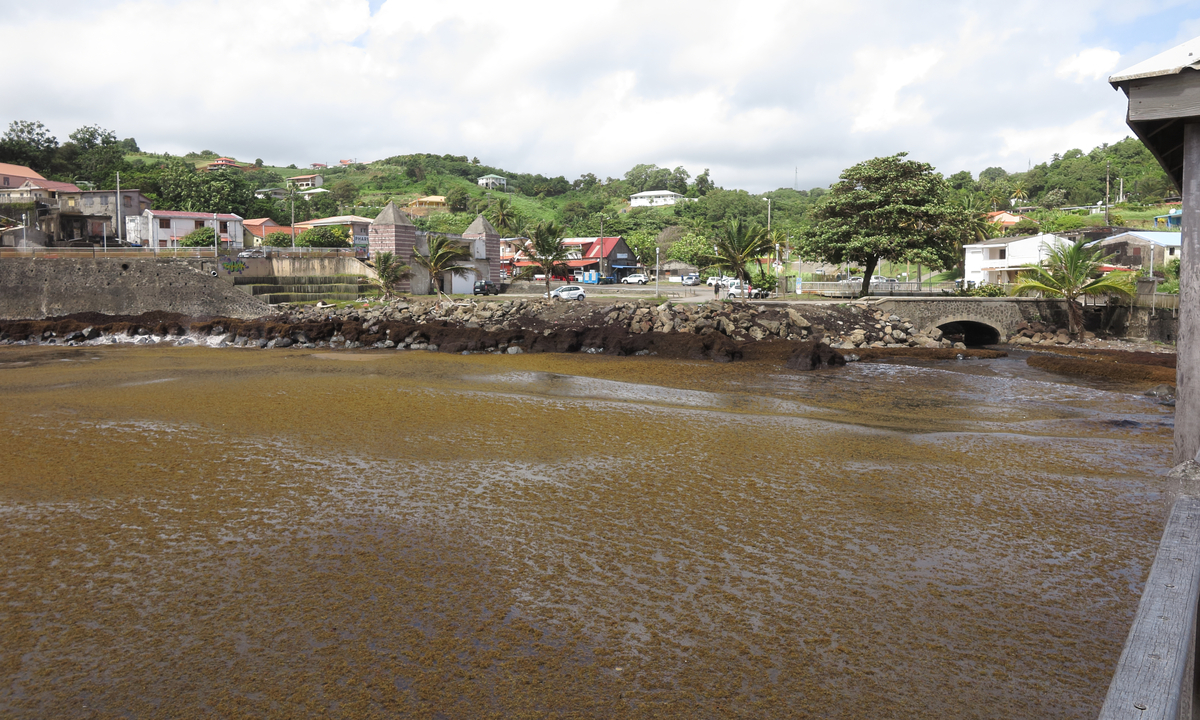
E.C.: Sargassum is toxic seaweed that is proliferating due to global warming, particularly in the Caribbean, and this issue is now being tackled head-on by the government. Two national plans to combat its proliferation have already been implemented.
Research is not lagging behind as the National Research Agency is launching calls for projects and the Ministry for Ecological Transition has also asked us to take up the issue. We’ll be able to carry out a systematic study that covers oceanography and the life cycle of Sargassum alike, as well as a focus on its impact on public health and the economy. Environmental risks and emerging forms of pollution are major concerns for both the scientific community and the government.
Sargassum particularly affects the Caribbean. Why are France’s overseas territories now at the forefront of climate adaptation?
E.C.: Our overseas territories are located in the intertropical zone, which means they're particularly vulnerable to natural disasters, which are exacerbated by climate change in some cases. They’re also predominantly island territories, which means their dependence on energy and food imports can heighten this vulnerability. It therefore seems essential to coordinate research on these issues in the overseas territories.

How can we promote dialogue on these issues between researchers, local authorities and central government?
E.C.: The PEPRs are particularly useful tools for this purpose. Some of them - like BRIDGES on fisheries and biodiversity in the Indian Ocean or IRIMA on risks - feature initiatives that specifically target the overseas territories and the agency’s task is to support them.
Research as a foresight tool for public policy-making
Which environmental risk do you think is still the most underestimated in public debate?
E.C.: The ‘One Health’ approach, which highlights the interconnections between human, animal and ecosystem health, is now well established, as was proved by the international summit dedicated to this issue that took place in April 2026 in Paris. However, there’s a risk that this will largely be limited to rhetoric. For example, we’ll only have a genuine ‘One Health’ approach when we succeed in making all animal, human and environmental health data interoperable, which will take time. By definition, the ‘One Health’ challenge is at the crossroads of disciplines, so we’re exploring the issue on an inter-agency basis by working with the Health Research Agency led by the Inserm, and Agralife which the INRAE leads.
What would a public policy truly driven by scientific knowledge look like, in your view?
E.C.: I don’t think research can steer public policy on its own, because other factors like the economy and social justice need to be taken into account. On the other hand, I really do believe it’s important for research findings not to be simply ignored. Science is a real asset in supporting our decision-makers because it anticipates future risks to ensure the liveability and resilience of society and our regions. It would be a real shame not to take advantage of science being there!