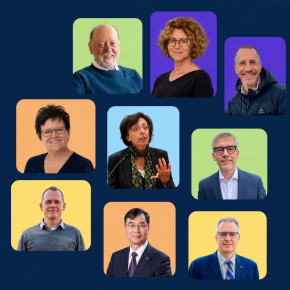

The fourth cohort of CNRS Fellow-Ambassadors is made up of leading figures from the world scientific community
Corporate
From the Turing Prize to the Nobel Prize, from immunology to the history of cinema - the CNRS is welcoming a new cohort of 'Fellow-Ambassadors' whose work has redefined the boundaries of contemporary research. This new cohort is characterised by scientific excellence, interdisciplinarity and the 21st century's major strategic challenges - artificial intelligence, health, high-performance computing, the climate, energy and the memory of societies.
With this fourth cohort, the CNRS Fellow-Ambassadors programme is reaffirming its objective of making the CNRS a focal point for major international scientific communities. This year, researchers from the United States, Canada, Brazil, Japan and Germany are joining the CNRS Fellows network.
The work of the new Fellow-Ambassadors covers fields as diverse as high-performance computing, mathematics, ecology, materials physics, immunology and film studies. All of these researchers have one thing in common, namely their scientific contributions that are already shaping tomorrow's research and technologies.
CNRS Fellow-Ambassadors 2026-2028:
Cathleen M. Crudden, organometallic chemistry, Canada
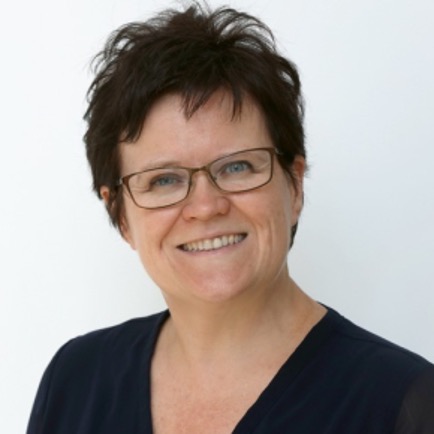
Trained in Toronto, Ottawa, and Urbana–Champaign (United States), Cathleen Crudden took charge of her first team at the University of New Brunswick. She then joined Queen’s University in 2002, where she founded the Carbon to Metal Coating Institute, a research centre dedicated to studying the links between carbon and metal, which she still heads today.
Her first significant contributions concerned cross-coupling reactions, which are essential tools for the manufacture of many pharmaceutical molecules. She was the first to show that it is possible to carry out this type of reaction in an enantiospecific manner, i.e., by controlling chirality, a key property of biologically active molecules.
Her findings in a completely different field, that of organic coatings on metals, have also profoundly changed the game. For more than 35 years, there was no reliable technique for securely attaching organic molecules to metal surfaces, for example to protect them from rust. Cathleen Crudden showed that small carbon-based molecules, called N-heterocyclic carbene (NHC) molecules, could bind to metals to form exceptionally stable organic films that are resistant to oxidation, solvents, and extreme temperatures. These 'organic skins' pave the way for more sensitive biosensors, anti-corrosion coatings for offshore wind energy, new materials for semiconductors, and even biomedical applications in cancer detection and treatment.
An internationally recognized scientist and elected member of the Royal Society of Canada, the Royal Society of Chemistry (UK), and the American Academy of Arts and Sciences, Cathleen Crudden has received numerous awards, including the John Polanyi Award (2023), the American Chemical Society's Cope Scholar Award (2019), and the Montreal Medal (2019). She is also editor-in-chief of ACS Catalysis, one of the most prestigious international publications in catalysis.
Jack Dongarra, high-performance computing, United States
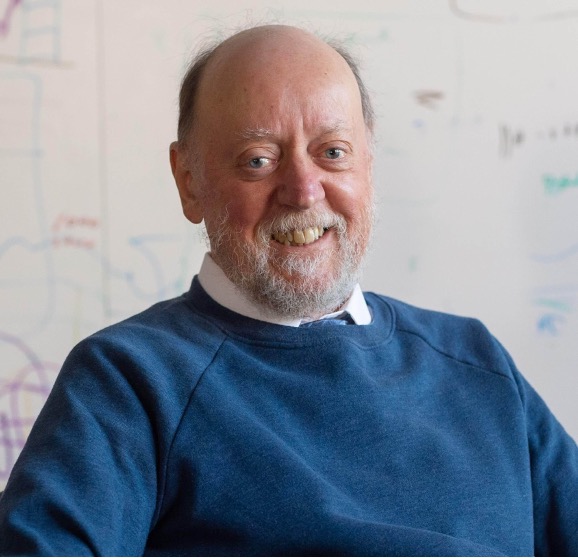
Jack Dongarra is a Distinguished Professor Emeritus of computer science in the Department of Electrical Engineering and Computer Science at the University of Tennessee in Knoxville. He is also a Distinguished Research Staff member in the Computer Science and Mathematics Division at Oak Ridge National Laboratory, holds a Turing Fellowship at the University of Manchester's School of Mathematics, and is an adjunct professor and lecturer in Rice University's Department of Computer Science.
Jack Dongarra specializes in numerical algorithms in linear algebra, parallel computing, the use of advanced computer architectures, programming methodology, and tools for parallel computing.
He is a pioneer in high-performance computing whose work and code have enabled the field to develop in step with advances in hardware and parallelism, thus paving the way for the emergence of high-performance computing.
His work was recognised with the Turing Award in 2021 – often referred to as the ‘Nobel Prize of Computing’ - for his groundbreaking contributions to numerical algorithms and libraries. These have enabled high-performance computing software to develop in step with exponential improvements in computer hardware for over four decades.
Here in France, he has played a very important role within the HPC community for several decades now.
Giulia Galli, theoretical physics and chemistry, United States
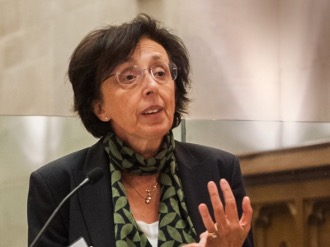
Giulia Galli is a professor at the University of Chicago and a researcher at Argonne National Laboratory. She is internationally renowned in the fields of theoretical physics and chemistry and particularly specialises in materials modelling, computational science and atomic-scale simulation. Her expertise covers fields of strategic importance for the CNRS, particularly materials for energy, quantum simulation, and the study of solid-liquid interfaces for applications in energy storage and electrocatalysis. Giulia Galli is also a pioneer in the application of artificial intelligence methods to accelerate atomic simulations.
Giulia Galli’s career has featured major scientific contributions that have been recognised by many prestigious awards like the Feynman Prize in Nanotechnology and her election to the American Academy of Arts and Sciences. Her international renown and influence are also reflected by her active role in major interdisciplinary collaborations and contributions to flagship quantum simulation projects.
Mattias Jonsson, complex geometry and dynamics, United States
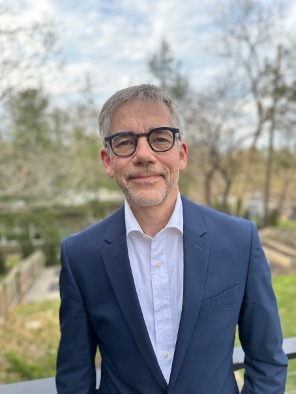
After completing a PhD in mathematics at the Royal Institute of Technology (KTH), Stockholm, in 1997, Mattias Jonsson has spent most of his career at the University of Michigan, including a period as a professor at KTH, and visiting positions at the Institut des Hautes Études Scientifiques, the École Polytechnique, Chalmers University of Technology, and Sorbonne Université. He became a Full Professor in 2009, is a Fellow of the American Mathematical Society, and was a Simons Foundation Fellow in 2023–2024.
Originally focused on higher-dimensional complex dynamics, his research has more recently shifted toward non-Archimedean techniques in complex geometry and dynamics, with a focus on Berkovich spaces. He is the author of over sixty research articles in mathematics, including several in top-tier journals, and has supervised a dozen PhD students. In collaboration with Sébastien Boucksom, he has employed a non-Archimedean point of view to make important advances on the Yau–Tian–Donaldson conjecture, contributing to the understanding of stability conditions and canonical metrics on complex manifolds.
Eduardo Morettin, cinema and history, Brazil
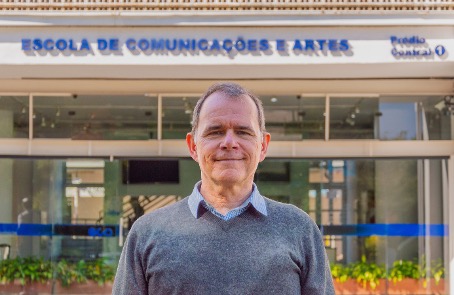
Eduardo Morettin is a Brazilian historian and researcher who works as a professor at the School of Communications and Arts at the University of São Paulo, teaching the history of cinema and audiovisual media. He trained in history and then in the arts before completing a postdoctoral fellowship at the Paris 1 Panthéon-Sorbonne University. His research concentrates on the history of cinema and audiovisual studies, particularly focusing on the relationships between images, memory and the writing of history. He is particularly interested in analysing films as historical sources and explores the links between films and the political, cultural and historiographical contexts they are situated within.
He has notably studied major figures in Brazilian cinema like Humberto Mauro and Glauber Rocha, publishing the book 'Humberto Mauro, Cinema, História' in 2013 and editing the collective work 'A recepção crítica de Glauber Rocha no exterior (1960–2005) in 2020. He has also edited many other collective works (Cinema e espaços de perpetração: imagens e lugares de memória das ditaduras do Brasil e do Cone Sul in 2025, O cinema e as ditaduras militares: contextos, memórias e representações audiovisuais in 2018, História e Documentário in 2012 and História e Cinema: dimensões históricas do audiovisual in 2011) and coordinated thematic issues of journals on cinema and history. From 2010 to 2020, he was also an editor of the journal Significação – Revista de Cultura Audiovisual (2010–2020).
Currently, Eduardo Morettin coordinates the research network História e Audiovisual: circularidades e formas de comunicação, which is organising an international conference on cinema and history, among other initiatives. In 2019, he worked at Sorbonne Nouvelle University's Institute of Latin American Studies (IHEAL) as a visiting professor and also as a visiting researcher at New York University in 2024–2025, and at the Universidad de Buenos Aires in 2026.
His research contributes to a more in-depth understanding of the role of cinema in the construction of historical imaginaries and collective memories, and of the relationship between the aesthetic analysis of images and historiographical issues.
Julian D. Olden, ecology, United States
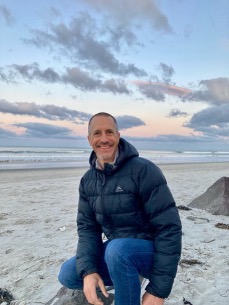
Julian D. Olden is a Professor in the School of Aquatic and Fishery Sciences at the University of Washington, United States. He is an ecologist dedicated to excellence in scientific scholarship and societal impact in freshwater ecology, conservation, and global change. His work promotes the adoption of science-based conservation principles for sustainable freshwater management, achieved through engaging, impactful research and authentic collaborations that transcend disciplinary and sectoral boundaries. He has been recognized repeatedly for his accomplishments and sustained contributions to science, including being identified as a Web of Science Most Highly Cited Researcher since 2018. He was named a Fellow of the Ecological Society of America (2022), the American Fisheries Society (2020) and the Aldo Leopold Leadership Program (2015) and received the Society for Conservation Biology Early Career Conservationist Award (2010). His record of service demonstrates his dedication to science, as evidenced by his current role as one of ten international scientists on The Nature Conservancy’s External Science Advisory Board.
Shimon Sakaguchi, immunology, Japan
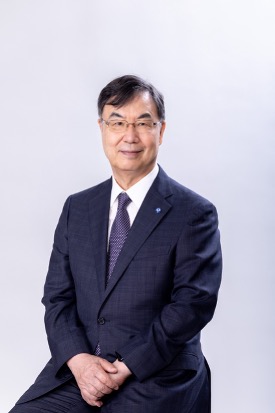
Shimon Sakaguchi's research deals with the immunological mechanisms involved in maintaining tolerance and preventing autoimmune diseases. The prime focus of his work is the identification and characterisation of regulatory T cells (Tregs), which are a subtype of an immune cell that is essential for controlling excessive immune responses. More specifically, he has demonstrated the crucial role played by these cells in preventing autoimmune reactions and maintaining the balance of the immune system. His research has profoundly transformed our understanding of immune tolerance processes and paved the way for new therapeutic avenues, particularly in oncology and chronic inflammatory diseases. He is internationally recognised for his work, receiving many awards for his major contributions to modern immunology, notably the 2025 Nobel Prize in Physiology or Medicine.
Nigel Smith, particle physicist, Canada
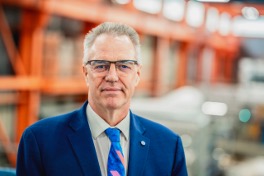
Nigel Smith is a Fellow of the Royal Society (FRS) and has been the Director General of TRIUMF, the Canadian particle accelerator centre, since May 2021. Dr Smith served for 12 years as the Executive Director of SNOLAB and remains an Executive Director Emeritus of this world-class underground science facility. He is an Honorary Professor and Associate Professor at the University of Victoria, and also a visiting professor at Imperial College in London.
In his role as TRIUMF Director, Dr Smith draws on an extensive portfolio of strategic and leadership experience in the development of science research facilities in the U.K. and Canada. In 2025, he was elected to the Royal Society of London in 2025 and is also a member of the Canadian Institute for Advanced Research (CIAR) in the framework of the Earth4D programme. He chairs or is a member of advisory groups for three underground facilities and is on the board of directors of Canadian Nuclear Laboratories, while also chairing the Canadian Institute for Quantum Computing's board of directors.
As a scientist, Dr Smith has pursued a wide breadth of world-leading research in extreme environments, including astrophysics and astronomy, deep underground science, experimental and detector physics and work on 'dark matter'. He has been awarded a US Congressional medal for his Antarctic duty, where he was the first British scientist to ‘winter-over’ at the South Pole itself.
In 1985, he obtained a Bachelor’s degree in physics from the University of Leeds (UK), followed, in 1991, by a PhD in astrophysics from the same university. Before his move to Canada, he was a senior lecturer at the University of Leeds, a research fellow at Imperial College London, a group leader on 'dark matter' and also a deputy division director at the Science and Technology Facilities Council's (STFC) Rutherford Appleton Laboratory.
Gabriele Steidl, machine learning and image processing, Germany
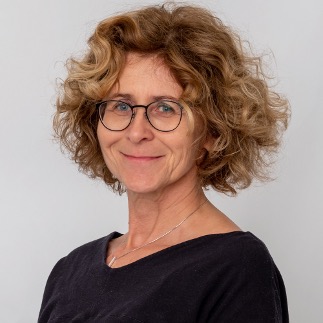
Gabriele Steidl (maiden name, Drauschke) is a German researcher who works at the interface between mathematics and computer science. More specifically, her research focuses on image processing, machine learning, optimal transport, optimisation, and applied and computational harmonic analysis. In 2022 Gabriele Steidl was elected a Fellow of the Society for Industrial and Applied Mathematics for her contributions to computational harmonic analysis and imaging science.
Gabriele Steidl studied at the University of Rostock in Germany. Following her Habilitation from the University of Rostock, she carried out postdoctoral research at the University of Debrecen in Hungary, the Banach Centre in Warsaw and the University of Zurich. Following this, she worked as a consultant for the Verband Deutscher Rentenversicherungsträger in Frankfurt am Main. She continued her career as an assistant professor at the Technical University of Darmstadt, and then as a professor at the University of Mannheim. She continued her career as a professor at the Technical University of Kaiserslautern while also working as a consultant for the Fraunhofer Institute. Currently, she is a professor in the Department of Mathematics at the Technical University of Berlin.