
How the CNRS plans to reduce its impact on biodiversity
Corporate
The CNRS has made an initial assessment of the impacts of its activities on biodiversity, using the 'Global Biodiversity Score'. This is the first step before the organisation launches an ambitious initiative to mitigate impacts of this kind and protect biodiversity at its sites.
In early 2025, the publication of the CNRS’s first Overall Sustainable Development and Social Responsibility Plan marked a turning point in the organisation’s approach to environmental issues. Henceforth, moving beyond the carbon issue – the CNRS's main concern in recent years – the organisation intends to implement “a systemic and interconnected approach to our actions”, as Antoine Petit, the CNRS Chairman and CEO, explains. “Using his framework means we are also taking into account our impacts on soil and biodiversity, the conservation of water resources, the transition to sustainable food systems, and pollution and waste management.”
Of course, impacts of this kind still need to be actually measured which has now been achieved for biodiversity. A year of collaborative work led by the CNRS’s Environmental Transition Unit (Transversal Steering Support Mission, MTAP) and involving several of the organisation's functional departments plus support from the consultancy firm Utopies, the CNRS has made its first attempt to quantify the impact of its research activities – incorporating all the uncertainties inherent to such an approach – on biodiversity using the Global Biodiversity Score (GBS), a method developed by the Caisse des Dépôts et Consignations (Deposits and Consignments Fund). Certain research institutions, like the universities of Oxford and Utrecht, for example, have used other tools but the CNRS selected the GBS following its own comparative analysis of the existing methods. The GBS can be used to measure the impact on biodiversity on an organisation’s entire value chain in the form of a metric estimated on the basis of monetary values. In this case the metric is the Mean Species Abundance (MSA), an indicator of biodiversity loss per km² based on an organisation’s activities. At the CNRS, the loss is 2 MSA/km² per year which is equivalent to 2 km² of primary forest being converted into a tarmac car park.
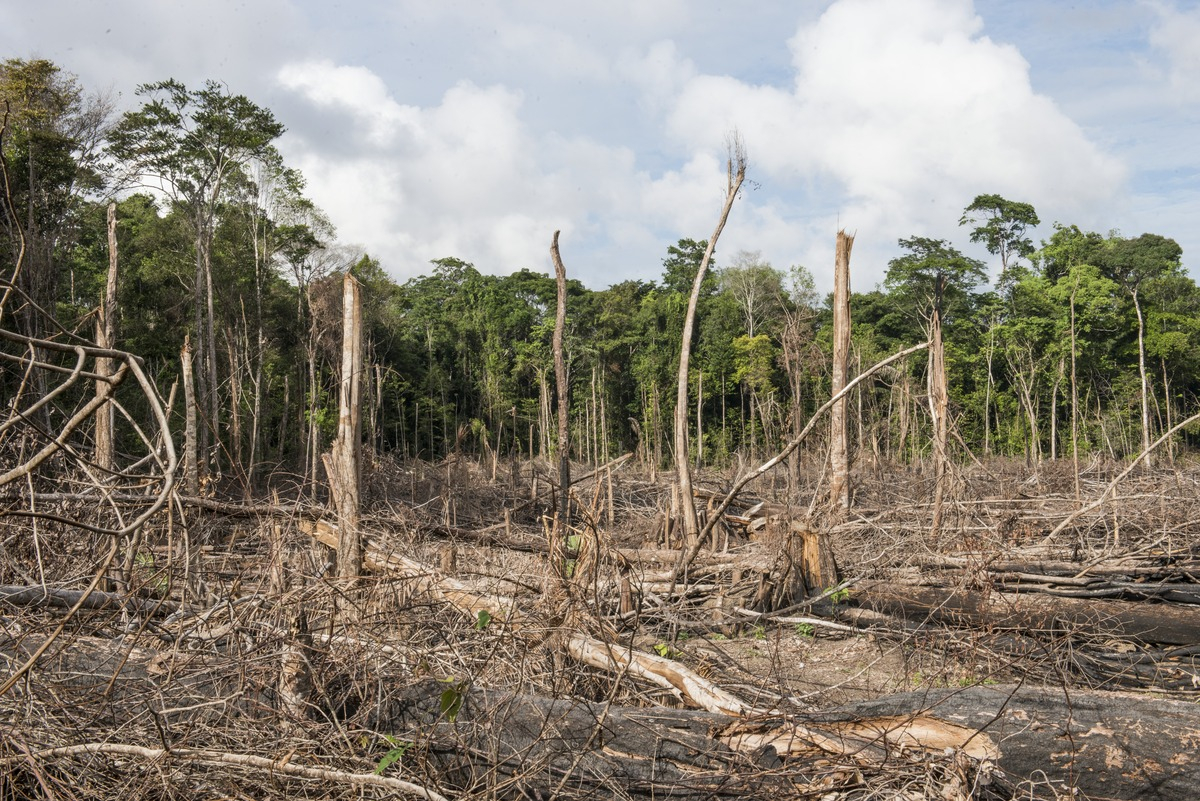
Deforestation is one of the five main pressures on biodiversity © Fabrice MONNA/Biogéosciences-Dijon/CNRS Images
So, which factor contributes the most to the CNRS’s impact on biodiversity? Unsurprisingly the answer is purchasing which accounts for up to 97% of this first biodiversity footprint and 85% of the CNRS’s last carbon footprint assessment. Research activities do indeed contribute indirectly to the five main pressures
Tangible impacts on human activities
Beyond these figures, the impact on biodiversity of organisations has very tangible consequences for human activities. "The issue of biodiversity is still overlooked'" according to Philippe Grandcolas, an expert associated with this biodiversity initiative and the deputy scientific director of CNRS Ecology & Environment, one of the ten CNRS Institutes. And yet, the decline of biodiversity actually reduces and limits the activities, survival and comfort of Homo sapiens in real terms. For example, the degradation of soil fauna by pesticides leads to a reduction to the capacity of a significant proportion of agricultural soils to retain water or nutrients; the fragmentation of natural habitats brings humans into contact with animals that act as 'reservoirs' for pathogens, thus promoting the emergence of more infectious diseases; or the disappearance of ‘green water’(the majority of atmospheric precipitation absorbed by vegetation) which significantly increases the vulnerability of two-thirds of humanity to water stress. As Philippe Grandcolas regretfully puts it, “the negative externalities of our activities are growing out of all proportion.”
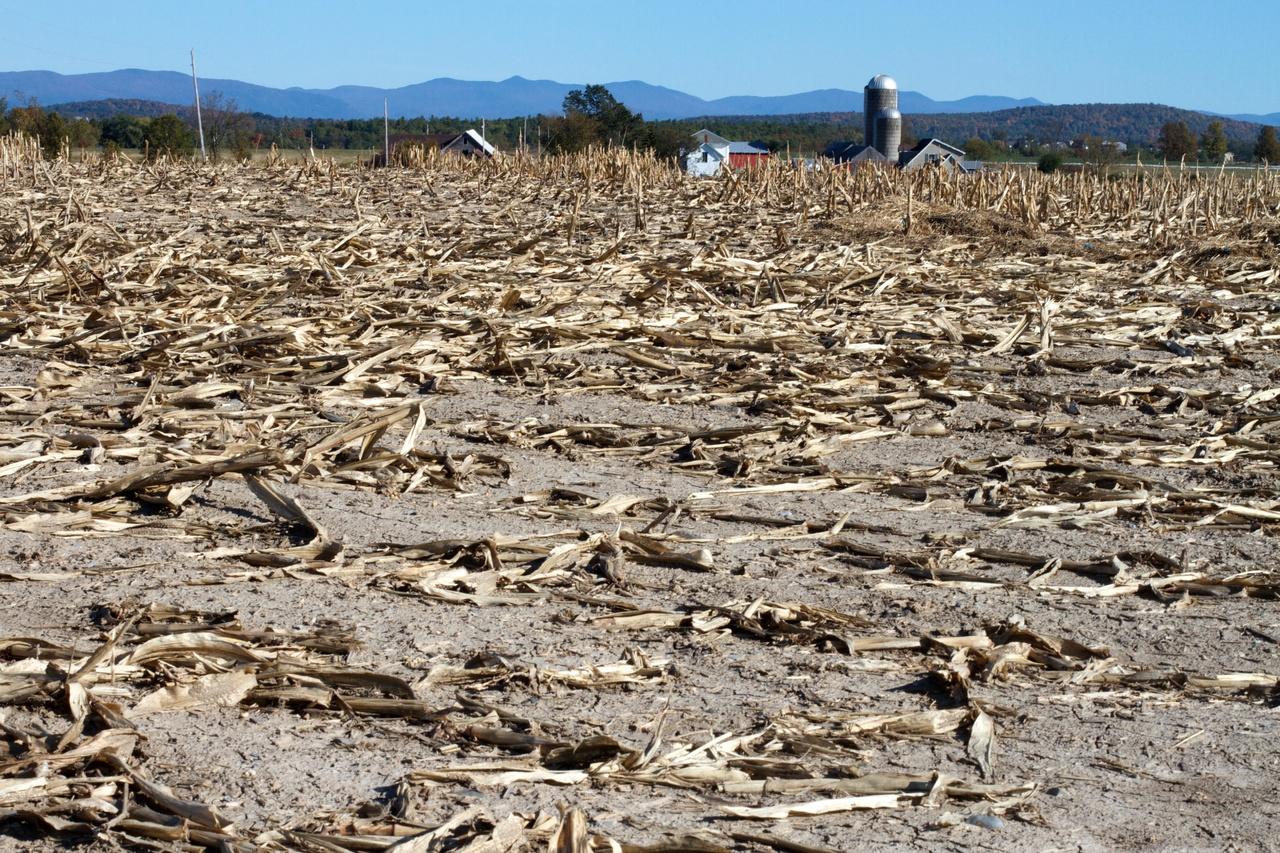
The decline in biodiversity has tangible consequences for human activities. The degradation of soil fauna caused by pesticides means that much of the agricultural soil is poorly able to retain water or nutrients © Alan Levine / PxHere
To buck this trend, the CNRS is developing a biodiversity strategy taking into account its global impacts, the enhancement of its sites, and the organisation's influence on society through knowledge dissemination. This strategy focuses primarily on purchasing through the slogan “Buy better”, according to Séverin Baron, the CNRS’s deputy national environmental transition officer and head of the CNRS’s biodiversity initiative
Towards biodiversity observatories
These benefits may derive from the conservation or restoration of biodiversity or relate to other issues like adaptation to climate change and all are core elements of the approach adopted by the CNRS regarding its land and property assets. In this area, the CNRS has produced an atlas that analyses the proximity of its own sites to protected areas. The majority of its sites (71%) are located within 5 km of a protected natural area, with nearly a third (27%) actually situated within an area of this kind like the Luminy campus in the Calanques national park in Marseille. Of course, locations of this kind confer a responsibility on the CNRS in its role managing these sites. Séverin Baron explains that the aim is to “make CNRS sites places for developing knowledge that combine sustainability, the protection of living things and quality of life at work”.
To achieve this, the CNRS is launching an innovative initiative from spring 2026 which involves its own staff members monitoring the biodiversity on its campuses. This approach was inspired by citizen science and will contribute to two national databases, supported by the VigieNature programme - Propage for butterflies and Florilèges for the flora of urban grasslands. “These databases were selected because they cover a wide range of pressures on biodiversity at our sites,” explains the deputy national environmental transition officer, pinpointing factors like disturbance and trampling, plant protection products, pressure on ecological corridors, climate change and mowing grass.

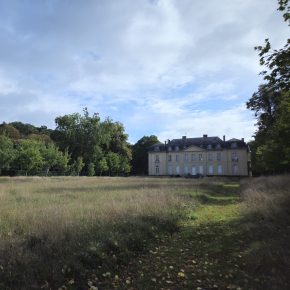
Starting in the spring of 2026, the CNRS’s tree-lined campus in Gif-sur-Yvette (Essonne) will serve as the organization’s pilot site for monitoring biodiversity on its property © CNRS
In practice, two or three volunteer staff members will carry out this local monitoring on their sites with support provided by a coordinator. At the end of May, the Gif campus in the Yvette Valley, below the Saclay plateau in France's Essonne region, will be launching the first such biodiversity observatory on its splendid 72-hectare campus, half of which is woodland. The programme will then be rolled out from this pilot site to other volunteer campuses next year.
The initiative gives Philippe Grandcolas renewed hope. The ecologist sees the approach as an opportunity to implement nature-based solutions, as posited by the Priority Research Programme and Equipment