
The CNRS's strategies to reduce the environmental footprint of its purchasing
Corporate
The CNRS is implementing a series of purchasing measures as part of a drive to reduce the environmental footprint of this, the largest source of greenhouse gas emissions.
The CNRS's second greenhouse gas emissions assessment (BEGES) published at the end of 2024 pinpointed the organisation's main carbon impact factor. Purchasing of consumables, scientific equipment and services was found to be the main source of emissions, accounting for 85% of the CNRS's greenhouse gas emissions and far ahead of energy consumption (6%), missions (6%) and travel to work (3%). The organisation is well aware of the work that still needs to be done to reduce the environmental footprint linked to purchasing while maintaining the quality of its research. Thus, at the start of 2025, the CNRS published its Overall Sustainable Development and Social Responsibility Plan which advocates "prioritising actions to control the most impactful purchasing segments". Through its various component parts, France's foremost research organisation possesses a number of levers to work towards sustainable scientific purchasing that can be adapted to work on all scales.
Training to purchase better
The first lever remains awareness-raising for purchasing decision-makers in laboratories. The Institut Pierre-Simon Laplace's (IPSL
Actually, as Sébastien Turci, head of the CNRS's Purchasing and Innovation Office (DDAI) points out, the manufacturing phase for a purchase of equipment accounts for the most greenhouse gas emissions
The CNRS, the Inserm and the Inrae

The IPSL purchasing decision tree© Marie Pinhas pour ICOM-IPSL
Responsible purchasing
Over and above national and European calls for projects, since May 2023 – three years ahead of public sector regulations – the organisation has required an environmental criterion to be included in all its formal public procurement contracts. To provide staff members working on purchasing with the best support possible for the implementation of this new measure, the DDAI has set up a collaborative sustainable development space developed collectively by a group of purchasers from the CNRS's seventeen regional offices and the shared department in the Île-de-France region which it was mainly initially intended for. To find the right environmental clauses that are adapted to their contracts and answer their questions on sourcing, these purchasers can share instructions, reference documents, guidelines and proposals for environmental clauses and criteria to help facilitate the implementation of the CNRS's pioneering decision on this. In this context, the aim of sharing information and best practices is intended to "provide better support for laboratory purchasing advisors" and show "that action opportunities are possible at every stage of the life cycle of a purchase – from eco-design to waste management and also including maintenance, delivery and consumption", explains Aurore Debono, the DDAI's study officer and advisor on public procurement and purchasing techniques.
This kind of tool is all the more valuable given that in early 2025 the CNRS reached a milestone in its commitment to responsible purchasing with the publication of its first scheme to promote socially and environmentally responsible purchasing (Spaser)
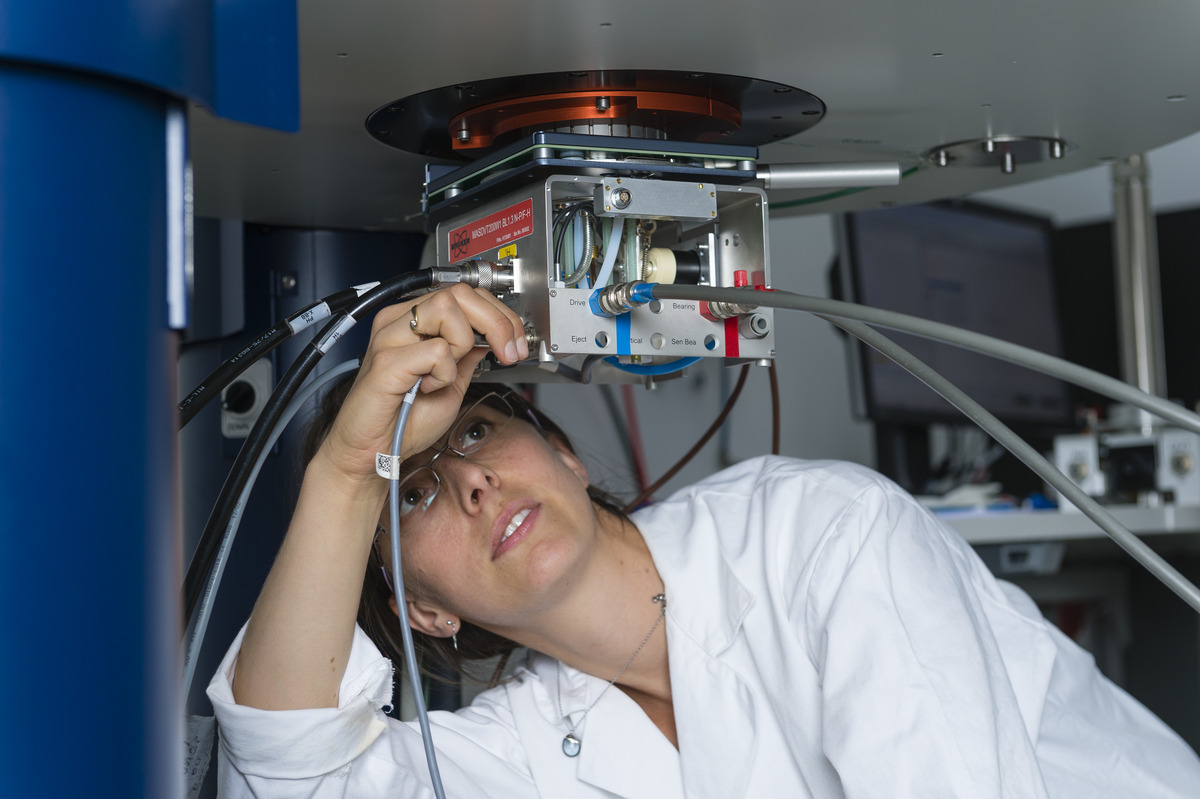
Connecting the optical fibre to an NMR probe© Cyril FRESILLON / CEMHTI / CNRS Images
Evaluating the environmental impact of purchasing
A method exists that enables users to carry out an in-depth analysis the socio-technical processes underpinning any purchase. Life cycle analysis (LCA) calculates a product's environmental footprint from the extraction of raw materials at the start of its life to waste processing at the end. CNRS Engineering's (one of the ten CNRS Institutes) direct interactions with industrial applications led it to set up an LCA-dedicated support and research unit (UAR) recently. By the end of 2026, the new UAR, Utopii
LCA could also help the whole of the CNRS to quantify the carbon impact of its purchases more accurately. In the absence of a precise estimate of purchases made, the CNRS's BEGES is based on the monetary volume of purchases. This is assessed using the 'Purchases' module from the GES 1Point5 tool developed by the similarly-named Labos 1point5 research network (GDR) which associates an emission factor with each purchase identified under the nomenclature used by research organisations. The method has the merit of actually estimating a laboratory's greenhouse gas emissions on the basis of its expenditure but it does not distinguish between similar items of equipment with different carbon footprints. To counter any uncertainty on this point, Stéphane Guillot, the CNRS's scientific officer for sustainable development and risks, assures that "the CNRS is working with Labos 1Point5 to substitute physical emission factors based on the actual environmental characteristics of purchases for monetary emissions factors, which are useful but imperfect". A working group has been set up to work along these lines at the level of the Ministry of Higher Education and Research with Utopii and the CNRS among those contributing.
All these initiatives make Stéphane Guillot pretty optimistic. "We can do quality science and keep our purchasing under control. Our objective now is to strike the right balance between optimising our carbon footprint and keeping our research at the highest international level".
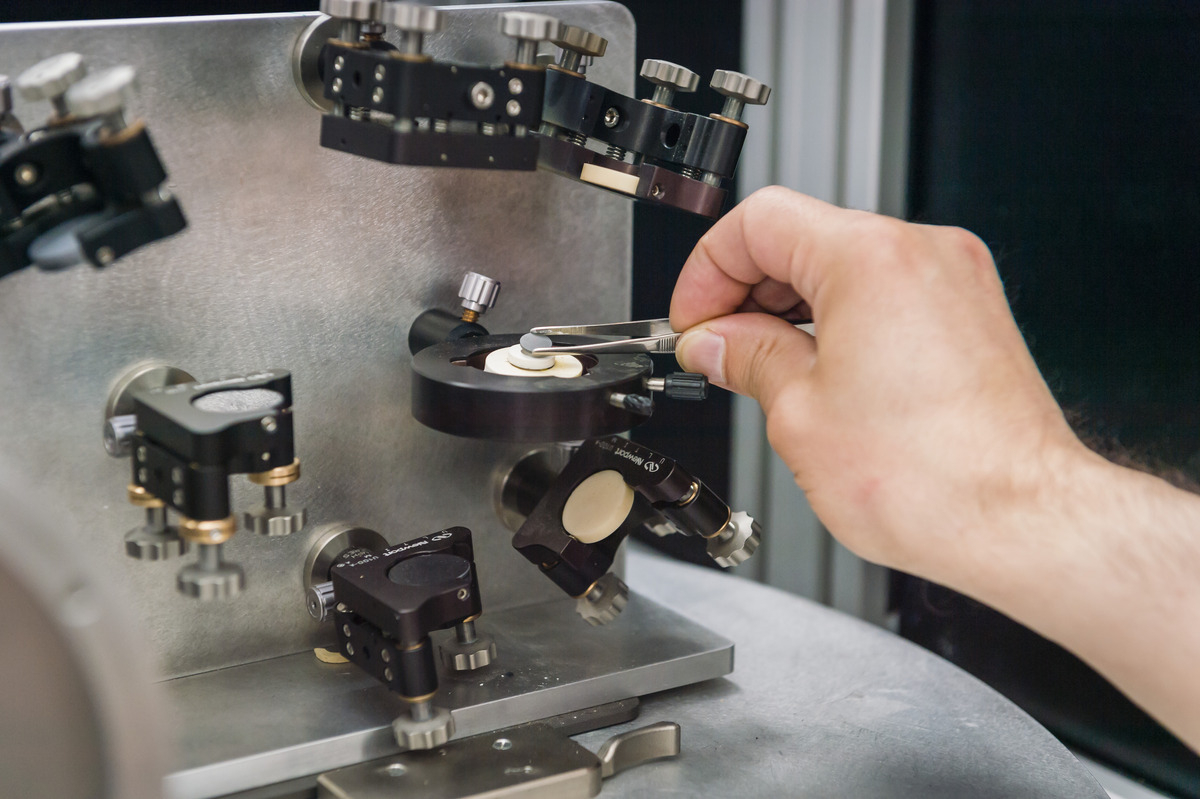
Measurement of the emissivity of a silicon carbide wafer by infrared and visible emission spectroscopy© Cyril FRESILLON / CEMHTI / CNRS Images