Phage therapy – microscopic predators countering antibiotic resistance
Bacteriophages have particularly promising therapeutic potential for combating antibiotic resistance because they are capable of targeting and destroying certain bacteria. French research in fields ranging from human medicine to agriculture is studying their uses and working on ways to establish a sector to ensure the long-term usage of these microscopic predators to fight infections.
Key takeaways
Antibiotic resistance causes millions of deaths worldwide so research is exploring a new therapeutic approach, namely bacteriophages.
The French Agency for the Safety of Health Products (ANSM) has authorised the first clinical trials in the wake of several research programmes.
To produce these bacteriophages, a research team is arguing in favour of the creation of a public infrastructure. This proposal is also supported by a bill before the French Parliament.
As well as their use in the human health sphere, bacteriophages are also of interest to the agricultural sector from a One Health perspective.
“A number of patients are now finding themselves faced with a therapeutic dead-end because antibiotics have become completely ineffective for fighting their infections,” explains Alban Dhanani, the deputy director of the ‘Infectious and Emerging Diseases’ medical department at the French Agency for the Safety of Health Products (ANSM).
The issue of antibiotic resistance is actually even more concerning because the therapeutic arsenal has run dry, with no new class of antibiotics having emerged for over thirty years. In 2021, bacterial resistance was linked to 4.7 million deaths worldwide1 and, without urgent action, the World Health Organisation has estimated2 that it could cause up to 39 million deaths by 2050.
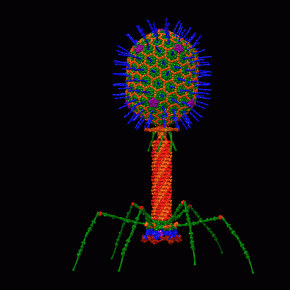
But what if it were possible to enlist the services of the natural predators of these multi-drug-resistant bacteria to combat bacteria? Bacteriophages, or phages, are viruses that are capable of infecting specific bacteria and destroying them without infecting human cells. This old therapeutic approach is now being revived in France, but how does it actually work?
Highly selective predators
A vast range of diverse phages exists but they do not attack just any bacterium. “They need to recognise a surface component of their target to attach themselves and inject their genetic material,” explains François Rousset, a CNRS researcher working at the Center for Intergrative Research in Infectious Diseases3. This component could be a protein or a sugar, for example.
However, none of this is set in stone. “There is a constant co-evolution between bacteria and these viruses. Bacteria develop defence systems on the surface and inside their cells to evade phages, while phages evolve to counter bacterial defences in response,” explains the researcher. The aim of phage therapy is to harness this natural dynamic to combat bacterial resistance.
- 1
https://www.who.int/news-room/fact-sheets/detail/antimicrobial-resistance
- 2
Global antibiotic resistance surveillance report 2025 – World Health Organisation.
- 3
CNRS/ENS de Lyon/Inserm/Claude Bernard University of Lyon I.
This specific aspect of phages changes the therapeutic strategy that needs to be adopted, which is different from the broad spectrum of action of antibiotics. First, the bacterium responsible for the infection needs to be identified and then researchers have to pinpoint the phages capable of infecting it. This is the role of the phagogram, the equivalent of an antibiogram. “In this way, phage therapy paves the way for a much more tailored approach involving using the right phage at the right time. Phages are intended as a complement to antibiotics and act synergistically,” explains Alban Dhanani.
From the laboratory to the hospital
In France, certain phages are already available to patients before their marketing authorisation in the framework of a compassionate use scheme. This began in 2022 when phages were notably used against Staphylococcus aureus and, more recently, Pseudomonas aeruginosa.
“However, there is still limited clinical data demonstrating their efficacy in specific infections,” explains Alban Dhanani. To be capable of running clinical trials, it is essential to possess phages that have produced to pharmaceutical quality standards, which means the production process needs to guarantee the quality and compliance of any product given to a patient.

It is precisely on this last point that the Hospices Civils de Lyon took a significant step forward when the ANSM authorised them to manufacture therapeutic phages in compliance with the quality standards applicable to medicines. This production is part of a process that ranges from the isolation of phages (particularly from wastewater) to their purification and preparation. Their clinical use is also already a reality through the PHAGEinLYON Clinic programme which has enabled over 100 patients suffering from complex infections to benefit from personalised phage therapy.
From standard to tailored solutions
Modern phage therapy begins at the patient’s bedside, as the bacterium responsible for the infection has to be characterised to produce or prepare the right phages to combat it. “On one hand, this approach makes it difficult to set up a supply chain based solely on the model of industrial pharmaceuticals,” explains Charlotte Brives, a health anthropologist at the CNRS1. “On the other hand, we’ve noted that some of the skills required for phage therapy are already present within public institutions. These include bacteriology, bacterial collections, human resources, clinical expertise and even platforms that are capable of producing medicines and hospital preparations,” continues Koichi Kameda, a sociologist and legal specialist at the Research Institute for Development (IRD).
The two scientists have studied how to develop a sustainable framework for phage therapy in France as part of their research for the ANR Phag-One project2 which works on developing the public-sector production of therapeutic phages. Their research has led them to argue in favour of a public-sector model based on networking the capabilities that already exist in hospitals and research institutions rather than relying on the industrial pharmaceutical model alone.
Constructing a collective infrastructure
“Two principles should guide the development of this public sector. The first is accessibility, or being capable of providing treatment to as many people as possible, and the second is sustainability because we have to avoid repeating the dead ends that occurred during the development of antibiotic resistance when working on phages,” explains Charlotte Brives.
This kind of national phage therapy infrastructure would require dedicated staff, specific expertise and long-term funding. Koichi Kameda points out that “phage therapy currently relies on funding designed to support research projects rather than sustainable hospital-based production.” This makes it essential to structure this public model and ensure its long-term viability.
- 1
At the Émile Durkheim Centre (CNRS/Science Po Bordeaux/University of Bordeaux)
- 2
The PHAG-ONE project is one of 11 projects selected in the framework of the 'Antibiorésistance "Comprendre, innover, agir' call for proposals managed by the French National Research Agency (ANR).

This way of thinking about the issue has already been reflected in legislation through the Green Party group in the French National Assembly which has tabled a bill that aims to ensure the public development of phage therapy. “It’s clear that antibiotic resistance is a major public health issue. Given the private sector’s limited involvement, our idea is to stabilise the legal framework governing the use of phage therapy in human medicine in France as well as the funding involved,” explains Hendrik Davi, the MP behind the bill and a former researcher at the National Research Institute for Agriculture, Food and Environment (INRAE).
Beyond the hospital – One Health
Antibiotic resistance is also now posing a challenge to human medicine because antimicrobials are not just used in hospitals. Resistant bacteria circulate between different spheres like human health, livestock farming or the environment. This means that, from a ‘One Health’ perspective1, the fight against antibiotic resistance has to extend beyond the medical sphere alone.
For example, in agriculture, bacteria are developing resistance to the copper used to combat certain plant diseases and climate change could lead to these diseases becoming even more widespread. "Heatwaves increase the vulnerability of trees to certain diseases like fire blight2, particularly apple and pear trees,” explains Clara Torres-Barceló, a microbiologist who specialises in phages at the INRAE. In 2026, a phage-based product was actually applied for the first time in real-world conditions in France to combat this disease.
Health and environmental constraints vary according to the environments phages are introduced into but research converges on several key issues, such as the evolution of bacteria and the emergence of resistance. This is why French research is already structured to work on these challenges, particularly through the CNRS’s Phages Research Group and the Inserm’s Phage Therapy Initiative. Clara Torres-Barceló concludes by remarking that “phages are already here, in human medicine, veterinary medicine or agriculture. Now is the time to discuss them, carry out research and adapt their applications."
- 1
A holistic concept that links human health, animal health and the health of ecosystems and the environment.
- 2
Fire blight is capable of rapidly causing the death of diseased trees or shrubs and, as such, is one of the most dangerous diseases for pear, apple, quince and medlar trees, along with a few other species like hawthorn. It spreads easily and current control measures are only partially effective.