

Scientific publications: a fatal level of overproduction?
Corporate
They are variously labelled too numerous, fraudulent or written by generative artificial intelligence: criticism of scientific publications is ramping up in a current context of overproduction. But does this mean we should give up on them? This was the subject of debate at the CNRS's seventh Open Science Day.
Something has been wrong in the world of scientific publications for many years now and the process is speeding up. In 2025, there will be nearly five million unpublished articles, compared to just one million in the 1980s. There has been a particularly sharp increase in the last decade with the main bibliographic databases growing by nearly 50% between 2016 and 2020. This phenomenon is unrelated to the +16% increase in the number of scientists worldwide in the same period
Alain Schuhl, the CNRS's Deputy CEO for Science (DGDS), puts his finger on it thus: "The emergence of generative artificial intelligence means we're in a system that can't have the same standards as before because there are no longer any authors, reviewers or readers". The "announced demise of scientific publications" was discussed in detail at the CNRS's seventh Open Science Day on November 25th of this year.
Part of the day was given over to understanding the mechanics of this global crisis. Several speakers highlighted the role of 'paper mills' which are now driven by generative artificial intelligence but what proportion of scientific articles do these paper mills actually represent? The lowest estimates are between 1% and 3% but they illustrate a general phenomenon as described by Lionel Maurel, the deputy director for scientific publishing at the CNRS's Open Research Data Department (DDOR)
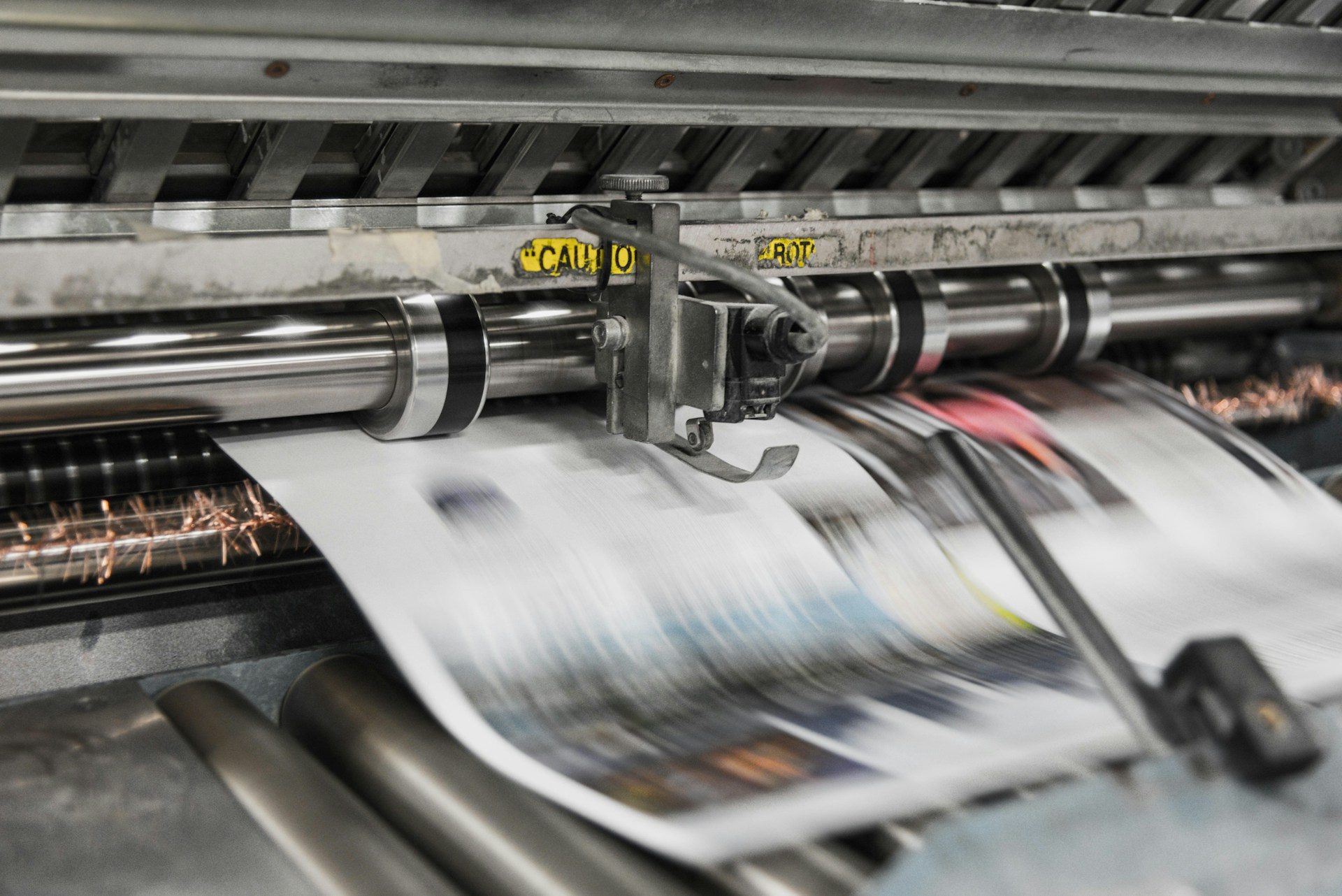
Paper mills are only the most visible and criticised part of scientific overproduction.@bank_phrom / Unsplash
However, when it comes to scientific publications, paper mills and other fraudulent practices are only the tip of the iceberg. The phenomenal growth of scientific publications derives primarily from the organisation of research itself according to Vincent Larivière, a library science specialist from the University of Montreal
Overproduction and platform-based research
What is at the root of this political problem? The fact that the assessment of researchers is still often linked to their volume of publications. "We publish more because we're actually encouraged to on an individual basis", sums up Vincent Larivière and sometimes this can reach border on the absurd. Didier Torny, a CNRS publication economics researcher
This has now led to bibliometrics and economics actually becoming inseparable as Yves Citton
Just as the music industry has shifted from physical media to streaming, research now depends on digital platforms to be read.@bdbillustrations / Unsplash
This has not taken place without knock-on consequences for editorial production itself. The Information and Communication Science researcher Chérifa Boukacem-Zeghmouri
Decorrelating the assessment of publications
So does it make sense to continue publishing scientific articles in these circumstances? Two publishers were invited to take part in a round table discussion where they defended the value of scientific publications as long as technical modifications are implemented. Olivier Dumon, Chief Product Officer with one of the world's leading publishers, Elsevier, announced his company sees scientific integrity as a real issue. Indeed, Elsevier has invested $20 million in expanding its integrity team from two people in 2023 to 120 today. With a team like this, "Elsevier ensures that the rejection rate for articles submitted for publication remains at around 80%", which itself is a guarantee of the quality of the papers that Elsevier publishes. Regarding the pressure exerted by the overproduction of articles on reviewers, Olivier Dumon points out that "an article is rejected 2.6 times before a journal accepts it" and praises the creation of a tool based on artificial intelligence that is "capable of identifying relevant peer reviewers rather than relying on publishers' personal networks".

Does peer review still make sense in an era of scientific overproduction?@amstram / Unsplash
Emmanuelle Jannès-Ober, the representative at the conference of the association of French public publishers
This position is not broad enough in Lionel Maurel's view because 90% of scientific pre-print manuscripts will eventually be published in a journal. "Peer review has lost its primary function. Its purpose isn't to evaluate quality any more but to rank prestige", laments the deputy director scientific publishing before going on to clarify his point. "Nowadays, scientific publishers no longer sell a certain quality of research – instead they sell prestige which is a commodity of infinite value that's actually unrelated to the service provided but publication costs are based on this. It's no longer a question of deciding whether to publish a paper but rather of choosing where to publish it based on a journal's reputation". Unlike publishers, Lionel Maurel and other contributors believe that the overproduction crisis can only be resolved by reforming the assessment of research to move away from basing this on bibliometric indicators.

Since reforming its researcher evaluation system, the CNRS has been promoting other areas of scientific activity beyond publications alone, particularly other means of disseminating scientific knowledge.@johnishappysometimes / Unsplash
Antoine Petit, the CNRS Chairman and CEO, reminds us that this has been the case at the CNRS since 2021. "The individual assessment of researchers has been completely overhauled in consultation with the CPCN
With this shift away from such indicators, research assessment can now highlight other areas of scientific activity rather than focusing on publications alone. These include communicating on research, outreach activities, cross-disciplinary missions and even investment in the translation of scientific articles, with the latter activity featuring in a series of presentations at the Open Science Day. One was made by Susanna Fiorini, the scientific coordinator of the OPERAS research infrastructure