

What kind of risk culture is right for Martinique?
Despite awareness-raising initiatives in Martinique, a large proportion of the population remains inadequately prepared to deal with the risks of natural disasters. This is why the Risques PEPR project has prioritised listening to local stakeholders a priority to understand why and help develop the right responses.
France’s overseas territories are exposed to a wide variety of natural hazards, including earthquakes, cyclones, tsunamis or volcanic eruptions. This is why they quickly emerged as a key study area for the Risques PEPR programme, which is now focusing on preparing these communities for disaster risks. “These territories are also characterised by significant vulnerabilities like social inequalities, a lack of infrastructure, an ageing population and insularity, all of which can make crisis preparedness and management more complicated”, explains Soraya Boudia, the PEPR’s co-director.
The possibility of major natural hazards requires the risks to be effectively studied and monitored, while also reinforcing the capacity of communities and territories to prepare for and cope with these. In Martinique, the starting point for this process is a comprehensive assessment.
Listening to local stakeholders
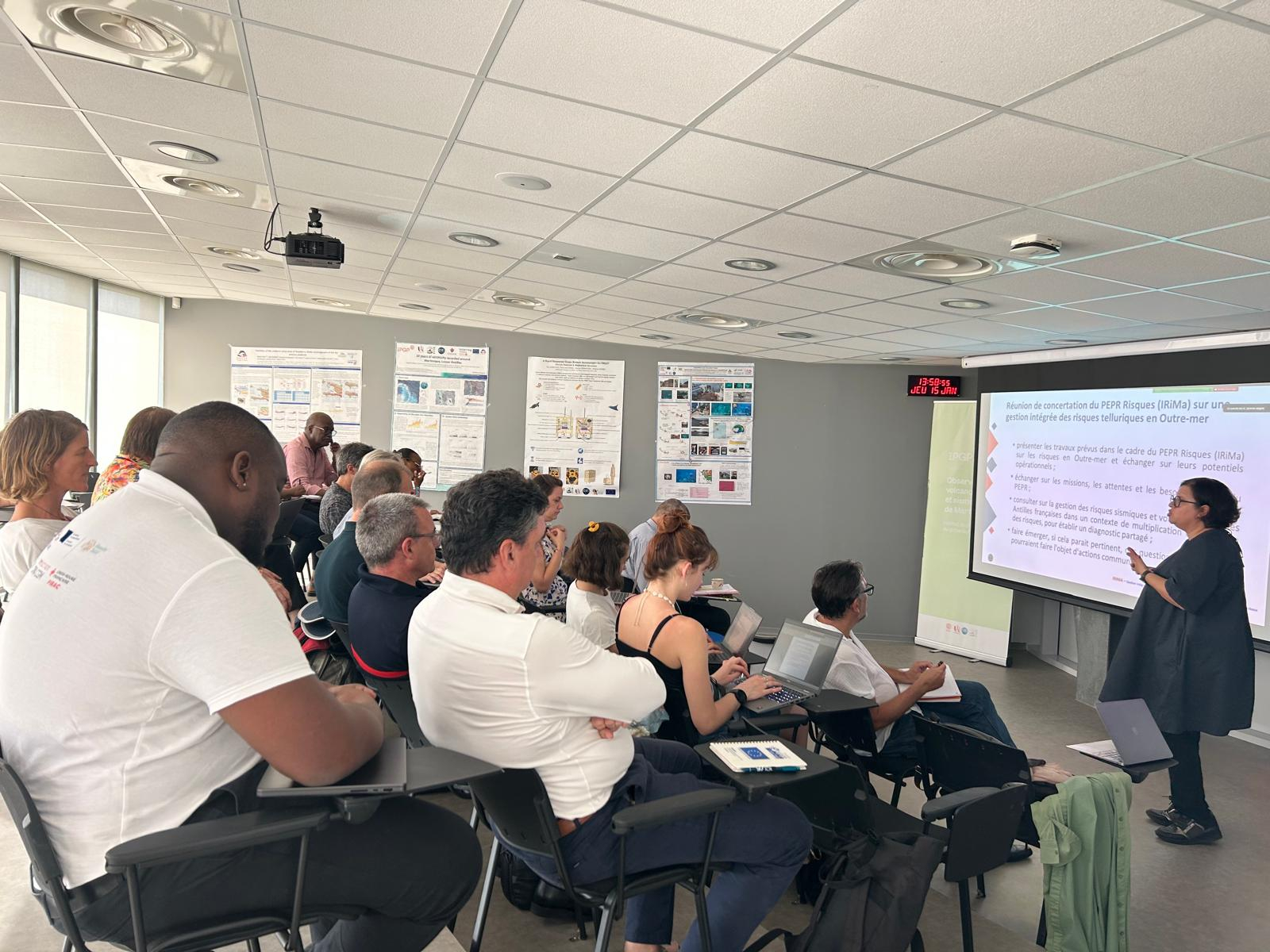
Researchers from the Risques PEPR (IRiMa) organised a consultation workshop last January for representatives from local authorities, government departments, associations and local stakeholders to find out more about what the concept of risk culture actually entails in Martinique. “We’d carried out interviews upstream to identify the key stakeholders and the workshop was designed to give them a voice so we could develop a shared assessment”, explains Soraya Boudia.
“The presence of researchers is essential to reduce uncertainty and avoid basing risk preparedness on unfounded assumptions”, emphasises Marie-Noëlle Raveau, the head of the risk prevention and planning department at the Collectivité Territoriale de Martinique (CTM, local authorities of Martinique).
The first observation was that being aware of a risk does not guarantee protective behaviour. For example, Sandrine Icheck-Bahuaud, the CTM’s director of territorial risks and resilience, reports that, following several decades without a major cyclone, “certain construction practices designed to strengthen roofs have gradually disappeared”, with the result that numerous roofs were blown off during Cyclone Dean in 2007.

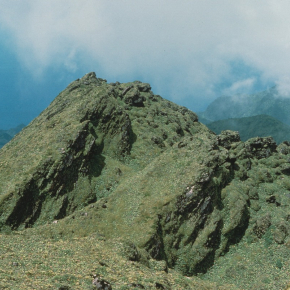
This example does illustrate the gradual erosion of safety measures, but Mount Pelée is an illustration of a more profound phenomenon, namely the potential for a risk to be actually even forgotten. Over a century after the 1902 eruption, which destroyed the town of Saint-Pierre and caused nearly 30,000 deaths, Mount Pelée had become something more akin to a collective memory. “The volcano’s renewed activity in 2020 brought the ORSEC1 emergency plan for volcanoes back into the spotlight, when, in fact, nobody had been paying much attention to this plan for several years”,points out Marie-Noëlle Raveau.
“Local stakeholders have also observed a form of information overload”, reports Soraya Boudia, because the local authorities, central government, scientists and organisations tend to bombard residents with messages about a wide range of risks, often using a siloed approach. This assessment has led scientists to shift their focus now to identifying the mechanisms that hinder or facilitate residents’ understanding of risks and to their ways of coping with them, the overall goal being to achieve a sustainable reduction in disaster risk.
Risks with social roots
“Today, we’re mostly still operating within a framework where the authorities address the public, rather than employing a co-constructive approach”, observes Marie-Noëlle Raveau. However, behaviours observed during a crisis do not just emerge when an alert is raised, and instead often reflect the relationship between residents and institutions that have built up over time.
- 1
ORSEC is the French civil protection response programme for organising emergency response at the level of France’s départements.
In Martinique, this issue is inextricably associated with the territory’s history, as the chlordecone scandal, the management of the Covid pandemic, issues linked to the high cost of living, and debates on the legacy of slavery can all be divisive influences on what is sometimes a complex relationship with public discourse. This means that risk preparedness cannot be considered in isolation from the overall context in Martinique. Sandrine Icheck-Bahuaud considers that the reality in the field requires moving beyond a purely technical approach to risk preparedness, remarking that, “as long as we don’t properly address this deeply anthropological dimension with local communities, we’ll always risk falling short”.
This assessment is now paving the way for new grassroots initiatives. “We’ve set up a RiskLab, a scheme to promote grassroots action, working directly with local stakeholders and citizens’ groups”, explains Soraya Boudia. The first initiatives have drawn on international experiences to explore various ways of moving forward, including collaborations with artists from Martinique, the development of outreach programmes, and coordinating a network of institutions, associations and educational stakeholders. In this way, the initial projects aim to reinforce social ties, as these are clearly crucial for coping with risks.
Future projects planned from 2027 onwards will also focus on first aid in schools, after-school clubs that involve parents, and intergenerational workshops focusing on remembering disasters.
Observatories: guardians of memory
In Martinique, as in other French overseas territories exposed to natural hazards, volcanological and seismological observatories continuously monitor phenomena and contribute to the early warning system, which means scientists act as the first link in the natural hazard management chain. However, the role of researchers does not stop there.
“Just a few years ago, some préfets1 would turn up in the overseas territories without even realising there was an active volcano in their territory”,observes François Beauducel, the director of the IPGP’s volcanological and seismological observatories. The high staff turnover in the préfectures has led the observatory teams to make it a habit to approach each new head of department as soon as possible to brief them on the reality of geological hazards. This familiarisation process is repeated with every change of post.
It is precisely to bridge this gap that these observatories act as a bridge between scientific knowledge, the public authorities and the local population. Initiatives like regular bulletins, open days, crisis exercises and training sessions for teachers are all initiatives that aim to keep alive awareness of risk that is not naturally sustained. “As scientists, we can’t build this culture of risk on our own”, admits François Beauducel. “It’s an immense task”.
- 1
In the French system, a préfet is the State's representative in a department or region.