Wildfires – science to the rescue
By 2100, wildfires will become a major risk in a France. In this context, the CNRS is providing insights into the risks at the interfaces between urban areas and natural spaces, through its collective scientific expertise. This particularly involves giving public authorities guidance on prevention and crisis management.
Key takeaways for action
- A collective scientific expertise from the CNRS has studied the causes and consequences of fires on the outskirts of towns and cities.
- Urban sprawl, land abandonment and reforestation are all factors that increase exposure to wildfires.
- Drawing on scientific knowledge enables us to better prevent fires and, at the height of a crisis, to manage it more effectively.
Fires across a great deal of mainland France – from the south-east and the Gironde region to the Vosges and even as far as Brittany… This is not the fiery apocalypse portrayed by the popular French science fiction author René Barjavel in his novel Ravage (1943) – it was actually France in the summer of 2022. And, since then, other large-scale fires have swept across the country, with the situation likely to worsen by 2100. If current emissions trends continue, by the end of the century France could experience a temperature rise of around +4 °C compared to pre-industrial levels. This trajectory is now used as a benchmark for climate change adaptation and means wildfires could affect more areas and last much longer.
In this fiery context, the CNRS has taken up the issue through its Mission for Scientific Expertise and led a collective scientific assessment in which 17 researchers analysed over 1000 international publications. This study is dedicated to the resilience of "urban interfaces exposed to wildland fire in the broader context of climate change" and aims to find out more about the causes and consequences of these phenomena in interface zones of this kind which make up two-thirds of all fire outbreak sites in France. The study's second objective is to provide public policy-makers with the scientific insight they require to effectively adapt prevention and crisis management, urban planning and governance accordingly.
Science is clearing away the deadwood on wildfires
The risk is increasing in step with the multiplication of factors contributing to fire vulnerability throughout the 20th century. France's ongoing urbanisation and decline in its agriculture have driven two concurrent phenomena – urban sprawl, through suburbanisation, and the abandonment of arable and pastoral land. In other terms, "analysis of scientific publications shows that outbreaks of fires are concentrated at the interface between towns and natural areas… which means where people, buildings and activities are also concentrated", observes Christine Bouisset, a geographer at the Université de Pau et des Pays de l’Adour
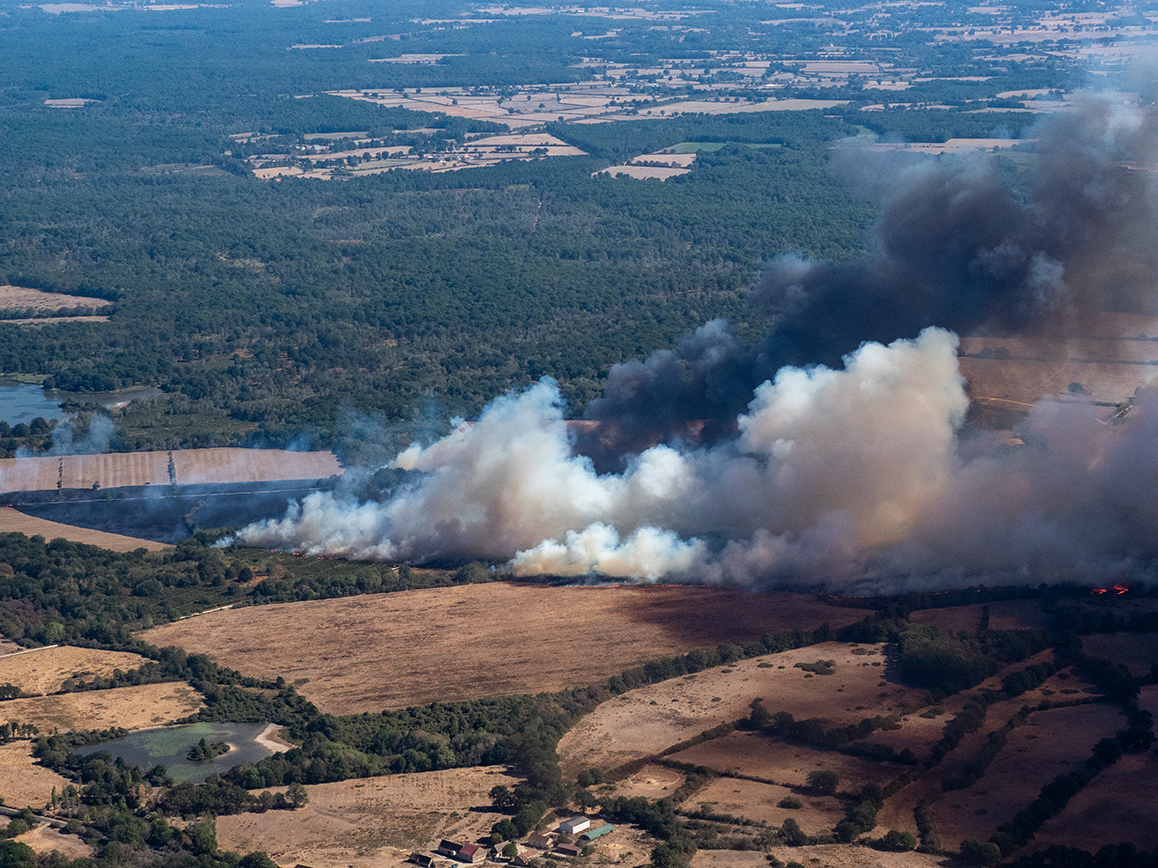
The increased proximity of inhabited areas, which is where most fires start, combined with an overall increase in the volume and continuity of combustible vegetation, and also climate change makes a pretty explosive mix, with severe consequences. "A tiny proportion of fires account for the vast majority of the burnt areas and the impacts. Depending on the year, under ten incidents, and sometimes just one, can account for the majority of the damage", explains the specialist in wildfire modelling. Added to that, climate change is already contributing to conditions that favour wildfires of this kind, which are considered extreme across the globe. In turn, the proliferation of extreme events of this kind is increasing the number of people in vulnerable situations. "Scientific studies estimate that 400 million people are now at risk worldwide, notably because they live in areas like these that are prone to fires", explains Christine Bouisset. "And yet, in certain parts of the world that are particularly vulnerable to fires like Australia and the United States, it's becoming increasingly difficult to get fire insurance…" A 2025 study
Science supporting prevention and crisis management
Faced with this increased fire risk, the scientific literature agrees on the importance of adapting prevention measures to the new situation. To reduce the risk in the short term, the report identifies several levers for action that need to be combined. These are: clearing vegetation around buildings, implementing prevention plans, and involving the affected communities in public policy-making. Following its analysis of the scientific literature on the subject, the expert review has also highlighted a number of measures to anticipate, manage and protect property and people at the height of a crisis more effectively. Along with advance positioning of firefighting resources on high-risk days, the literature stresses the importance of detection, monitoring and decision-support tools like satellites, cameras, drones or fire spread prediction models and the need to reinforce anticipation capabilities. "Simulation tools already enable us to develop scenarios for many fires, but extreme fires are difficult to anticipate using standard tools, particularly when they interact strongly with the atmosphere", explains Jean-Baptiste Filippi. Alongside weather forecasting, the report highlights the need to raise the public's awareness of life-saving actions. "When you're faced with an extreme fire, waiting for the fire brigade at home actually doesn't always seem the best option", remarks Christine Bouisset. "The literature agrees that it's essential to prepare the public in advance through individual contingency plans while also providing them with accurate and factual information at the height of a crisis".
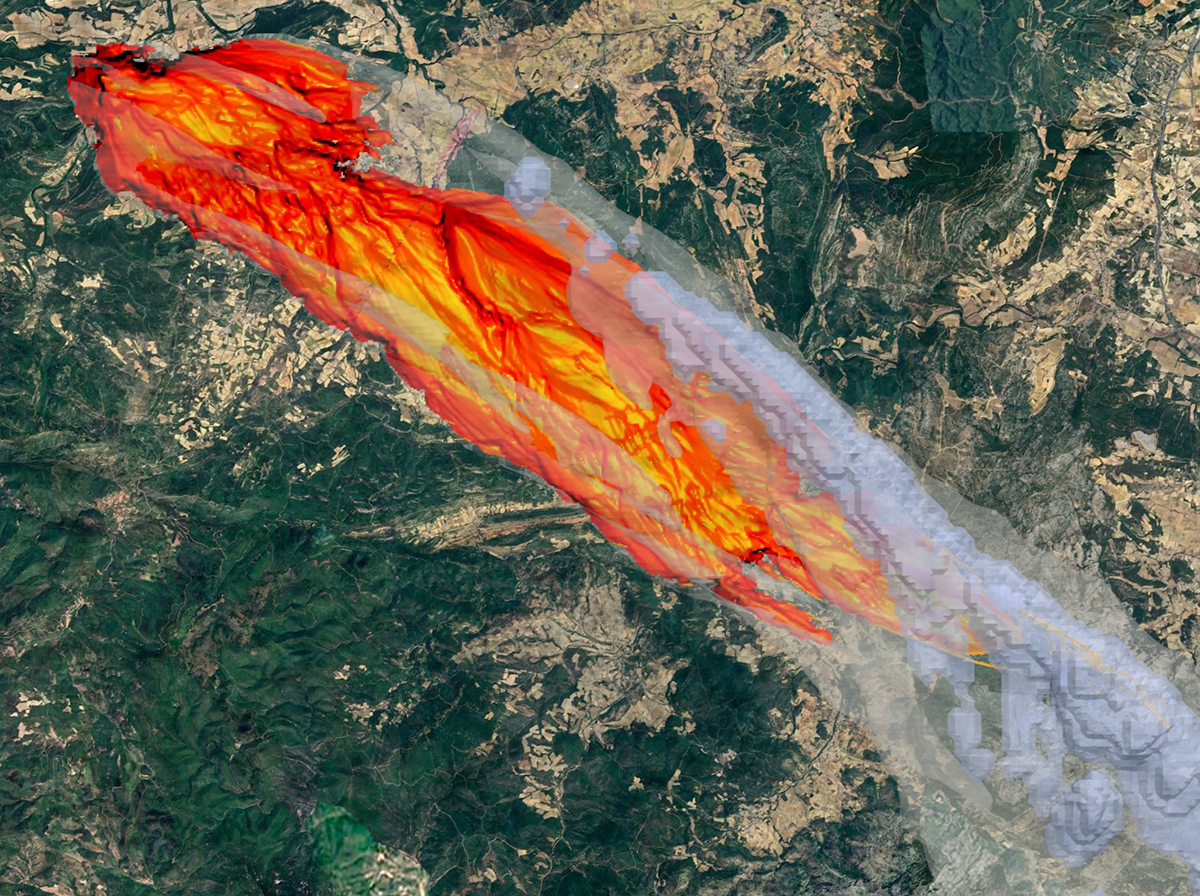
As well as short- and medium-term actions, the overall aim is to rethink cities and their outskirts sustainably to reduce the risk of fires in the long term. In this way, research stresses that the fact that urban planning and development can help reduce vulnerability and optimise emergency responses to limit exposure to wildfires on the fringes of urban areas. This brings up questions about the relationship with urban greening policies in high-risk areas and the importance of considering plant species and how these are arranged. Increased vegetation is intended to "cool people down in the face of global warming but conversely this simultaneously provides more fuel for fires", observes Jean-Baptiste Filippi. The report analysed feedback from countries that are used to fires like the United States and Australia, which highlights the value of developing a genuine risk culture in France and Europe. "It's now a matter of learning to live with risk, integrating it right from the outset of a development project, and of training decision-makers and the public alike along these lines", concludes his fellow geographer.
To face up to what looks a lot like a thousand-headed hydra, given the many risk factors, an interdisciplinary research organisation like the CNRS is ready to provide the right support.