2026 Nobel Prize in Chemistry awarded to Henri Kagan for his work on asymmetric catalysis
Corporate
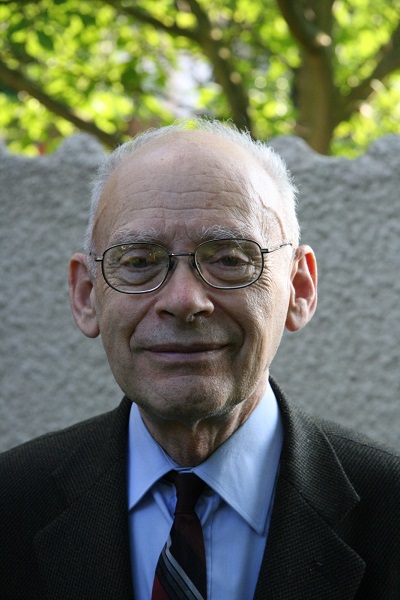
Henri Kagan, Professor Emeritus of Université Paris-Saclay, has been awarded the 2026 Nobel Prize in Chemistry for the discovery of nonlinear effects in asymmetric synthesis, work he carried out at the Institute of Molecular Chemistry and Materials of Orsay (Université Paris-Saclay/CNRS). He shares the award with Japanese chemist Kenso Soai for his work on autocatalysis in organic chemistry. The Nobel Committee praised their discoveries, which “have played a decisive role for chemists designing reactions for the manufacture of pharmaceuticals”.
Henri Kagan, Professor Emeritus at the Faculty of Sciences of Orsay at Université Paris-Saclay, devoted a large part of his career, within the Molecular Catalysis team at the Institute of Molecular Chemistry and Materials of Orsay (Université Paris-Saclay/CNRS), to research dedicated to molecular chirality.
He actively contributed to the discovery of asymmetric catalysis, an efficient and selective synthesis method that makes it possible to produce these chiral molecules, which are essential for the development of medicines, among other applications.
They are also found in the constituents of molecules essential to life. How did they emerge on Earth? Henri Kagan’s work on nonlinear effects in asymmetric catalysis has contributed to answering this question through the conceptualisation and demonstration of the amplification effect of a molecular asymmetry.
Henri Kagan graduated from the École Nationale Supérieure de Chimie de Paris. He began his career at the CNRS in 1954, before completing his PhD at the Collège de France under the supervision of Jean Jacques. Henri Kagan was appointed lecturer at Université Paris-Saclay (formerly Université Paris-Sud) in 1967 and promoted to full professor in 1973. In 1993, he became a professor at the Institut Universitaire de France. He has been a member of the French Academy of Sciences since 1991 and was made an Honorary Fellow of the Royal Society of Chemistry (HonFRSC) in 2002. His many distinctions include the CNRS Silver Medal in 1974, the Grand Prix du Rayonnement Français for Science in 1989 and the Prelog Medal in 1990. In 2001, Henri Kagan was awarded the Wolf Prize, one of the most prestigious international awards in the field. Among the highest distinctions he has received are the Benjamin Franklin Medal in 2005 and the Lavoisier Medal in 2013. Henri Kagan was made a Knight of the Ordre national du Mérite in 1996 and a Knight of the Légion d’honneur in 2002.
“I am particularly pleased and proud to congratulate Henri Kagan, Professor Emeritus of the university and recipient of the 2026 Nobel Prize in Chemistry. The work for which he has been honoured by the Nobel Committee is part of the tradition of the great pioneers of chemistry at the university, such as Irène Joliot-Curie and Frédéric Joliot-Curie, who moved to Orsay in the late 1950s to develop unprecedented research facilities. This tradition of excellence was already accompanied by a constant concern for the applications of their discoveries in chemistry, particularly medical and pharmaceutical applications, as in the case of Henri Kagan. What a wonderful legacy,” said Camille Galap, President of Université Paris-Saclay.
“The awarding of the Nobel Prize in Chemistry to Henri Kagan, Professor Emeritus at Université Paris-Saclay, is an immense source of pride for French research as a whole, and in particular for the Institute of Molecular Chemistry and Materials of Orsay, which is also affiliated with the CNRS. His pioneering work on chirality and asymmetric catalysis has profoundly transformed the way we conceive and synthesise molecules, with major impacts, particularly in the pharmaceutical field. This distinction is a reminder of the strength of fundamental research conducted in France, capable of generating discoveries that have a lasting impact on chemistry and its applications. On behalf of the CNRS, I extend my warmest congratulations to Henri Kagan,” said Thierry Dauxois, CEO of the CNRS.
“Henri Kagan’s original models are being used more than ever today to develop new asymmetric catalysis reactions, beyond those that have already been industrialised. The study of nonlinear effects makes it possible to understand their mechanisms and optimise asymmetric amplification phenomena. This makes it possible to prepare chiral molecules using the most economical and sustainable methods, with research teams at ICMMO still working on these topics,” said Emmanuelle Schulz, Director of the Institute of Molecular Chemistry and Materials of Orsay (ICMMO - Université Paris-Saclay/CNRS).
A list of press experts is available on request to answer your questions about this Nobel Prize. Please contact us at service.presse@universite-paris-saclay.fr or presse@cnrs.fr. |
ABOUT UNIVERSITÉ PARIS-SACLAY
Université Paris-Saclay was born from the shared ambition of French universities, grandes écoles and national research organisations. As a leading university in Europe and worldwide, it spans the fields of science and engineering, life sciences and health, and humanities and social sciences.
The university’s research policy closely intertwines research and innovation, incorporating both basic and applied science to tackle major societal challenges. Université Paris-Saclay offers a varied range of degrees from undergraduate to doctoral level, including programmes offered in partnership with its grandes écoles, all of which are focused on student success and employability. The university prepares students for an ever-changing world where the ability to think critically, adapt and update their skills is crucial. Université Paris-Saclay also offers a comprehensive range of lifelong learning courses.
Located to the south of Paris, the university extends across a vast and diverse local area. Its location strengthens both its international visibility and its close ties with its socio-economic partners (major companies, SMEs, start-ups, local authorities and non-profit organisations).
www.universite-paris-saclay.fr
ABOUT THE CNRS
A major player in fundamental research worldwide, the French National Centre for Scientific Research (CNRS) is the only French research organisation active across all scientific disciplines. Its unique position as a multidisciplinary organisation enables it to bring together different fields of science to shed light on and address the challenges facing the contemporary world, working closely with public and socio-economic stakeholders. Together, the sciences contribute to sustainable progress that benefits society as a whole.
Contact
Université Paris-Saclay Press Office