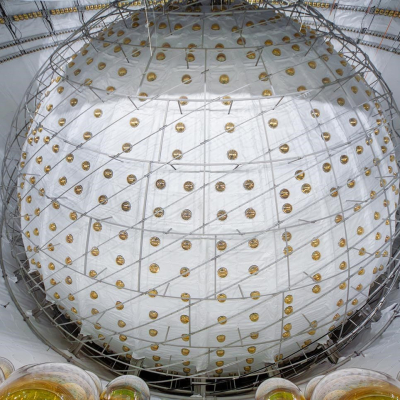
After 10 years under construction, the giant underground neutrino detector JUNO, located in China, has at last begun observations of the most puzzling fundamental particle in the Universe, the…
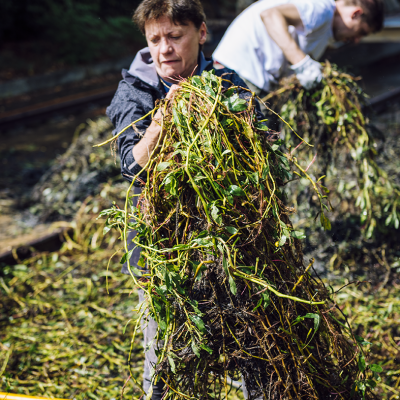
Over 15 years, almost 13,000 scientific papers have been published in the leading conservation science journals. Yet biodiversity remains threatened at a global scale. Two CNRS researchers have…
Working towards a sustainable pharmaceutical industry by using palladium ecocatalysis to prevent the predicted shortage ImpactPalladium catalysis is crucial for the pharmaceutic...
The aim of the international One Health summit taking place from April 5th to 7th is to improve our collective health by taking the major role played by the environment into account. The CNRS has…
The Rare Earths Collective Scientific Expert Review (ESCo) aims to establish the scientific state of knowledge regarding the use of rare earths throughout their life cycle. Three…
Today the European Research Council has announced the winners of its 'Consolidator' grants which annually support many projects by mid-career scientists. The CNRS is the host institution for 12 of…
For the first time, zinc isotope ratios in tooth enamel have been analysed with the aim of identifying the diet of a Neanderthal.
The Neanderthal to whom the tooth…