


The acceleration of High-Risk Research: imagining tomorrow’s scientific breakthrough discoveries
Which breakthrough innovations could soon emerge from basic research? Almost two years after the launch of the CNRS’s ‘High-Risk Research’ programme, a turning point has been reached with the evaluations of its first research projects. Analysis by the director of the National Programmes Mission.
Key takeaways to action
- The CNRS funds groundbreaking innovations that could emerge over the next ten to fifteen years.
- Polaritonics, dark matter, molecular computing on DNA… The ‘Accelerating of High-Risk Research’ programme is driving progress at the frontiers of science.
- Some of these scientific projects are already having an impact on public policy and industrial strategies.
High-Risk Research at the CNRS
In January 2024, the CNRS rolled out its High-Risk Research programme in the framework of the French state’s France 2030 plan along with four other research organisations1. Its ‘Acceleration of High-Risk Research’ programme works with a budget of 40 million euros to identify basic or innovative research at a very early stage that could lead to conceptual or technological breakthroughs of strategic importance for France over the coming decades amid strong international competition. Twelve projects were selected by the CNRS and allocated between two and three million euros each under this programme. These were submitted for evaluation eighteen months after their launch.
- 1
The CEA, the INRAE, the Inria and the Inserm.
The ‘Acceleration of High-Risk Research’ programme is coming to a crucial stage with the first go/no-go decisions on its twelve research projects. Do you see any common trends or concerns emerging amongst the eleven selected projects?
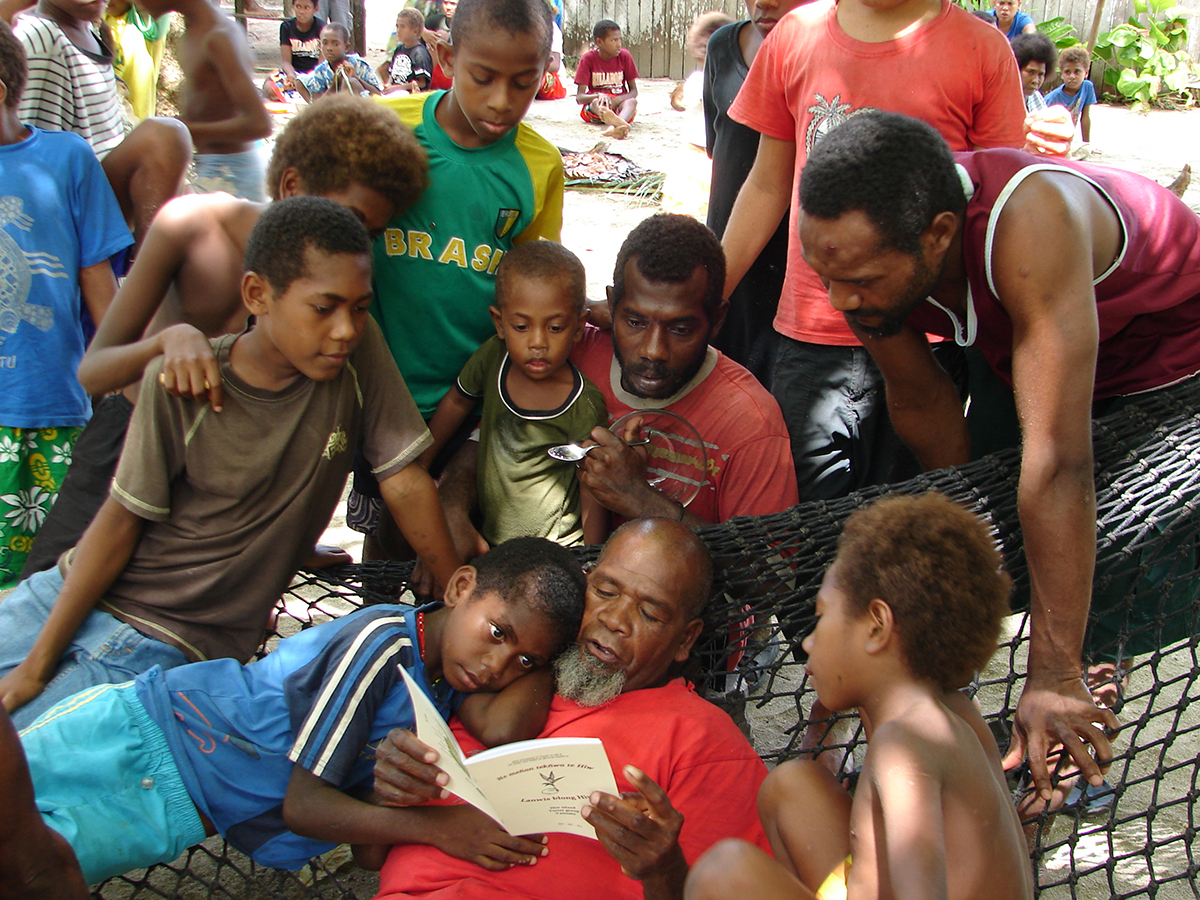
Frédéric Villiéras: I do see a common thread in that all these research projects return to the basics of their discipline, whether that’s chemistry, physics or the linguistic sciences, as is the case with the ‘Linguistic Heritage, Oral Cultures and Education in Oceania’ (HéLiCéO) project. In other terms, the need to push the boundaries of basic research paves the way for potential breakthrough innovations. This also demonstrates just how important it is to fund basic research to help drive innovation.
For example, the Polaritonic project is dedicated to a field that is still very much emerging, namely polaritonics, which studies the interactions between matter and quantum fluctuations. The challenge lies in understanding the underlying principles to be able to control them more effectively and, in doing so, predict new properties of matter. Such findings are thought to be capable of driving a cleaner, more energy-efficient form of chemistry that minimises economic and environmental costs alike. There will be a clear industrial advantage for whoever succeeds in putting this into practice.
As you mention polaritonics, several of the projects supported similarly focus on topics that remain largely overlooked in public debate, such as dark matter, molecular computing on DNA, or the detection of early warning signs of turbulent phenomena. What can these teach us about future areas of scientific and technological competition?
F. V.: Research projects like these are situated precisely at the frontiers of science in areas that remain invisible to the general public and which few teams are working on. If research like this can clear the hurdles of development and technological adoption, it could have tangible effects on society in ten to fifteen years’ time.
Funding for high-risk projects has provided a massive boost for work on these frontier research subjects. For example, this is the case of the TES4DM project, which works on detecting dark matter, which is one of the greatest challenges in physics over the last thirty years. To achieve this, the research team has developed sensors immersed in cryostats that go down to record-breaking temperatures within one hundredth of a degree of absolute zero! The technological feat is such that US researchers will soon be coming to the Modane Underground Laboratory to replicate this equipment for experiments of their own. This clearly testifies to the international influence of French research. Also, if the equipment developed by TES4DM actually does succeed in detecting dark matter, this will also pave the way for the remote observation of what goes on within nuclear power stations and laboratories.
So, this is a highly strategic field, then. Has the ‘Acceleration of High-Risk Research’ programme revealed other similar projects?
F. V.: Several research projects could indeed be of interest to decision-makers. PheroInnov aims to drastically increase our capacity to detect infinitesimal molecules, drawing inspiration from the sense of smell of insects, which is a hundred times more powerful than a dog’s sense of smell. The idea is to help enhance agroecology management and improve counter-terrorism or anti-drug efforts. The CatFoam project focuses on the enzymatic breakdown of biofilms and microplastics, a subject considered of value for both the hospital sector and water treatment operators. As for the EcoPalladium project, its aim is to use Japanese knotweed, an invasive alien species, to produce medicines sustainably by actually turning an environmental problem into an industrial opportunity.

Many of these projects are linked to the digital technology. Will the next breakthrough innovation necessarily involve this sphere?
F. V.: It’s true that half of these projects do rely on the intensive use of digital tools. This may be because they’re developing specialised algorithms, which is the case of ALEAS which studies the precursors of extreme events in turbulence. Or it could be because they use large amounts of data, like ProteoVir. This project uses computing power to recognise, isolate, fragment and analyse proteins from thousands of single cells, the end goal being to work towards enhanced personalised patient care.
However, other projects make little or no use of digital technology. This is the case of CatFoam and EcoPalladium, which work on the optimisation of chemical protocols. In other terms, this means these projects have demonstrated significant advances based on the very fundamentals of their discipline.
Specifically, the aim of the programme is to promote disruptive innovations deriving from this basic research. How does the transition from scientific intuition to an innovation capable of transforming an industrial sector, a market or public policy work in practice?
F. V.: These projects concentrate on the technical and scientific hurdles that need to be overcome. If they are successful and have potential for technology transfer, they will subsequently be able to rely on the existing innovation ecosystem at the CNRS for patent filing, pre-maturation/maturation, start-up funding, technology transfer acceleration companies (SATTs), and so forth. All of these are effective tools for scaling up.
Recherche à risque : au cœur de la science qui ose
Audiodescription
The programme was designed to finance research that would probably not have been accepted by more conventional funding schemes. What does this first cohort reveal about the current blind spots in research funding?
F. V.: That the CNRS has the capacity to identify emerging, high-impact topics from the ‘weak signals’ gathered by our ten Institutes. For example, PheroInnov had been rejected by a European Research Council (ERC) call for proposals because its likelihood of success was thought to be too low to qualify for funding.
This is precisely the aim of the ‘Acceleration of High-Risk Research’ programme. Our institutes have a very good understanding of their research units, so they’re able to identify breakthrough topics and target the right scientists. This avoids having to apply to calls for proposals to identify such projects and means we can quickly allocate substantial resources to teams so they can make effective progress.
But eleven of the twelve projects put forward have passed the first evaluation stage, so far. This could be seen as a high success rate for a programme intended to fund High-Risk Research, which, by nature, could be expected to have a high failure rate. How did you evaluate the scientific risk of these projects?
F. V.: This success rate does not minimise the initial level of risk but does prove the choices of topics and teams at an early stage were good. The aim of these evaluations was to verify that risk-taking was properly integrated and managed to some extent by the project teams during the demonstration phase. In this way, for most projects, the go/no-go evaluation actually marks the beginning of the journey.

Take, for example, the emblematic case of the ‘Modelling and simulating certain quantum systems through new mathematical approaches’ (MaQuI) project. Currently, there is strong international competition to solve highly complex equations in chemistry. To achieve this, theoretical modelling using techniques to simplify the calculations can be used, but they only work on static states so the challenge was to model dynamic effects. The MaQuI team has taken up this challenge by proposing a new mathematical approach to derive a validated functional solution for simple systems. This would be a world first, as long as this approach can be extended to increasingly complex cases. Their method was published in June of this year1 and is currently being tested by the international community. It’s set to have a significant impact on theoretical modelling in chemistry.
When you consider the projects that are currently at the go/no-go stage, which do you think are likely to have the most far-reaching consequences for society, the economy or public policy by 2035 to 2040?
F. V.: They all have the potential to make an impact and some have even already attracted interest from public policy-makers. In Oceania, the HéLiCéO project dedicated to the study and protection of Pacific languages has a very strong educational objective, namely to empower the people of Oceania to document, preserve and pass on their oral traditions. In this way, partnerships have been established with the education authorities in French Polynesia and Vanuatu.
- 1
https://journals.aps.org/prl/accepted/10.1103/xtjx-r2lm
The 2024 Draghi report brought the issue of European technological competitiveness back to the fore, and now the European Union is considering reinforcing its support for disruptive innovations, particularly based on the ARPA model from the United States. What role could the ‘Acceleration of High-Risk Research’ programme play in this regional strategy?
F. V.: The CNRS programme seems to me to be closer than the ARPAs to this brand-new ERC+ initiative, as it offers grants of up to seven million euros over four to seven years to work on major scientific challenges or open up new research avenues. Nevertheless, competition will be particularly fierce and based on calls for proposals rather than on identifying and targeting high-potential subjects.
And at the national level in France?
F. V.: We’re still waiting for a second funding round, which has been maintained despite the various budget cuts in research, to our knowledge. We hope we’ll be able to support around fifty additional projects in this way. In fact, to be competitive in international science, we’d need to fund ten to fifteen projects of this scale every year to accelerate High-Risk Research liable to lead to major innovations.