The CNRS is helping the environmental transition to take root
Corporate
The second edition of the CNRS Bas Carbone call for projects launched last year has just come to a close after driving the emergence of ground-breaking initiatives to promote the environmental transition in research laboratories.
In early 2023 the CNRS launched CNRS Bas Carbone, its first call for low carbon projects. Funding of €225,000 was assigned to promote the development of environmental transition initiatives throughout the organisation's jointly-supervised laboratories. 32 projects were selected with most focusing on the four thematic areas – purchasing, energy, mobility and digital technology – and three transversal areas – awareness-raising/training, promotion and measurement – set out as priorities in the CNRS's transition plan. A few of the actions involved promoting biodiversity or working to enhance water management. The undoubted success of this first edition led to a second call for 'Environmental Transition' initiatives integrating all the major transition issues rather than just the carbon impact alone. This was launched in May 2024 with 78 project applications submitted, 46 winning projects and €230,000 of CNRS joint funding.
Reusing single-use plastic
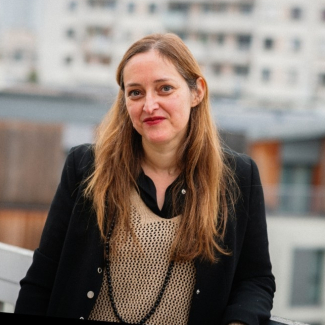
CNRS Bas Carbone funded and encouraged transition initiatives that have now become commonplace in research laboratories like greenhouse gas assessments, awareness-raising workshops and the installation of cycling facilities equipment to encourage soft mobility. The call has facilitated the emergence of highly original initiatives as well which is certainly the case of Laurence Salomé's project to reuse single-use plastic in Toulouse. This CNRS research director and sustainable development officer at the Institute of Pharmacology and Structural Biology
Laurence Salamé explains that what began as "a small fringe project very quickly gained momentum" because of her colleagues' enthusiasm for the idea. A usage survey was carried out in the seven laboratories involved and found that several teams had already replaced plastic with glass instruments or were already reusing plastic containers. The findings also enabled Laurence Salomé and her colleagues to identify four priority uses for testing to eliminate contamination by plastic additives. Prospective solutions were also found for the researchers' own specific issues such as cell and bacterial cultures, the conservation of buffer solutions and the conservation of biomolecules. Different washing methods will be tested for each of these uses. To encourage researchers to adopt these new practices, the simplest solutions like "rinsing with ultra-pure water or passing through an ultrasound bath or an alcohol bath, depending on a tube's contents" are being considered as a priority to avoid overly increasing the workload of members of laboratories that do not have dedicated staff to work on this. A life cycle analysis will be carried out to gauge the environmental impact of the protocols selected for the reuse of single-use plastic. The work carried out in the framework of this project produced its first results at the end of June 2024 and should lead to a scientific publication plus even a study day in Toulouse. Currently, purchasing accounts for nearly three quarters of the CNRS's environmental footprint so Laurence Salomé is confident that "reuse is one of the solutions for reducing our impact. Our project will not provide all the answers but at least we'll have opened up a way forward".

A hybrid international conference
After purchasing, the CNRS's second largest source of greenhouse gas emissions is travel for work purposes which accounts for 13% of our carbon footprint. Air travel makes up 90% of these emissions so Karim Benabed, an astronomer at Sorbonne University's Institut d'Astrophysique de Paris (IAP)
This hybrid format was mostly unknown to the majority of the participants but had an immediate appeal for the assembly because of the very high video quality provided by the top-level audiovisual equipment partly financed by CNRS Bas Carbone. The final environmental impact of this kind of conference is still being calculated at the IAP but Karim Benabed estimates the hybrid format saved 100 Paris-New York return journeys by plane or "twice the IAP's annual heating bill !". The researcher regrets that "distance does still paralyse the communities on both sides of the Atlantic" and explains that coordinating two sites brings extra work, particularly for support staff. However he still believes that this kind of event simultaneously "reduces the carbon impact of research and preserves the quality of scientific exchanges during large-scale, long-duration conferences".
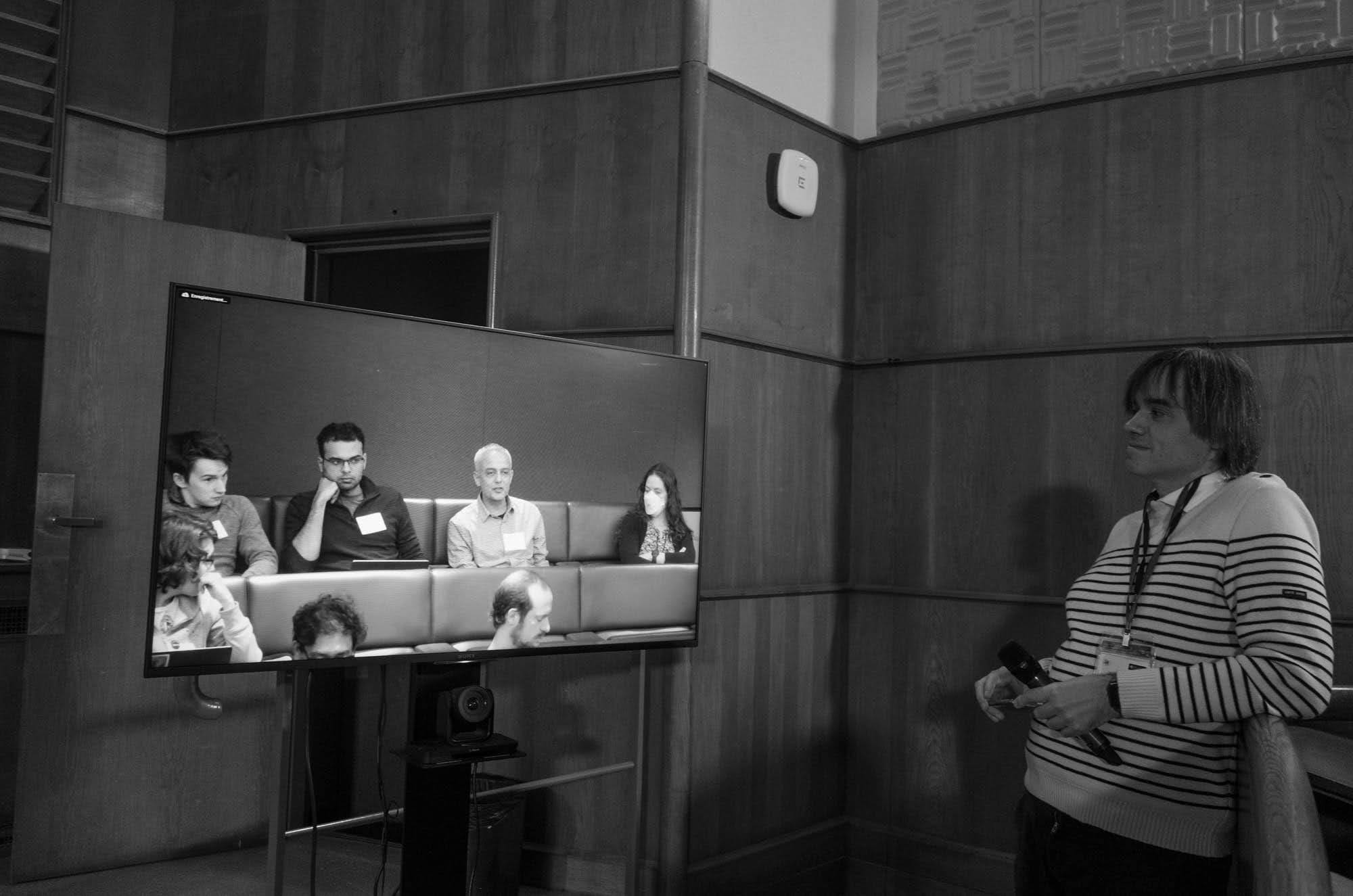
The conference at the IAP
Partager
Audiodescription
A mini-forest in a laboratory
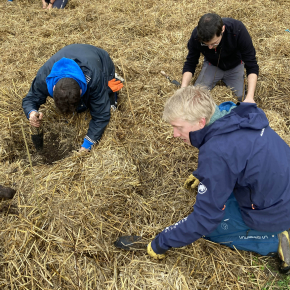
As well as working to cut carbon emissions deriving from scientific activities, the CNRS's call for projects supported actions to promote biodiversity on university campuses. A perfect example was the mini-forest planted on a CNRS site in Caen in February 2024 using the Miyawaki method
However, the future foresters were thrown off kilter by one big surprise. The director recalls that "firstly, the soil was slightly lacking in potassium but, above all, the coring revealed it to be very thin – barely thirty centimetres before reaching the limestone plate", recalls the director. However, the project was made possible by adapting the Miyawaki method with one tree planted per square metre rather than three. CNRS Bas Carbone enabled the purchase of 400 trees from 26 local species that require little water – such as hornbeam, hawthorn and privet – along with 50 tonnes of compost, 3 tonnes of horse manure and sufficient straw to be laid on the ground.
The forest was planted in mid-February and Laurent Dezileau tells us that university staff members, neighbours and volunteers from the MiniBigForest Normandie association were all part of a "lovely unifying moment that brings meaning to plants and people". The trees are still a long way from reaching their full size but the mini forest is already attracting local shoppers who come to stroll around and even eat there. In the long term it will provide an island of coolness in a very urban area and could become part of Caen's green network running from the Vallée des Jardins to the Bassin Saint-Pierre, via the Jardin des Plantes and the city's château with its hundred steeples.
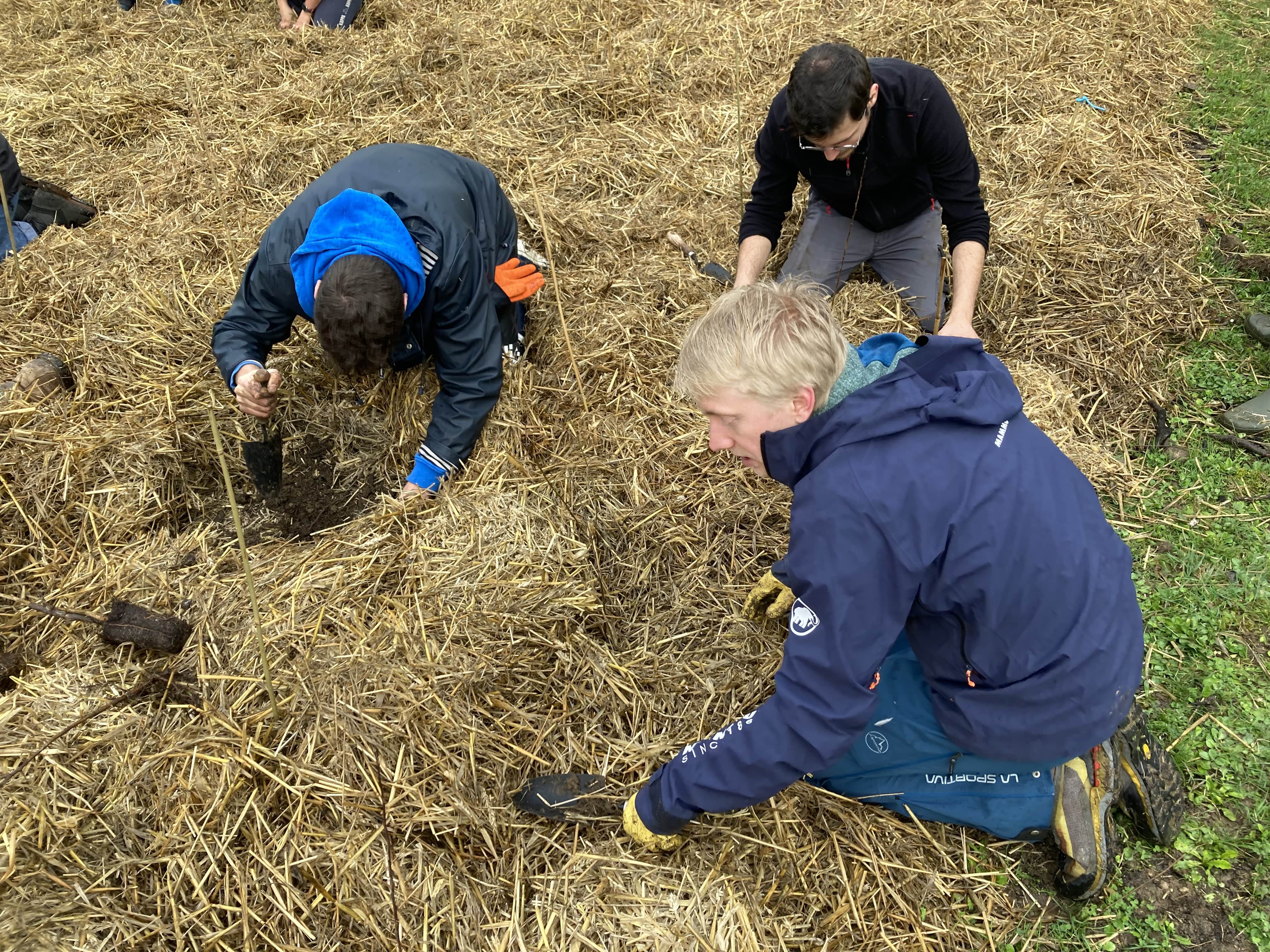
Planting a mini-forest at the M2C
Partager
Audiodescription
The CNRS Bas Carbone call for projects did not actually directly lead to all these initiatives but certainly enabled budding projects developed in laboratories working on the transition to come to fruition. Let's hope this will also be the case for the winning projects in coming editions.