Feminising science – how to fix the 'leaky pipeline'
In autumn 2025 a report with CNRS input was submitted to the French Senate, putting forward several robust measures aimed at attracting women to scientific careers and consolidating their presence. This important societal issue goes beyond academic questions alone.
"In France, less than a third of scientific researchers and barely a quarter of engineers are women. This massive under-representation is no way inevitable – it results from bias, stereotypes, inequalities and violence that are a regular ongoing feature of the educational and professional careers of girls and women
The senator Laure Darcos is one of the co-rapporteurs and explains the origins of the report. "The trigger was the 2019 secondary school reform which removed mathematics from the core curriculum in Years 12 and 13". The disappearance of certain course paths, including the science baccalaureate, has led to a 60% drop in the number of girls in scientific disciplines, as has been shown by Mélanie Guesnais, the coordinator of the 'Maths & Sciences' collective
Is scientific excellence the preserve of men?
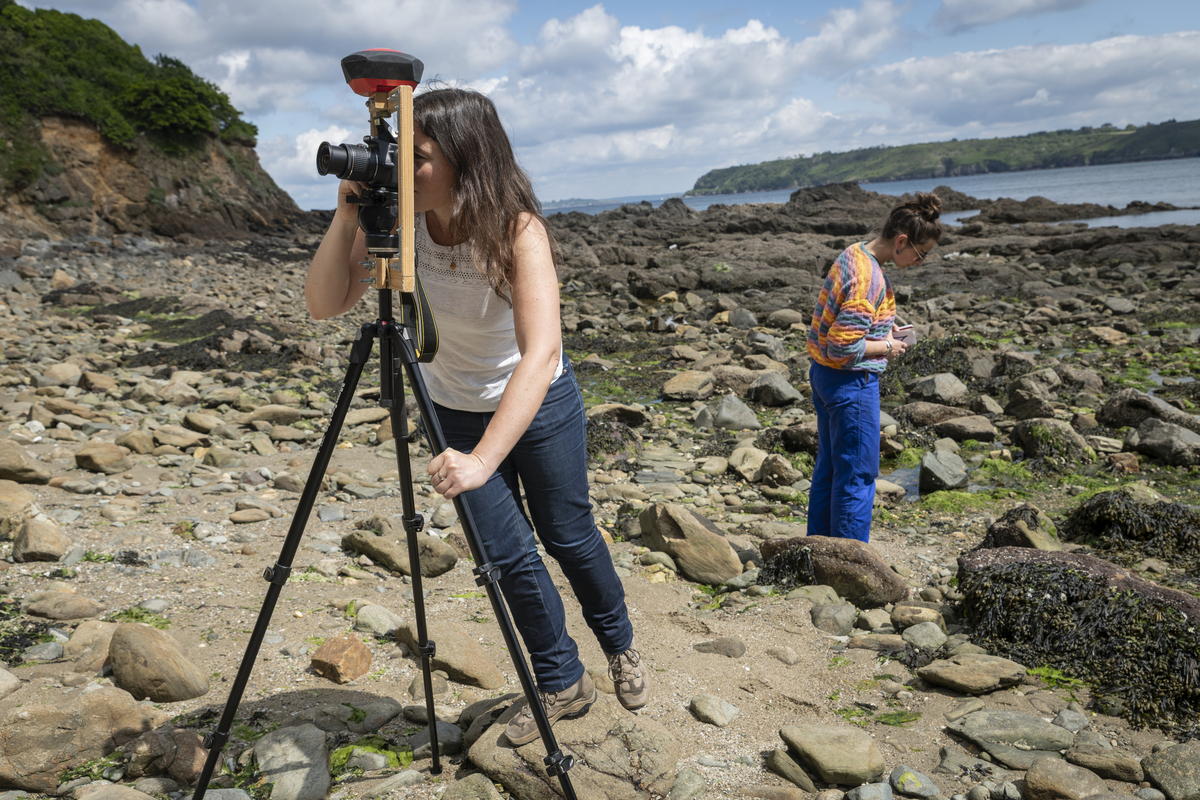
However, there are a variety of reasons for this 'pipeline' to be 'leaking'. It is undeniable that a large proportion of young girls give up science, the exact sciences in particular, because they imagine it to be the preserve of boys. The senator believes that this male representation of science drives a phenomenon of "self-determination in girls from an early age" which in turn leads them to pick other careers that they believe to be more in line with their image of adult women. Many of the women who do choose scientific careers find themselves faced with "a feeling of being an impostor and of being in a 'boys' club'. These are two important elements of the glass ceiling that women really do come up against", explains Mathieu Arbogast, project leader at the CNRS's Mission for Women's Inegration, who was interviewed for the Senate report. To sum up, "we need to change the image of what is an excellent scientist" and the CNRS is making significant efforts to do so through several scientific outreach initiatives such as the photo exhibitions 'La Science Taille XX Elles'
However, the report also pinpoints causes that are intrinsic to how research itself is organised rather than to representations of science. During her hearing before the Senate, the sociologist Sophie Pochic insisted that "the insidious reconfiguration of academic organisations" over the last twenty years has also played a role insofar as "the race for excellence and, above all, the precarity of academic careers reproduces gender inequalities and makes them invisible". She gave some concrete examples of male-centred scientific excellence
This under-representation of women in science also has tangible effects that go beyond research. Laure Darcos points out that "the limited presence of women in artificial intelligence (AI) research will lead to research that's mainly focused on male patients in AI for health... and therefore leads to disastrous results for women's health". Mathieu Arbogast agrees with the senator on the importance of developing the consideration of sex and gender in all disciplines. To work towards this, he posits relying on "the humanities and social sciences, first of all, but also cognitive sciences, neurosciences, and political and legal sciences, which feed into policy decisions on equality". The project leaders stresses that this is also taking place "in a context of increasingly virulent attacks on this kind of work which are intrinsically linked to the questioning of science in general".
How to fix the 'leaky pipeline'
It is even more crucial to feminise the sciences given the objective of recruiting 60,000 additional engineers set out in the France 2030 plan. Drawing on research into this issue, the Senate report envisages a series of very tangible actions to fix the 'leaky pipeline' and make sure future recruitment is as gender-balanced as possible. These are: rethinking the selection process in scientific fields by adapting entrance exams to France's grandes écoles; making it compulsory for all higher education establishments that run scientific courses to put a plan in place to combat sexist and sexual violence and provide training for academic staff on these issues; developing incentives and 'welcome' schemes for girls who wish to choose selective scientific courses like dedicated scholarships, safe lodgings or temporary single-sex spaces; and finally experimenting with quotas for girls in scientific higher education at different stages and levels of schooling.
The idea of quotas is often controversial and, to justify its implementation, Laure Darcos draws a parallel with the political sphere where the quotas adopted for eligible women at the start of the 2000s have led to a significant increase in the number of women in politics. The proportion of female MPs in the French National Assembly went up from 10.9% in 1997 to nearly 35% in 2024

Two other reports on women in science
Along with this Senate report, CNRS researchers have also contributed to two other public reports that were published recently. The first was 'Filles et mathématiques : lutter contre les stéréotypes, ouvrir le champ des possibles'
Then, in May several CNRS scientists contributed to the report 'Lutter contre les stéréotypes filles-garçons. Quel bilan de la décennie, quelles priorités d’ici à 2030 ?'