

The CNRS defends gender equality in world science
On October 27th 2025, the eleven organisations, including the CNRS, that won the European Equality Prize signed a declaration of principle in support of gender equality in research, an initiative launched by France's leading research organisation which now incorporates gender equality into all its international collaboration projects.
"Attracting more women to academic careers and ensuring the highest standards of research quality are essential to enhancing science’s role in addressing societal and economic challenges. To achieve this, it is vital that we continue to mainstream gender equality in European and international cooperation". These words come from the joint declaration proposed by the CRNS and signed by all eleven of the institutions that won the EU Award for Gender Equality Champions (see list at the end of this article). During an international webinar for Women's Rights Day in March 2025 organised by the CNRS's European and International Affairs Department (DEI) and Mission for Women's Integration (MPDF), Antoine Petit, the Chairman and CEO of the French research organisation that won the 2024 European Gender Equality Prize, urged representatives of other similar organisations from the 'Old Continent' to join "a European league of gender equality champions". The Chairman and CEO considers it "important to show the international community that Europe is working to promote gender equality" in what is an increasingly worrying situation for gender equality initiatives in the United States since the start of 2025. Mr Petit's March appeal clearly resonated with its audience as ten other European gender equality champions have since agreed to work on drafting a joint declaration proposed by the CNRS that affirms the importance of gender equality.
In France, the CNRS has been recognised for its positive actions in favour of gender equality since the creation of the MPDF nearly 25 years ago. The CNRS's previous Gender Equality Plan (2021-2023) paved the way for achieving a 40% female representation rate among its scientific staff members, a figure that varies according to the discipline involved, and lowering the so-called 'glass ceiling'. Now, 32% of research professors are female with women also directing a quarter of the units under CNRS supervisory authority. However, the CNRS's commitment to gender parity does not stop at the European Research Area as the organisation incorporates pro-gender parity actions into its international cooperation projects worldwide, even inspiring other scientific institutions to follow suit in promoting the place of women in science. Here is an overview of the CNRS's global gender equality initiatives.
China – raising awareness for more effective action
The first step towards gender equality is to raise awareness of the issue itself and this challenge has been taken up by the CNRS office in Beijing, working alongside the French Embassy in China and the organisation's Chinese partners. To celebrate 60 years of diplomatic relations between China and France, the French Embassy worked with Chinese scientists to organise the installation of the travelling photographic exhibition 'La Science taille XX elles'

These figures clearly testify to the Chinese public's considerable interest in this issue. The CNRS now aims to build on this interest in its cooperation projects in China which have been booming since the end of the Covid-19 pandemic. Fermin Cuevas, director of the CNRS Beijing office, explains that "the Chinese government has launched an ambitious policy to reduce gender inequality in research. Up until now, women researchers only received 10% of the funding and represented just 6% of the members of the Chinese Academy of Sciences (CAS)", China's leading research organisation. The measures taken at the national level are remarkable and include the creation of gender equality committees, the introduction of a pilot quota for women in academic elections, priority scientific funding for women when applicants have equal skills, and support for pregnant or breastfeeding women. However the director of the Beijing office still observes "remaining gaps in their local implementation" which makes it necessary to "reinforce monitoring of policy implementation". In this context, the CNRS, as the leading French partner and third largest European partner for Chinese scientific organisations, could act as a catalyst for gender equality by starting to structure the issue into its cooperation mechanisms. Fermin Cuevas indeed observes that "during Antoine Petit's last visit to China in June 2024, he expressed his wish to achieve progress with the issue of gender equality during the strategic dialogue with the CAS".
Japan – inspiring local partners
To further advance gender equality the CNRS's Chinese partners could look across the East China Sea for inspiration. In Japan, since the creation of an International Research Centre (IRC)
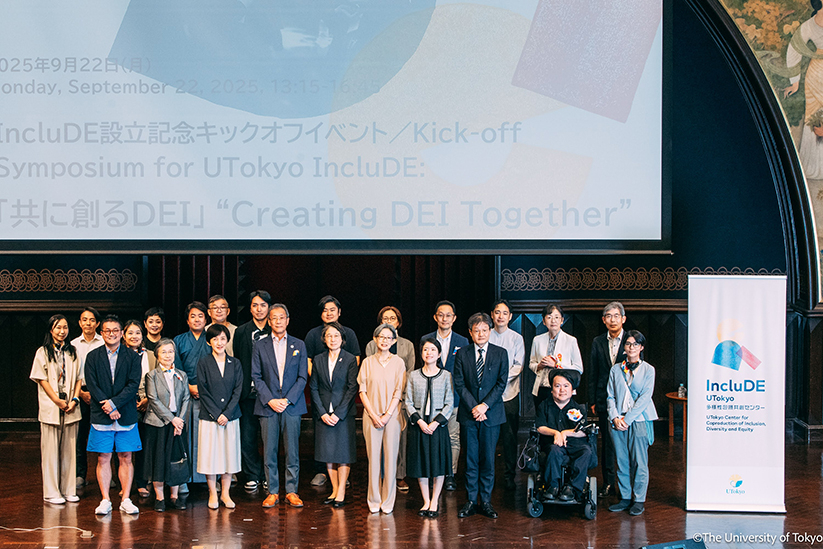
This diversity programme derives from the observation that "women are under-represented at our university to an extent that is quite exceptional on a global scale", admits Kaori Hayashi, the female Executive Vice-President of UTokyo in charge of gender equality issues. In 2022, the proportion of female faculty members was at 16.7% while only around 20.1% of the University of Tokyo's undergraduate student body were women. Conversely, 90% of the university's full professors were male along with 85% of the associate professors and 80% of the undergraduate students. To rectify this imbalance and promote inclusivity on its campuses, the university set up a 'Center for Coproduction of Inclusion, Diversity and Equity'. By 2024, the first results of this initiative were already visible with the proportion of female faculty members rising to 18.3% while the proportions of undergraduate students going up to 21.3%.
The Executive Vice-President of UTokyo welcomes advice from her French partner. "The CNRS has different measures to address gender imbalance. By sharing information on this topic, it is hoped that new ideas would be brought to light". At a time when Japan aims to forge closer ties with Europe and hopes to become an associated country in the Horizon Europe framework programme like Canada, New Zealand and South Korea, Kaori Hayashi would like to draw inspiration from the avant-garde nature of European organisations' work in favour of gender parity. "I believe that Japan is seeking to align itself with the level of feminisation of scientific disciplines in Europe. We would like to cooperate with CNRS and European partners on issues such as increasing gender balance in the decision-making process and research institutions, and integrating a gender dimension into research and innovation content".
Latin America – giving cooperation schemes the right tools
On the other side of the Pacific in Latin America, the rate of feminisation in science is higher than in Japan, ranging from 18% of women in Chile to 33% in Argentina and 37% in Brazil, and yet obstacles still remain. Dealing with these was the precise objective of the European Gender-STI observatory which the CNRS and four Latin American organisations contributed to until it shut in 2023
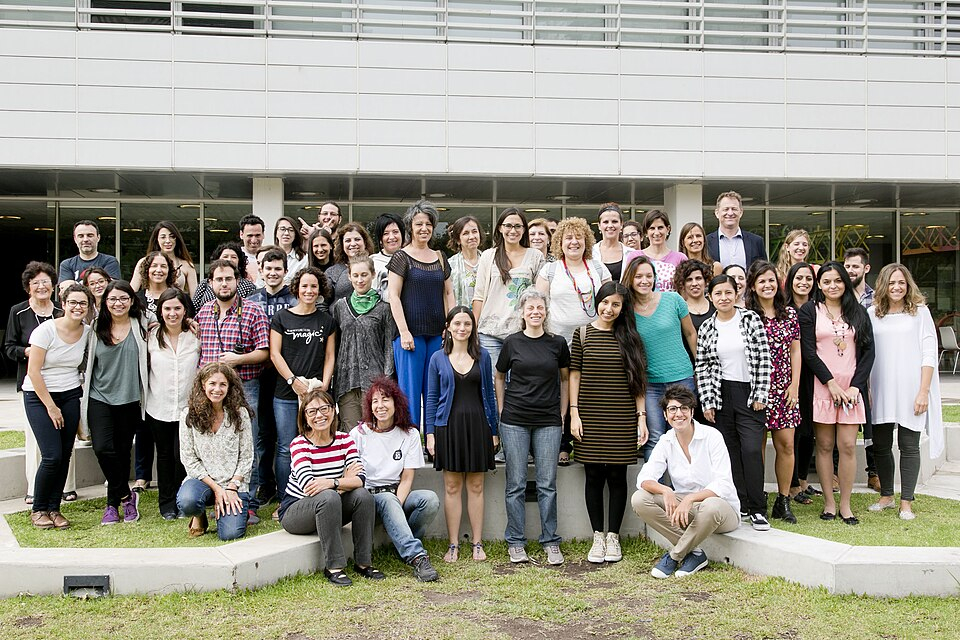
As well as collecting statistics, Gender-STI has also provided partner institutions with practical tools to promote gender parity. The research officer assures us that, from now on, "new scientific cooperation agreements aim to achieve gender parity in the governance of work packages as far as possible". A gender equality observatory, the SPIDER-EULAC project, which the MPDF takes part in, is carrying on monitoring this issue in Latin America.
Africa – enhancing the visibility of women researchers
The CNRS has been increasing its cooperation with Africa since the launch of its 2023 Multi-Year Cooperation Plan with Africa. The proportion of women in scientific careers on the continent is growing rapidly, reaching up to 30% of the workforce in some African countries. Benoit Hazard, the director of the new CNRS office in Nairobi, has observes "a vast movement driving women's involvement in scientific careers in Africa coupled with a significant change to their place in universities – women are increasingly reaching very high level political positions such as university presidencies, roles on ministries or pan-African scientific organisations". However, this diverse pool of women also masks a form of 'relegation' to certain fields. Their visibility in scientific diplomacy posts and applied research programmes linked to social and development issues, particularly in the engineering sciences appears to be at the expense of basic research. Added to this is a sociological factor namely that it is common in women's scientific careers for these "to have children – with the burden of raising them as well – and to work on a PhD at the same time. This factor has a strong impact on women's professional careers which take a lot longer than in Europe", notes the director of the new Kenyan office.

Benoit Hazard points out that "the issue of women's place in scientific careers was quickly brought to the table at the Nairobi office since it was set up". Among the office's first actions were mapping women's scientific careers, highlighting African women scientists and also a series of conferences aimed at reinforcing the basic research capacities of the 44 beneficiaries of the pan-African Arise programme
Canada – drawing inspiration from successful policies
Despite Europe's positive feminisation rate, the continent can itself draw inspiration from countries that are even more advanced in terms of gender parity, particularly if we look across the Atlantic to Canada. Two Canadian scientific institutions
Above all, Canada has taken the single issue of gender even further by setting "proactive targets for the representation of women and also visible minorities (non-white and non-Indigenous), indigenous populations and the disabled". For these reasons, Andréa Dessen strongly urges Europe and the CNRS to "take inspiration from Canada in promoting diversity, equity and inclusion".
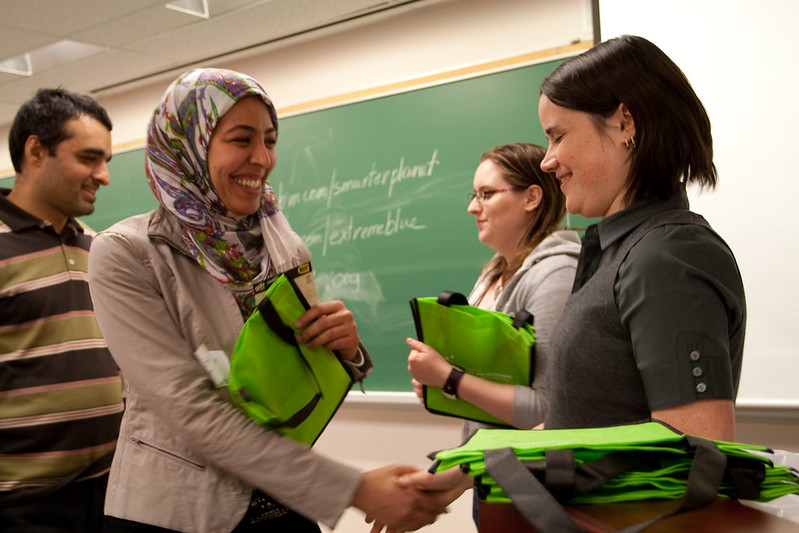
Feminising science has thus had repercussions that go far beyond just scientific disciplines because proactive policies in science also have a trickle-down effect for society in the countries concerned. Or, to quote the European Champions for Equality's joint declaration, "in today’s context, science is more important than ever in addressing the global challenges facing our societies. Achieving inclusive gender equality in higher education, research and innovation is key to successfully addressing these challenges".
The eleven signatories:
National Centre for Scientific Research (France)
Consejo Superior de Investigaciones Científicas (Spain)
INSTRUCT-ERIC (Europe)
Karolinska Institutet (Sweden)
National University of Ireland, Maynooth (Ireland)
University of Medicine and Health Sciences (Ireland)
South East Technological University (Ireland)
Trinity College Dublin (Ireland)
Technological University of the Shannon (Ireland)
Uniwersytet Gdański (Poland)
Rovira i Virgili University (Spain)