


The CNRS, a pioneer in gender equality in research for 25 years
Corporate
In 2001, the CNRS set up the Mission for Women's Integration (MPDF), the first French structure dedicated to gender equality. On the occasion of the International Day of Women and Girls in Science, the MPDF's director takes a look back at the main advances made in professional equality at the CNRS.
In 2001, the Mission for Women's Integration (MPDF) was created. What was the context at the time of its emergence?
Elisabeth Kohler: The 1990s marked a turning point in the issue of women's rights. In 1999, France adopted a law on parity at a time when gender equality issues were becoming institutionalised. French, European and international institutions were driving the promotion of equality. The MPDF was created was in this context and made the CNRS the first French organisation – alongside the Ministry of Research and Higher Education (the CNRS's supervisory authority) – to set up a structure of this kind.
Initially the mission resulted from of an initiative by female researchers who noticed some countries were more advanced than others in this area when meeting with their European counterparts. This transnational experience prompted these French researchers – including the physicist Claudine Hermann whose name was recently proposed for inclusion on the first floor of the Eiffel Tower – to encourage the CNRS and France to join the leading pack in terms of gender parity, despite there still being no regulatory obligation to do so. The CNRS grasped this opportunity and on July 27th 2001, the CNRS's Director General, Geneviève Berger, created the MPDF.
At the time, the MPDF consisted of an observatory on gender equality in research and its primary mission was to produce statistics and studies on gender issues in research. This work made it possible to identify barriers, for example when staff members move from the rank of what is now called associate research professor to research professor.
What were the mission's major milestones since its creation to the present?
E. K.: The MPDF has gone through three major complementary stages. Statistical analyses prevailed until the 2010s and were followed by the study of the cognitive and sociological mechanisms that can hamper parity. This period was marked by a large volume of scientific publications, a sign that social justice is based on science. At this time, the concepts of 'gender bias', the 'boys' club' and the 'leaky pipeline' were defined and are still used today.
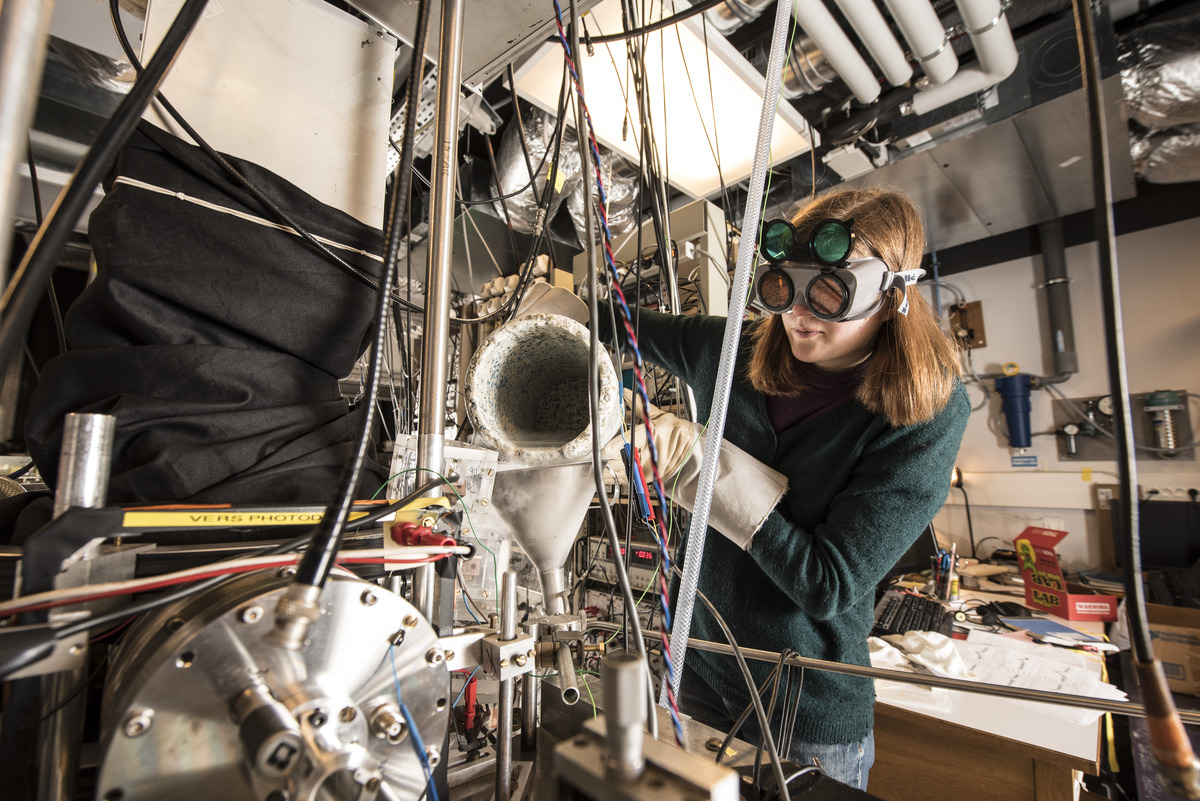
Research professions also suffer from gender bias, which the MPDF identified early on in its work.© Hubert RAGUET/LKB/CNRS Images
Then, from 2012 onwards, partly thanks to support from the CNRS's General Management and awards of European projects funded through the Framework Programme for Research and Innovation, the MPDF gained in visibility, notably through an initial voluntary action plan in 2014, five years before the French civil service reform law made this compulsory. Finally, since 2018 the emphasis on equality policies has been driven by the CNRS's Chairman and CEO and a real dynamic has been rolled at our institutes, regional offices and laboratories, resulting in numerous tangible actions and results that have had a strong impact.
In the early 2000s, women made up only 30% of scientific staff at the CNRS whereas today they account for 40%. Which measures have driven this increase?
E. K.: It's difficult to pinpoint a single measure as being behind this success because equality is multifactorial. Some actions, like communication without gender stereotypes, may initially seem insignificant but have tangible later consequences on the recruitment of women. In fact, since the end of the 2010s, a number of significant measures have been observed. These include cascade promotion which involves making sure the proportion of women promoted is equal to or greater than the number of women eligible for promotion to combat the 'leaky pipeline' phenomenon; awareness-raising and preparation workshops for women aiming to become research professors; an 18-month reduction in scientific progression to take the impact of maternity leave into account when assessing women's careers; and finally the MPDF self-training module and other gender bias awareness-raising tools.
We were able to roll out all these actions on a large scale thanks to a collective movement within the CNRS, particularly among our institutes. Some of the institutes took the initiative to provide financial support for actions promoting equality and preventing and combating gender-based and sexual violence.

Actions promoting gender equality have helped to break the glass ceiling and increase women's access to positions of responsibility, such as Sylviane Muller, Director of the Immunopathology and Therapeutic Chemistry Unit in Strasbourg.© Cyril FRESILLON/CNRS Images
This has produced notable results, particularly as regards the glass ceiling. Women accounted for only 20% of research professors in 2001 but now they represent 32% of our workforce. Similarly, women now account for 25% of CNRS laboratory directors, compared to 15% in 2010. Progress may seem slow but this is because of the low annual staff turnover at the CNRS, with 250 to 350 positions available through competitive examinations annually. These figures mask a real acceleration in the proportion of women in recruitment and promotions.
Beyond the French context, the MPDF also has strong interactions with the CNRS's European partners. Can you tell us about these?
E. K.: The MPDF has indeed played a pioneering role at European level by coordinating innovative projects since 2013 with GENDER-NET, which was extended by GENDER-NET Plus in 2017. These projects were part of the Horizon 2020 Framework Programme and aimed to develop professional equality policies within research and higher education in Europe while integrating gender issues into research. The MPDF also took part in two other European projects. The first, GE Academy, involved the design of awareness-raising and training tools on equality at the European level, while the second, GENDER STI, works on the integration of equality policies in international cooperation projects.
Although the MPDF no longer coordinates European projects currently, the mission remains very active at the European and international levels, for example through the organisation's cooperation with the University of Tokyo, the CNRS's partner in an international research centre. Thanks to the CNRS's involvement beyond the institutional level, we are the first – and currently the only – French organisation to have been awarded the European Gender Equality Award (in 2024). The next year, the CNRS joined forces with ten other European champions of equality to sign a declaration of principle that advocated for continued efforts to promote gender parity.
The scope of gender equality in research has expanded considerably in the last 25 years. How do you see the prospects for the future?
E. K.: A whole dynamic has been created thanks to the robust involvement of institutes, regional offices and a network of over 700 equality officers in our laboratories. Beyond the MPDF, this has meant equality policies have been sustainably integrated into the CNRS. These policies concern the recruitment and promotion of female researchers but also, as the organisation's 2024-2026 gender equality action plan clearly shows, other policies have been rolled out such as: taking gender into account in research; work-life balance and parenting issues, for example through temporary nurseries during conferences; the visibility of women scientists, through awarding a greater number of gold medals to women and photographic exhibitions like 'La Science Taille XX Elles' and 'Ingénieuses'; along with training for unit directors in the prevention and combat against sexist and sexual violence. Moving forward, the next steps will be to broaden the scope to include diversity and inclusion issues and integrating equality more effectively into all CNRS policies, such as international cooperation and innovation.
To sum up, in a quarter of a century a whole culture of professional equality has developed at the CNRS and we now aim to make sure this is sustained in the long term.

Scientific outreach initiatives, such as the photography exhibition “La Science taille XX elles”, held here in Marseille in 2024, have also helped to shine a spotlight on women in science.Anne Haguenauer