

Wikipedia and science: a happy love story (at last)
Twenty-five years on from its launch, the world’s most widely read online encyclopaedia has made the reliability of its content, which is underpinned by scientific consensus, the theme of its conference in Paris from July 21st to 25th. Delphine Montagne, a Wikimedian in residence at the Urfist in Paris, analyses the improving relationship between research and Wikipedia.
To mark the online encyclopaedia’s 25th anniversary, the first Wikimania conference to be held in France has adopted the theme of ‘Freedom, Equity, Reliability’. Currently, millions of disinformation articles are being generated by artificial intelligence online, so how reliable is a collaborative encyclopaedia like Wikipedia today?
Delphine Montagne: Several scientific studies1 have shown that the reliability of general articles on the English Wikipedia is comparable with a leading encyclopaedia like the Encyclopaedia Britannica. For twenty-five years, we’ve been working on our mission to provide reliable, up-to-date content that reflects the scientific consensus, or, in short, to write and publish the sum of human knowledge by humans for humans.
The emergence of generative AI on Wikipedia has provoked much discussion and the 36,444 active contributors to the French Wikipedia are now strongly discouraged to use it. Among the arguments put forward against using AI are fabricated references, invented content, etc. However, even though Wikipedia’s volunteers make very little use of it, generative AI does create more work for them in checking articles that have been entirely generated using AI.
You stress the importance of the links between Wikipedia and the scientific community. And yet the latter has generally been wary of an encyclopaedia written by volunteers for a long time…
D. M.: Unfortunately, the research community seems a little stuck in a pre-2006 view of the encyclopaedia. Since 2006, the introduction of mandatory source citations for every article has helped this collaborative project to mature. Wikipedia has established a legal and organisational structure and is based on peer review and the horizontal distribution of work. Obviously some of the 2.7 million articles in French are out of date or incomplete, particularly those from before 2006. But in these cases, we include a banner that highlights the lack of sources, their biased nature, the weakness of the content, and so forth. We also make efforts to source and correct these older articles.
Today, Wikipedia, with its advantages and disadvantages, has become one of the links in the knowledge ecosystem. We’ve noted that scientific content on Wikipedia is cited more frequently subsequently2, which testifies to the greater visibility of scientific content that has been made publicly available in this way. Also, during the Covid-19 pandemic, Wikipedia demonstrated its ability to filter content and check sources in a time of crisis.
Conversely, as the encyclopaedia is positioned downstream of this knowledge ecosystem, it does suffer from poor-quality institutional papers (retractions, paper mills, scientific dishonesty, etc.) further upstream. In other terms, Wikipedia is of a higher quality when scientific publications are reliable and journalism is ethical, diverse and rigorous.
The relations between science and Wikipedia have improved to such an extent that the French Ministry of Higher Education and Research has officially incorporated the ‘Wikify Science’ programme into its Second French Plan for Open Science. What does this involve?
D. M.: The partnership with the Wikimedia France association was announced in the roadmap for the French Plan for Open Science and is part of the first priority path, ‘Generalising open access to publications’. This testifies to a commitment to sharing knowledge and science with the general public in an accessible way.
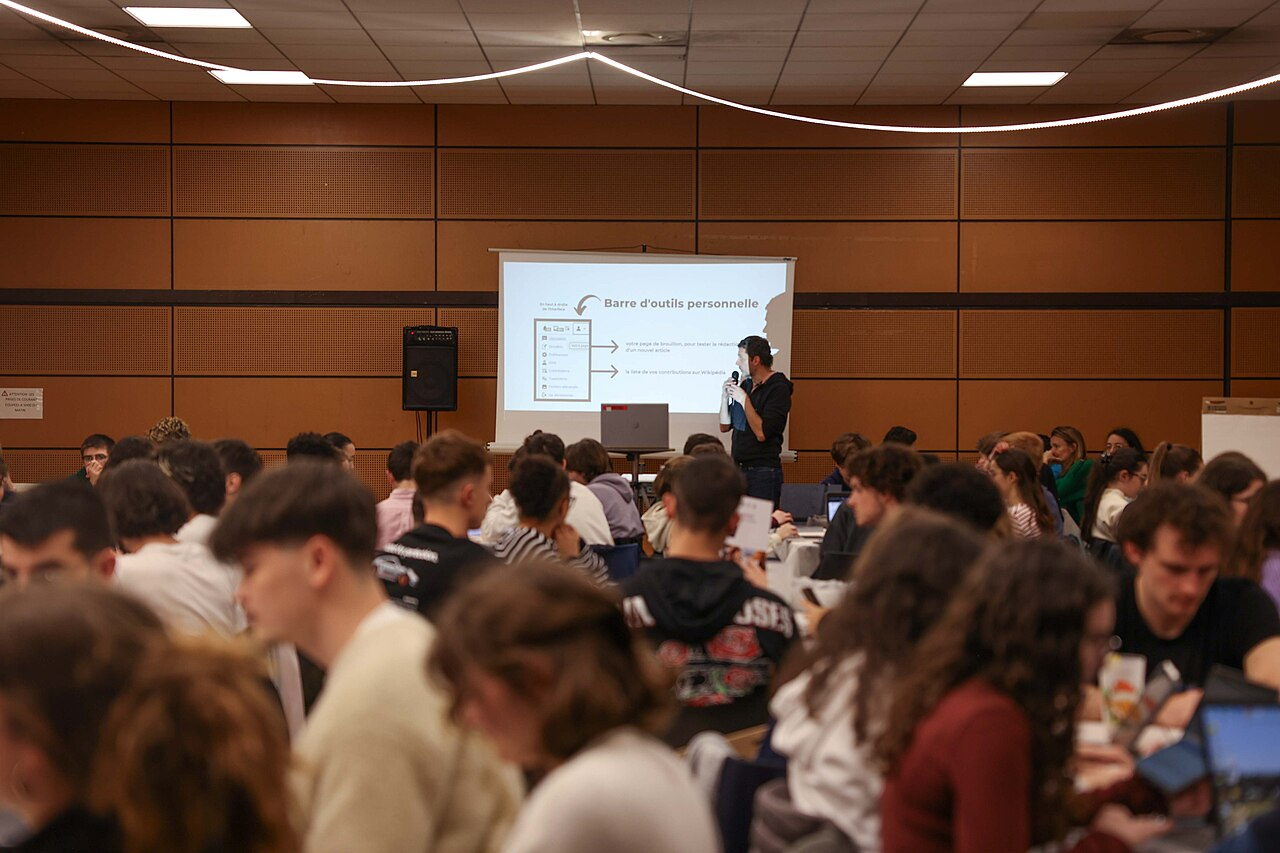
In this way, France is something of a special case. In other countries, libraries, museums and heritage sites mainly host Wikimedians, with 300 recorded all over the world, but France has nine residencies that are dedicated to research organisations. These programmes are spread across three cycles of residencies within Regional Training Units in Scientific and Technical Information (Urfist) and have now trained over 6000 people.
You have been leading a second residency in Paris since April 2026 yourself, after an initial residency in Lyon last year. What does this work involve?
D. M.: A Wikimedia residency works on bringing together the world of Wikimedia and the world of the organisation that hosts us. It is my job to highlight the common ground between these two spheres and demonstrate that research is welcome on the online encyclopaedia by working to dispel Wikipedia’s negative reputation.
To do so, I’m working on instilling a ‘wiki reflex’ amongst research staff through a range of training initiatives, like webinars, practical workshops, week-long summer schools and support for local wiki clubs. The 290 hours of training I’ve given to 1600 people have shown that staff feel reassured by Wikipedia and are impressed by the contributions made by volunteers.
Could you give us some examples of scientific contributions to the online encyclopaedia?
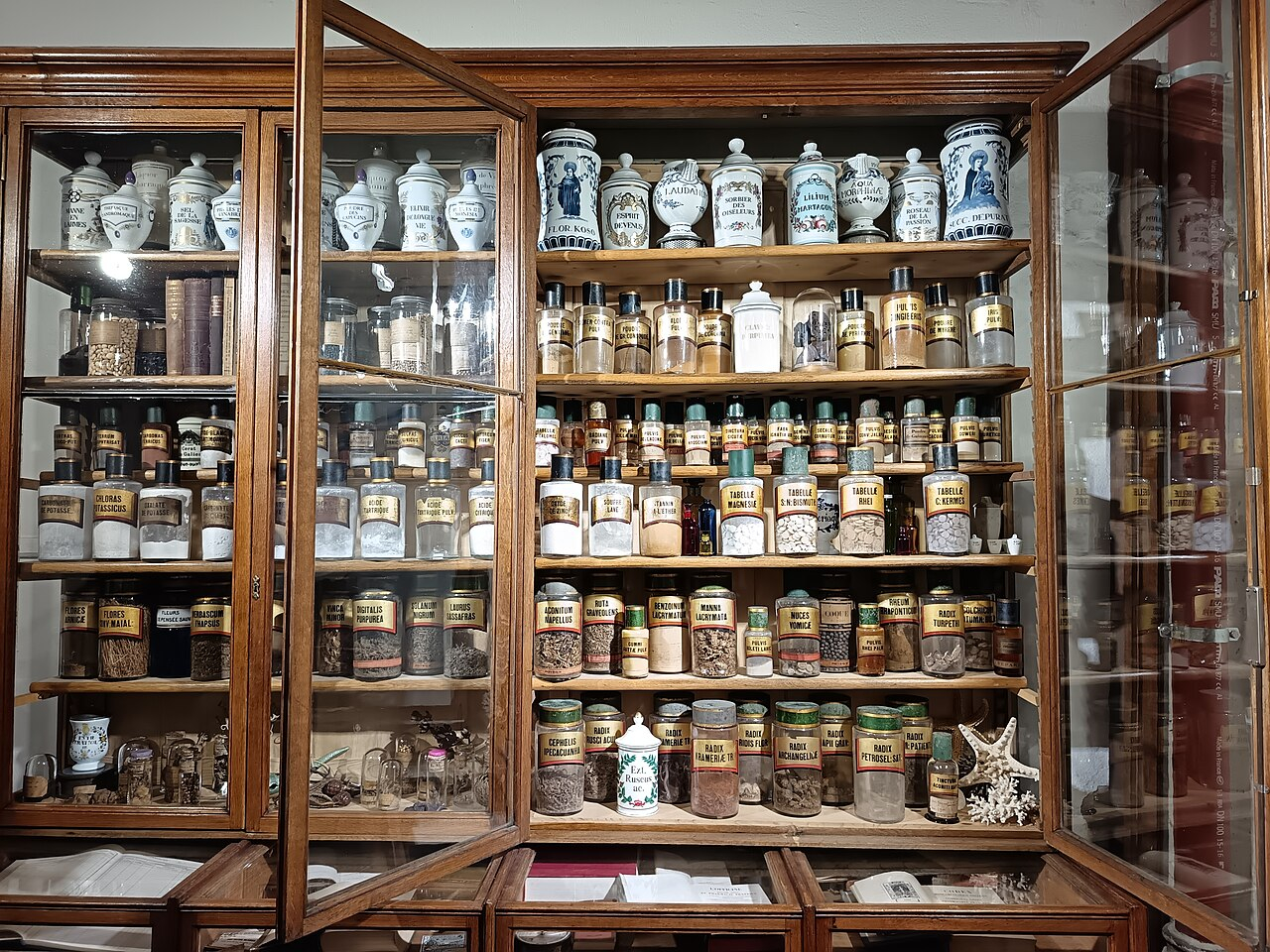
D. M.: During my residency in Lyon, thanks to the library at ENS-Lyon, I coordinated the scanning and transcription onto Wikisource of the very rare ‘Livre des petits enfants’, by the Lyon-based poet Marceline Desbordes-Valmore, a book that was being studied by a researcher. I also worked on a project at the Faculty of Pharmacy of Lyon, which involved me photographing a collection that is rarely open to the public. I also published an open science thesaurus on Wiktionary. And finally, I was particularly honoured to be able to help the Nobel Prize winner Alain Aspect contribute to Wikipedia in the framework of the exhibition for the 250th anniversary of the birth of André-Marie Ampère, in collaboration with the local Wikimedia group in Lyon.
Of course, everyone won’t necessarily want to contribute as much to Wikimedia, but there really is a place for everyone in wiki projects, even if that just involves spotting typos, adding up-to-date references, or creating a Wiktionary entry. If people would like to take this a step further, they could dedicate an afternoon to a collaborative Wikipedia workshop at the end of an ANR project, or take part in the biannual Wiki Science Competition, the world’s largest competition for royalty-free scientific photographs. All of this helps fill gaps in the encyclopaedia, particularly in terms of the representation of women and people of colour in scientific professions.
As you mention women, you have begun a long-term project to catalogue the CNRS’s silver and bronze medals, particularly focusing on female scientists. Why did you choose to do this?
D. M.: The medals are the perfect example of how wiki projects can come as something of a surprise. Before this became my full-time job, I was passionate about volunteering to write biographies of women scientists, but, in fact, only 20 per cent of biographies on the French Wikipedia are of women, and there are even fewer female scientists. For a biography to be published in the encyclopaedia, one of the criteria is to have won a national award like the CNRS’s Gold or Silver medals.
However, information on these was not accessible for the earliest periods, so, during the conference marking the twentieth anniversary of the Mission for Women’s Integration (MPDF), I approached the then CNRS Chairman and CEO Antoine Petit directly and he agreed to make the list of all CNRS silver medals, from 1956 to the present day, freely available.

I worked with the CNRS’s Comité pour l’Histoire and subsequently made two visits to the CNRS archives in Gif-sur-Yvette to collate the information, photograph the archive boxes to document my work, and so on. In fact, this work undoubtedly led to the inclusion of the materials chemist Denise Barthomeuf, who won the 1985 CNRS Silver medal, on the list of 72 female scientists showcased on the 1st floor of the Eiffel Tower. The proof of this is that her official profile includes passages from the biography published on Wikipedia a few months earlier, following my visit to the CNRS archives!
As a result, paradoxically, the most comprehensive database on CNRS medals is not on the CNRS website, but on the Wikidata knowledge base!
Would you like to take this collaboration with the CNRS further?
D. M.: I’ve already had the opportunity to lead a workshop with the CNRS’s Comité pour l’Histoire, but yes, a residency at the CNRS would be a great opportunity!