


"France’s overseas territories are at the core of a considerable proportion of contemporary scientific challenges"
France’s overseas territories are often the first to face challenges like extreme weather events, adaptation to natural hazards, zoonotic diseases, and the preservation of biodiversity, which makes them strategic locations for research and for the anticipation of challenges linked to global change. We take a look at these exceptional territories with Etienne Snoeck, the CNRS's Overseas Territories Officer.
Key action takeaways
Nearly 80 per cent of France’s biodiversity is in its overseas territories. These territories offer unrivalled conditions for the study of living organisms, the ocean and the impacts of global change.
In several overseas territories, rising sea levels, more intense cyclones, heatwaves and changes to socio-ecosystems are already a reality. Observations of this kind mean phenomena that will affect other regions of the world in the future can be anticipated more effectively.
Energy self-sufficiency for islands, the sustainable management of marine resources, coastal protection and forecasting extreme events are all fields in which research can directly inform public policy.
France possesses the second-largest exclusive economic zone (EEZ) in the world. How is this strategically important, and how is the CNRS capitalising on this unique position?
Etienne Snoeck : France’s exclusive economic zone covers over 11 million square kilometres – a maritime territory that is larger than Europe. It grants France sovereign rights over the exploitation of marine resources, which includes natural resources, the seabed and certain energy resources.
This situation is strategic for several reasons. Firstly, from a geopolitical perspective, because France’s overseas territories are spread across all the major regions of the globe – in the Pacific, South America, the Indian Ocean, the Mozambique Channel and the Caribbean, near the Panama Canal. This global presence is a significant asset for France.
It’s also strategic from a scientific standpoint because these territories provide access to unique tropical socio-ecosystems, some of the world’s richest coral reefs, and island and forest environments that can’t be found in mainland France. More specifically, they enable research into how living systems function, their adaptation to environmental changes and the evolution of major natural balances.
The CNRS views France’s overseas territories as both exceptional natural laboratories and essential hubs for research into the 21st century’s major environmental challenges.
Could you give us an overview of the CNRS’s presence in the overseas territories?
E. S.: The CNRS has a presence in five of the overseas territories, with about ten laboratories across the intertropical belt and nearly 80 tenured scientific staff members. The organisation has developed numerous partnerships with overseas universities, research organisations and local authorities.
Each territory has its own specific features which makes them a prime area of study in certain disciplines. The Observatory of Universe Sciences (OSU-Réunion) on Réunion Island involves several laboratories that are particularly renowned for their work on tropical cyclones, the climate of the Southern Hemisphere and extreme weather events. This research wouldn't have the same relevance if carried out from mainland France. Réunion also hosts a laboratory that studies the mechanisms behind the emergence of zoonoses in tropical island environments.

Research in French Guiana primarily focuses on the exceptional biodiversity found in the Amazon rainforest and mangroves, along with issues linked to coastal evolution. French Guiana is also home to the largest tropical forest in the European Union, so it’s a unique observatory for forest ecosystems and biodiversity.
In the West Indies, the humanities and social sciences play a significant role through laboratories that work on post-slavery history, social dynamics and the cultural legacies that are specific to these Caribbean territories.
In French Polynesia, researchers are working on coral reefs and how they adapt to climate change. This research has received international recognition because Polynesian ecosystems are viewed as global benchmarks.
Finally, New Caledonia hosts cutting-edge research into one of the world’s largest coral reefs, which is listed as a UNESCO World Heritage Site.
CNRS researchers also work in territories where the organisation does not have a presence, like Mayotte, Saint Pierre and Miquelon or the French Southern and Antarctic Lands. They generally cover topics relating to Earth sciences and environmental sciences.
So, these territories play a special role in certain disciplines, like climate, biodiversity, oceanography or volcanology?
E. S.: Absolutely. The overseas territories are at the core of a considerable proportion of contemporary scientific challenges. Nearly 80 per cent of France’s biodiversity is found in the overseas territories. These territories are essential for scientists working on this biodiversity, natural substances, the evolution of species or the conservation of ecosystems.
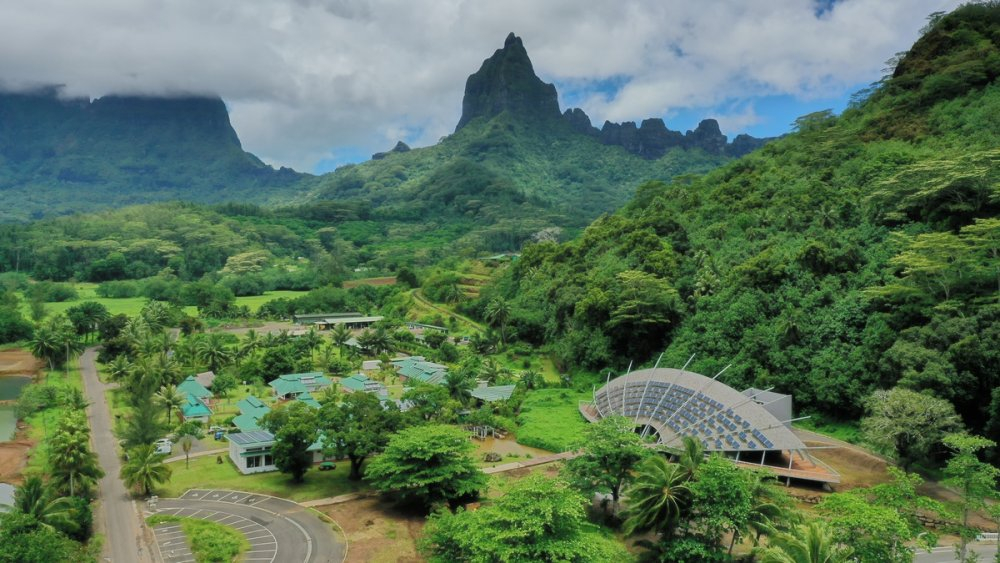
They’re also on the front line as regards the consequences of climate change. Rising sea levels are a direct threat for certain Polynesian atolls, as some are barely a few metres above sea level. Tropical cyclones like Chido in Mayotte or Garance in Réunion illustrate the findings of researchers and the IPCC, insofar as it’s not necessarily the frequency of extreme events that is increasing with climate change, but their intensity. This, of course, means we need to be able to predict them, but also we have to understand more about adapting to their increased severity. Similarly, heatwaves are becoming longer and more severe, torrential rains are becoming more destructive, and coastal erosion is gradually transforming certain coastlines, while affecting the communities that live there.
Researchers are therefore developing forecasting, modelling and adaptation tools. For example, in Réunion, teams are modelling the trajectories and intensity of cyclones to support public authorities in the anticipation of risks and in adapting planning policies. In other territories, like French Guiana or French Polynesia), our ‘Zones Ateliers’1 enable the long-term study of transformations in a territory’s socio-ecosystems in a context of global change. They do so by involving all local stakeholders and drawing on various disciplines from the humanities and social sciences, ecology and the environment, or the earth sciences.
The overseas territories are therefore veritable laboratories for global change, and the phenomena observed and studied there now also affect mainland France, even though their effects in France remain less pronounced there, for the time being.
- 1
Long-term socio-ecological research sites.
address these?
E. S.: The overseas territories have to deal with other major challenges, like food security and energy self-sufficiency, as well as having to cope with the many consequences of global change. For example, French Polynesia’s 118 islands and atolls remain largely dependent on fossil fuels. Researchers are working on various hybrid solutions that aim to enable the local production of renewable energy, notably through solar power or other technologies that are suited to the constraints of living on an island.
Another key focus area is the sustainable management of natural resources. Again in French Polynesia, CNRS scientists are studying the ‘rāhuis’, which are areas where local communities practise traditional methods of lagoon resource and land management, to find out more about how these communities organise the conservation of fishing grounds. The aims of this are to ensure the long-term sustainability of resources and maintain the associated economic and cultural activities.
This approach illustrates the CNRS’s capacity to combine interdisciplinary scientific knowledge with local expertise to develop tailored solutions that are adapted to the realities of life in these territories.
How does the CNRS develop its international cooperation through its overseas sites?
E. S.: The overseas territories play a major role in the CNRS’s international strategy. Our objective is to turn these territories into platforms for regional cooperation. Their geographical location means we can develop partnerships with neighbouring countries and set up scientific projects at the level of regional basins.

The CNRS draws on its international network, particularly its representative offices, to support these collaborations, facilitate contacts between scientists and so promote new collaboration initiatives. We also work with the CNRS’s Mission for Transversal and Interdisciplinary Initiatives, which supports interdisciplinary projects that involve teams from overseas universities, the CNRS and our international partners in neighbouring countries.
In this way, collaborations of this kind can be supported by various national or European funding schemes. They help create sustainable networks and also enhance French research’s international visibility.
Looking ahead ten or twenty years, what role could the overseas territories play in the scientific strategies of France and Europe?
E. S.: As I’ve mentioned, the overseas territories offer unique research conditions for understanding the major challenges of global change, including those related to the climate, biodiversity, the ocean, issues linked to the health of populations and ecosystem issues, or the energy transition.
It's important to carry out research of this kind for the benefit of local communities who are bearing the brunt of these effects, but these territories also enable the observation of phenomena today that are going to affect other regions of the world tomorrow. In this way, they are particularly valuable testing grounds for research.
This ambition is very much in line with ongoing discussions on Europe’s outermost regions, and also with several national programmes, some of which are funded in the framework of the France 2030 initiative. The 'BRIDGES' PEPR coordinated by the CNRS, the IRD1 and the Ifremer2 aims to conserve biodiversity and maintain fair and sustainable fisheries in the south-western Indian Ocean, and is a good example of this. Another example is the 'Overseas' PPR, which the IRD coordinates and which features a partnership between the CNRS partners and CIRAD3. This programme focuses on issues of pollution from agricultural, urban or mining sources in the overseas territories and works on finding solutions to these problems.
The overseas territories are not just areas for observation, they're also areas for innovation and experimentation, which play a central role in France’s and Europe’s ability to respond to the scientific, environmental and societal challenges of the decades to come.