Thierry Dauxois: “Investing in science to prepare for the future.”
Since taking up his post as the new Chairman and CEO of the CNRS in mid-June of this year, Thierry Dauxois has been facing one challenge after another, including investment in research, scientific diplomacy and budgetary constraints. An exclusive interview.
You have been Chairman and CEO of the CNRS since June. What have been your proudest moments during your first hundred days at the head of the organisation?
Thierry Dauxois: Science was in the spotlight this summer. Of course, there was the total solar eclipse on August 12th, which captured the imagination of everyone from 7 to 77 but there were also unusual ocean temperatures, drought, forest fires and so on. All of these issues are being studied by CNRS teams. Becoming Chairman and CEO of an internationally renowned organisation like the CNRS is exciting but also involves considerable responsibility given the many challenges we are facing.
And in a geopolitical context that is just as complex. You yourself forged your own career as a physicist through international collaborations in France, Italy (at the University of Florence) and the United States (at San Diego’s Scripps Institution of Oceanography and the Los Alamos National Laboratory). This career path has led you to make scientific diplomacy a core element of your programme. But what role can science play in the current international context of geopolitical tension?
T. D.: This international dimension is essential for me and is indeed what attracted me so strongly to the profession. This is equally important at the CNRS, given that 35 per cent of our researchers come from abroad, which testifies to the organisation’s global appeal and is a true wealth in scientific and indeed, human terms.
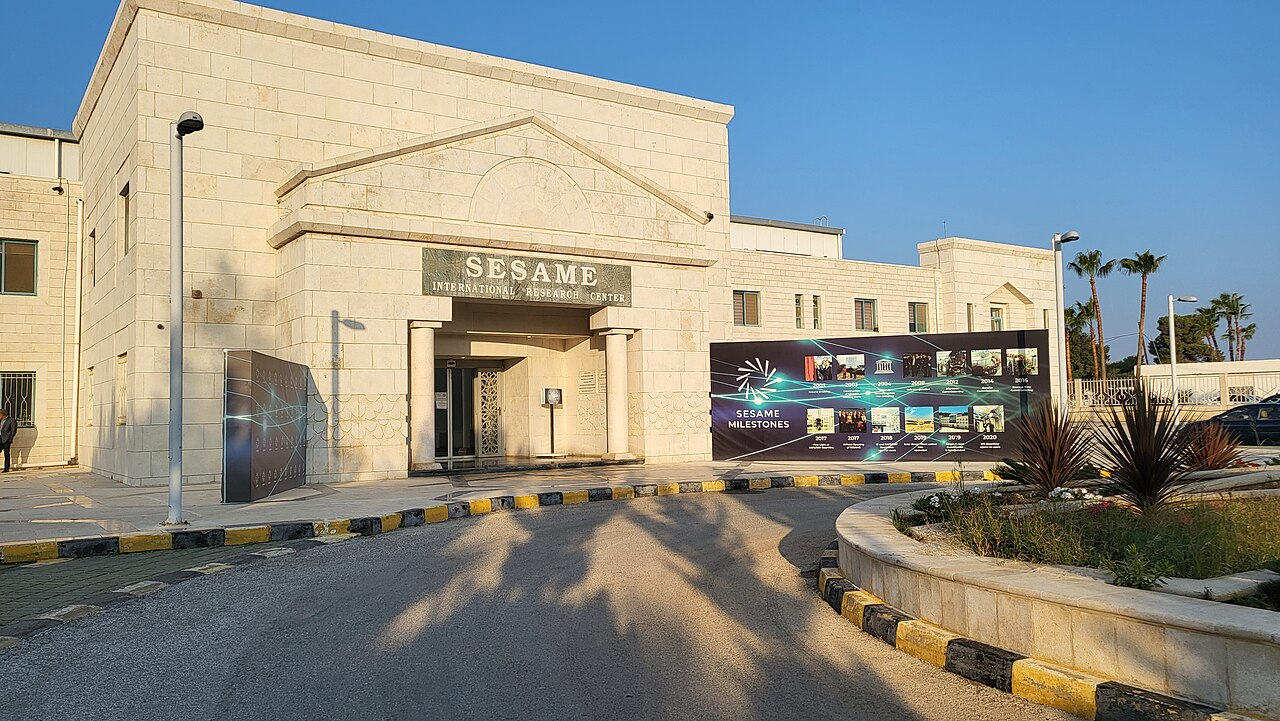
In today’s fragmented world, I consider science to be one of the few spaces for dialogue and trust that transcends political shifts. It allows us to maintain useful, if not actually vital, links between major states when the usual channels become blocked. I will take the SESAME synchrotron in Jordan as an example. Since 2002, this project has been coordinated by seven nations, including Iran, Israel and Palestine, and continues to operate despite the current situation. This is clear proof of the soft power that scientific diplomacy can generate.
Also, this form of diplomacy is proving decisive in a context of unprecedented attacks waged by certain states on research and academic freedom. With 80 international laboratories, 11 representative offices and 7 International Research Centres, the CNRS boasts formidable assets, which it must use to promote France’s influence and facilitate exchanges between citizens the world over.
This ambitious programme is nonetheless faced with a major challenge, which your predecessor had flagged before leaving the post, namely funding. How do you intend to manage this issue?
T. D.: It is indeed essential for France to maintain the CNRS’s full disciplinary coverage because it is one of the world’s few research organisations that actually spans the entire spectrum of scientific disciplines. If France aims to remain a major world power, then it must support research. One of my primary responsibilities is to convince the political sphere of that.
Precisely, why invest in research today?
T. D.: The real question is not whether we can invest in research but whether we can afford not to. France has to think in the medium and long term and, in this context, investing in science is the most rational choice to prepare effectively for the future.
And yet, the share of research in France’s GDP has stagnated at 2.2 per cent for the last thirty years, despite the 3 per cent target set out in the 2020 Research Programming Act, because this goal has yet to be acted upon. In the meantime, other countries like Germany, China or India are stepping up their efforts.
This stagnation has led to French research dropping from sixth to thirteenth place in the world rankings in a little over ten years. Has France fallen behind scientifically and become dependent on technologies developed elsewhere?
T. D.: France’s technological dependence is already underway and can be observed in the digital and rare earths sectors. Our country is heavily dependent on others, whether these are allies or not. For example, its dependence on major digital multinationals brings up questions about its capacity to plan for the future. In the field of artificial intelligence (AI), France is supporting the French company Mistral but will it be able to grow without servers that meet the same standards as those of its competitors?
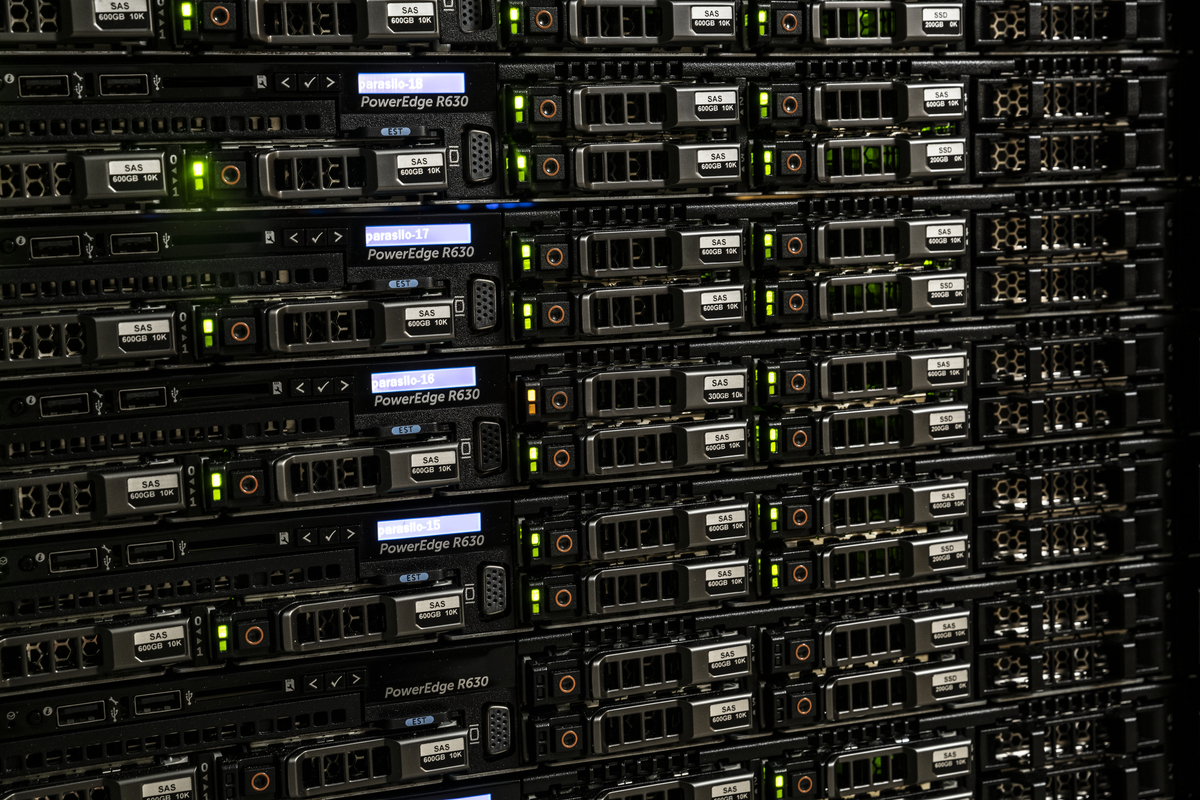
This specific case clearly shows that we cannot be a major power unless we master technology through science. This is why it is crucial for France to maintain the broadest possible scientific development to prevent dependencies of this kind.
Conversely, which sectors of the French economy for 2050 are currently emerging in laboratories?
T. D.: France has many strengths, deriving from its research into AI, climate change, quantum computing, or biodiversity. Significant time lags exist between basic science and practical applications but this research could actually lead to revolutions that would impact our daily lives in the next twenty to thirty years.
For example, the current research work on spintronics1 carried out by Julie Grollier and several CNRS laboratories in a field in which France stands out could lead to the development of more energy-efficient electronics. This, in turn, would help us regain autonomy over the microchips inside our computers and mobile phones. Similarly, certain start-ups deriving from the CNRS could revolutionise the energy landscape by harnessing a new form of energy, namely osmotic energy2. This example is particularly striking because Lydéric Bocquet, the researcher behind it, originally focused on basic research without giving any thought to the possible applications of his discoveries. And yet, 15 per cent of the world’s electricity could be generated in this way. And France is at the forefront in this field, thanks to the CNRS.
Finally, concerning healthcare, the biologist Céline Vallot has identified a fundamental and hitherto unknown mechanism in cancer cells. While these are becoming increasingly resistant to medical treatment, this discovery could help rethink care protocols in the medium term. In this way, patients could undergo less treatment but in a sequential manner in order for the resistant cells to become sensitive again and be treated.
In this regard, you have identified ‘six decisive scientific fronts’ for your programme. Why have you chosen these in particular and what are the CNRS’s strengths in these fields?
T. D.: These six fronts are AI, quantum science, new materials, climate and biodiversity, the brain, and societies in transition. They all reflect the CNRS’s greatest strength, namely its ability to cover the whole range of disciplines at a very high level, which means the organisation can rapidly bring biologists and mathematicians together to work on certain projects. We are the only institution in the world capable of forging collaborations of this kind.
- 1
Spintronics is a branch of physics that combines electronics (which uses the electric charge of electrons to transmit information) with spin, another intrinsic property of electrons. This field is now opening up new research avenues for the future of information technology.
- 2
The electricity generated in this way relies on harnessing the difference in salinity between fresh river water and seawater when these meet.
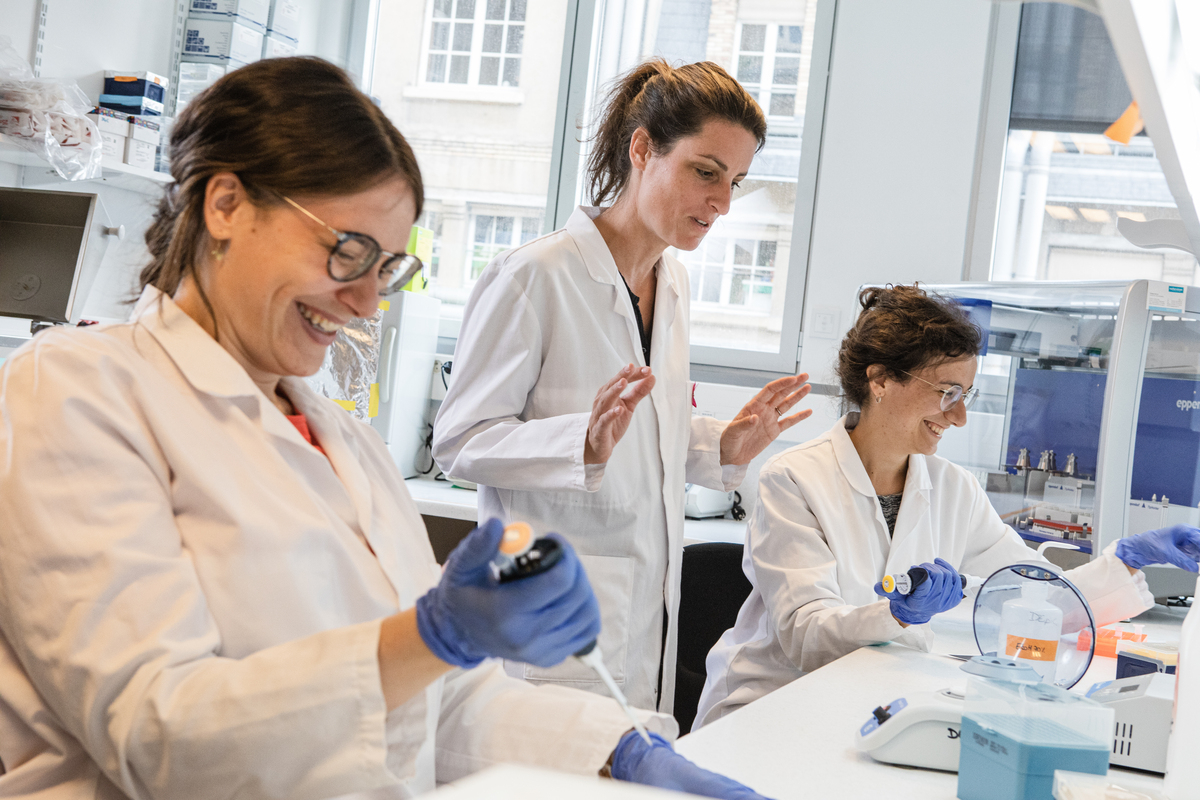
These key scientific research areas perfectly illustrate the CNRS’s ability to respond to civil society’s requirements. Regarding the climate and biodiversity, the CNRS needs to showcase its work, as shown by this summer’s wildfires and drought. France is also one of the leading countries, if not the leading country, in the field of quantum science and the race to develop a quantum computer. Another question is how the brain works. And how can we make sure it continues to function over time, given that our life expectancy is ever-increasing? Finally, the sociologist Muriel Darmon has shown that gender and social class skew the way cancer is managed in the medical sphere. Her research has highlighted delays in diagnosis among women, which can often be due to healthcare professionals downplaying their symptoms.
Alongside these scientific fronts, we also need to fund research with risk, which means betting on projects that are not guaranteed to succeed but which will lead to breakthrough innovations if they do. In France, we are probably still lagging behind other countries like the United States in this area. That is why we are calling on the government to regularly renew high-risk, high-impact research programmes like that led by the CNRS since 2024.
In today’s highly competitive global landscape, which scientific fields will directly determine France’s economic competitiveness twenty years from now?
T. D.: France is capable of training high-flying researchers across the entire disciplinary spectrum. Since it is difficult to predict the future, this is a remarkable asset, considering that maintaining a broad disciplinary coverage, despite chronic underinvestment in research, helps maintain our country at a respectable level.
In fact, the discoveries of tomorrow often emerge at the interface between several different fields. The nation must be capable of training scientists across the entire research range, and stimulating their curiosity is vital for anticipating and preparing for the future.
What do you see as the most motivating challenges to tackle in the framework of this vast programme?
T. D.: Collaborative work and mutual trust.
The CNRS is not just about the Chairman and CEO and its upper management! Every staff member is part of the whole and, at their level, can simplify and facilitate the work of their colleagues. This will help save time and ensure greater peace of mind across the whole organisation.
And we can also foster trust within our organisation, which still operates in a very hierarchical way. Personally, I encourage what is known as ‘intent-based’ governance, which involves delegating decision-making to the right level, empowering everyone and trusting people in principle.
In other terms, I encourage every staff member to choose the most appropriate means and methods to achieve the assigned goals and thus find more meaning in their work.